

Connecting Disciplines. Expanding Perspectives.
SYNAPSE 2026–27, presented by Vision Science Academy (VSA) as part of the World Vision Science Day initiative, brought together students, clinicians, researchers, educators and professionals to explore vision sciences through the connected lenses of Neuroscience, Artificial Intelligence and Technology, and Psychology. Across three virtual sessions, the series encouraged participants to look beyond traditional disciplinary boundaries and consider how scientific insight, technological innovation and human experience can work together to improve vision care.
The programme progressed from the neural mechanisms underlying sight, to the role of emerging technologies in eye care, and finally to the psychological and social dimensions of living with visual impairment. Together, the sessions reinforced a central message: vision is not simply an ocular function; it is a complex human experience shaped by biology, technology, behaviour, wellbeing and the environment.
| 3
INTERCONNECTED SESSIONS |
21 / 20 / 18
COUNTRIES REPRESENTED* |
1
SHARED LEARNING MISSION |
*Reported registrations by session: 21 countries for Session 1, 20 for Session 2 and 18 for Session 3. These figures are session-level reach indicators and should not be added to represent unique individuals or unique countries across the series.
The SYNAPSE Journey
| SESSION 1 | THE BRAIN BEHIND SIGHT | Neuroscience of Vision |
| SESSION 2 | SMART VISION WITH AI AND TECHNOLOGY | Artificial intelligence and emerging technologies |
| SESSION 3 | THE PSYCHOLOGY OF VISION | Psychological and social dimensions of visual impairment |
| The Series in One Sentence
SYNAPSE created a shared space to understand vision from neural processing to intelligent technologies and the lived psychological experience of visual impairment. |
Session 1: The Brain Behind Sight
19 April 2026 | Virtual symposium | Registrations from 21 countries
The inaugural session established the interdisciplinary foundation of SYNAPSE by exploring the neuroscience of vision and the relationship between neural processing, vision therapy and rehabilitation. It highlighted how a deeper understanding of the visual brain can inform new approaches to care and support people whose visual needs may not be fully addressed by conventional options.
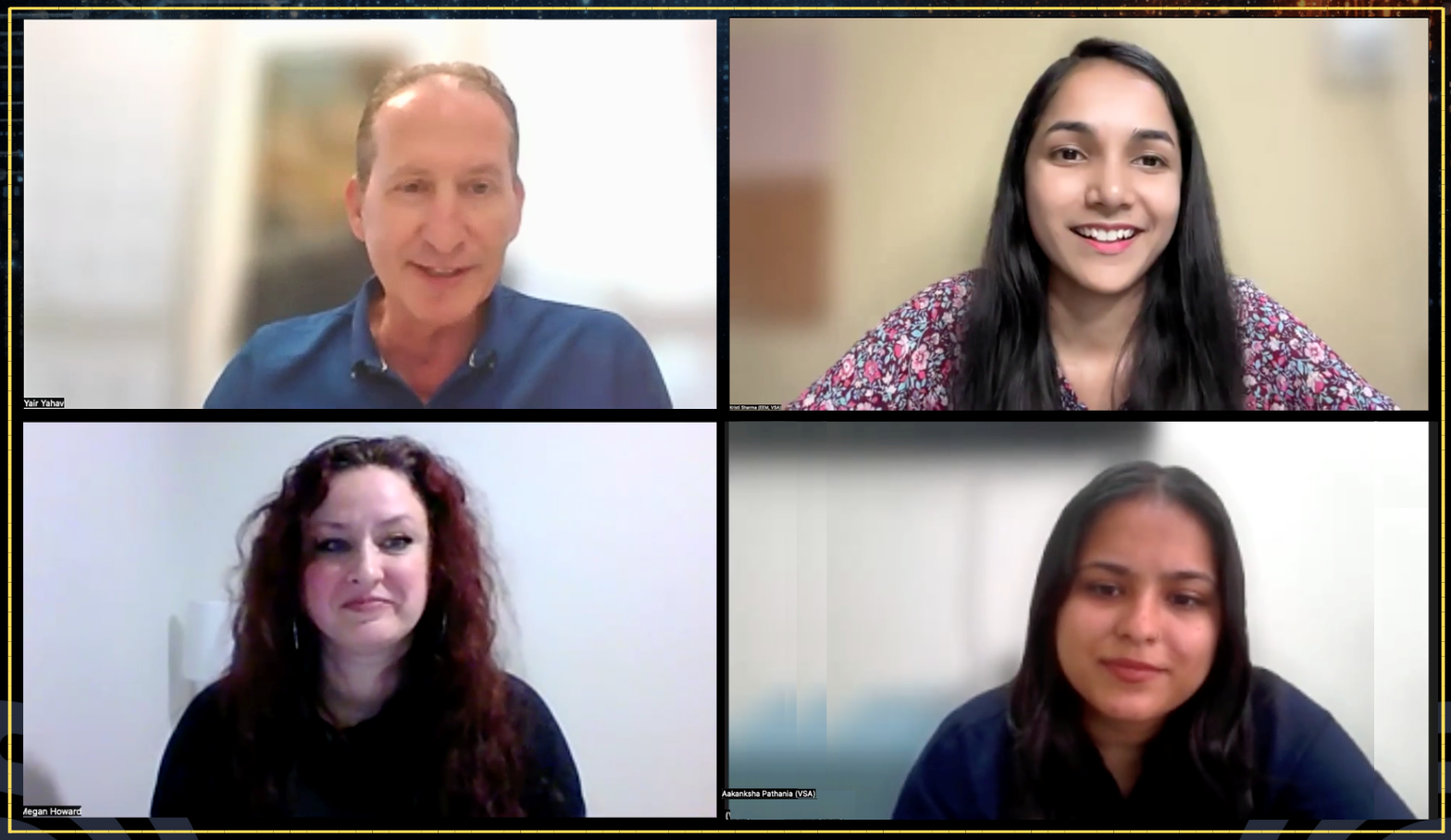

Featured Speakers and Presentations


Yair Yahav — RevitalVision, Israel
Presentation: “Visual Cortex Training: A New Treatment Option to Optimise Vision.” The presentation introduced mechanisms of visual processing in the primary visual cortex and discussed technology-enabled visual cortex training as a clinical approach for selected patients with reduced visual function.

M. Megan Howard — Vision Therapy Works, Canada
Presentation: “The Metamorphosis of Neurovision Rehabilitation.” The talk traced the evolution of vision therapy and considered the changing role of neurovision rehabilitation in contemporary practice.
Discussion and Audience Engagement
A panel discussion, “Neuroscience as an Integral Component of Vision Sciences,” invited participants to consider how neural mechanisms and rehabilitation approaches intersect with clinical practice. The session also featured the Vision Creators’ Showcase, which encouraged participants to communicate interdisciplinary ideas through short-form creative videos. Abhishek Chauhan, a student from Sankara College of Optometry, Ludhiana, was named the shortlisted Vision Creator for this edition.
| Key Message
Understanding the brain behind sight can broaden the way vision professionals think about assessment, rehabilitation and emerging treatment approaches. |
“Vision sciences are strongest when neural science, clinical practice and rehabilitation inform one another.”
Session 2: Smart Vision with AI and Technology
19 July 2026 | Virtual symposium | Registrations from 20 countries
The second session examined the growing influence of Artificial Intelligence and emerging technologies across eye care. Moving from clinical implementation to solution development, the programme explored how AI can support professional workflows, enable new digital tools and create opportunities for innovation, while also raising questions about responsible adoption, ethics and collaboration.
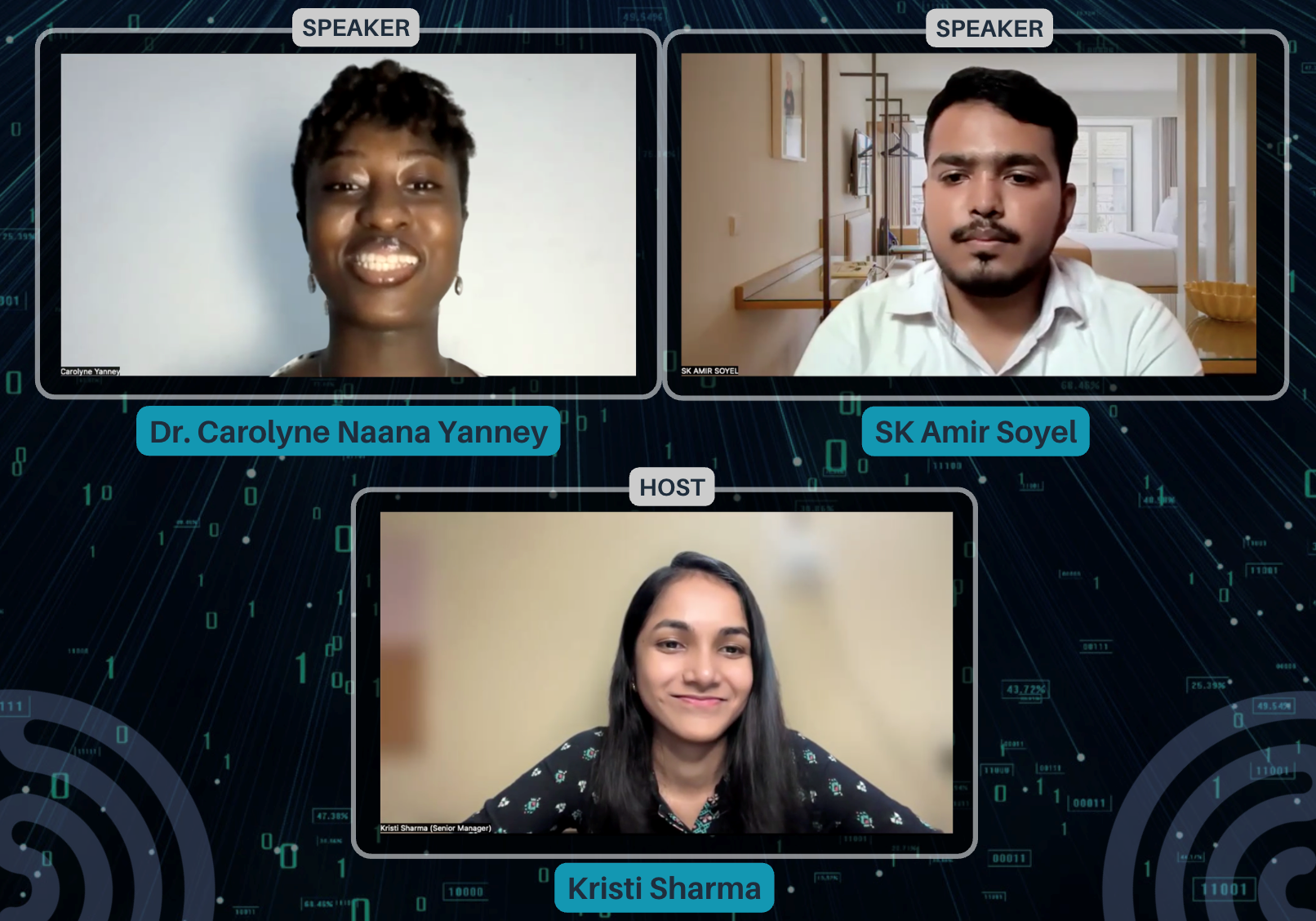

Featured Speakers and Presentations

Dr. Carolyne Naana Yanney — Lucentti Eye Center (Knoxxi Health), Ghana
Presentation: “AI in Eye Care: The Role of Eye Care Professionals.” The presentation considered the integration of AI into clinical workflows and the role of eye care professionals in evaluating and implementing these tools in day-to-day practice.

SK Amir Soyel — Orbsway Vision Therapy, India
Presentation: “Developing AI-based Eye Care Solutions.” The talk used practical examples to demonstrate how AI can be applied in developing digital solutions, including websites and applications for eye care entrepreneurs.
Discussion and Audience Engagement
The panel, “Emerging Technologies in Vision Sciences: Opportunities and Challenges,” explored the future of AI in vision sciences, ethical considerations and opportunities for interdisciplinary collaboration. Questions from participants across different countries helped connect technical innovation with the practical needs of clinical care, research and education.
| Key message
AI can support the future of eye care when innovation is paired with professional judgement, responsible implementation and attention to real-world needs. |
“Technology is most valuable when it strengthens, not replaces, human expertise and patient-centred care.”
Session 3: The Psychology of Vision
25 October 2026 | Virtual symposium | Registrations from 18 countries
The concluding session brought the series to the human experience of vision impairment. It explored how visual conditions can affect independence, wellbeing, employment, social participation and psychological health across the lifespan. The discussions reinforced that effective vision care must recognise not only clinical findings, but also the emotional, social and practical realities experienced by individuals.
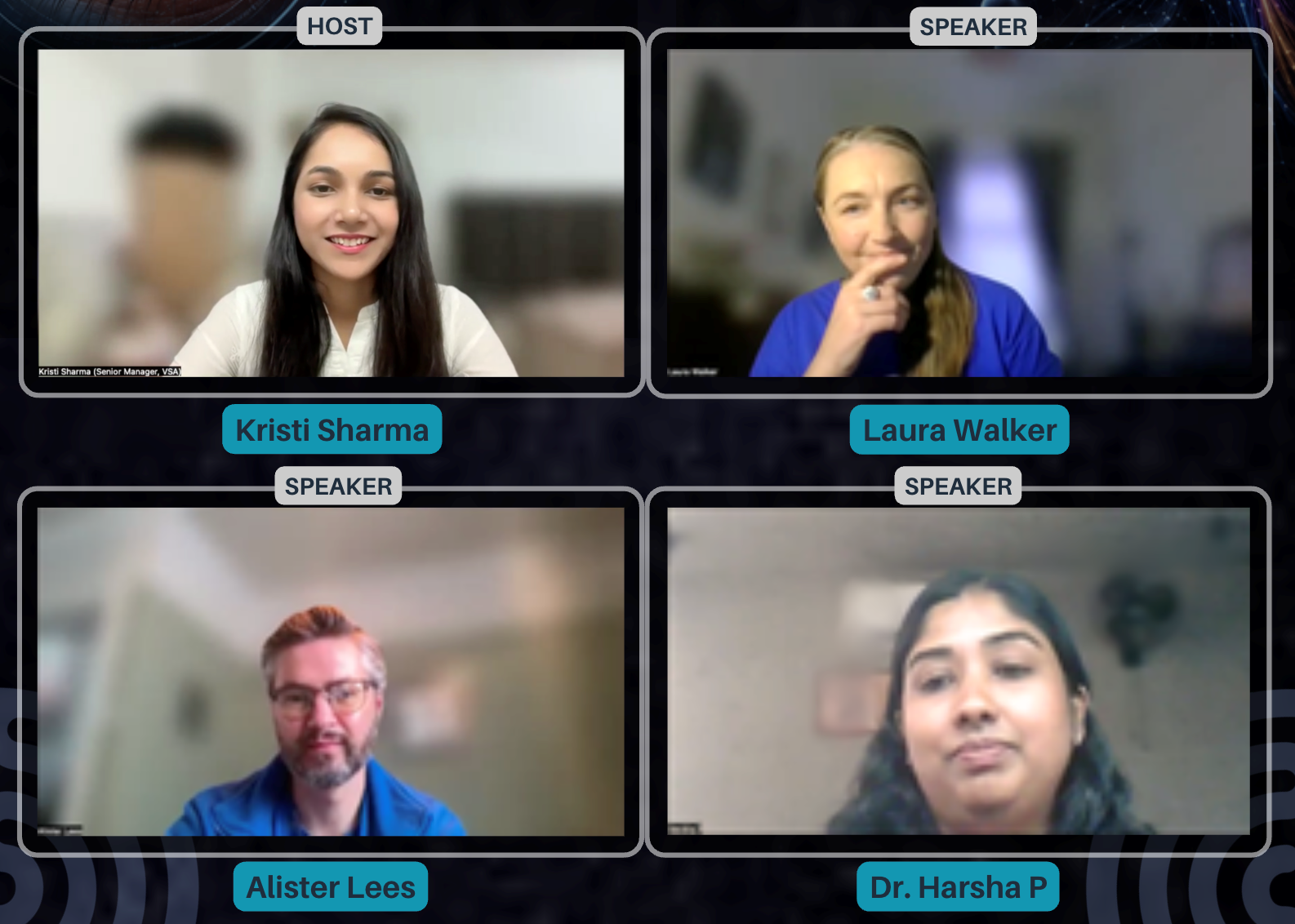

Featured Speakers and Presentations

Laura Walker — Visibility Scotland
Presentation: “Vision Impairment from Birth to Old Age.” The talk examined the impact of vision impairment across different life stages, including its effects on independence, wellbeing, employment and social inclusion, while highlighting the value of specialist support.

Alister Lees — Visibility Scotland
Presentation: “Acquired Brain Injury and Visual Field Loss.” The presentation explored the emotional, psychological and social challenges associated with visual field loss following stroke or acquired brain injury, including how these experiences may differ from progressive eye conditions.

Dr. Harsha P — VTrust Eye Hospital, India
Presentation: “Glaucoma and the Psychological Aspects of Living with Glaucoma.” The talk highlighted the importance of recognising psychological distress in glaucoma care and considering psychosocial support alongside clinical management.
Discussion and Audience Engagement
The panel discussion, “Why Psychology is Essential to Understanding Vision,” brought together perspectives on the relationship between visual impairment, mental wellbeing and everyday life. The session encouraged a more person-centred understanding of care and emphasised the value of collaboration between eye care professionals, rehabilitation specialists and wider support networks.
| Key message
Good vision care considers the person behind the diagnosis: their goals, wellbeing, independence and participation in everyday life. |
“To understand vision impairment fully, we must understand both the visual condition and the person living with it.”
Three Perspectives. One Integrated Vision.
Although each session approached vision sciences from a different direction, a common thread ran through the series: meaningful progress depends on connecting disciplines. Neuroscience offered insight into the mechanisms of sight; AI and technology raised possibilities for new tools and workflows; and psychology brought attention to the lived experience of visual impairment.
| NEUROSCIENCE | AI AND TECHNOLOGY | PSYCHOLOGY |
| How does the visual system process information, and how can this knowledge inform rehabilitation? | How can emerging tools support clinical practice, education and innovation responsibly? | How do visual conditions affect wellbeing, identity, independence and participation? |
Series-Wide Takeaways
- Interdisciplinary thinking is essential to understanding vision as a biological, clinical, technological and human experience.
- Technology has the greatest value when it is applied responsibly and guided by professional expertise and patient needs.
- Rehabilitation and eye care benefit from recognising the neurological, psychological and social dimensions of visual function.
- International knowledge exchange creates opportunities for learners and professionals to challenge assumptions and broaden practice.
- Students and early-career professionals need accessible spaces to ask questions, share ideas and connect with experts across fields.
Acknowledgements
Vision Science Academy extends its sincere appreciation to all speakers, panelists, participants, and contributors who made SYNAPSE 2026–27 possible.
We are grateful to VTrust Group of Institutions for supporting the series as Knowledge Partner. Their association and support throughout this series contributed meaningfully to make this event successful.


Messages from the people behind SYNAPSE
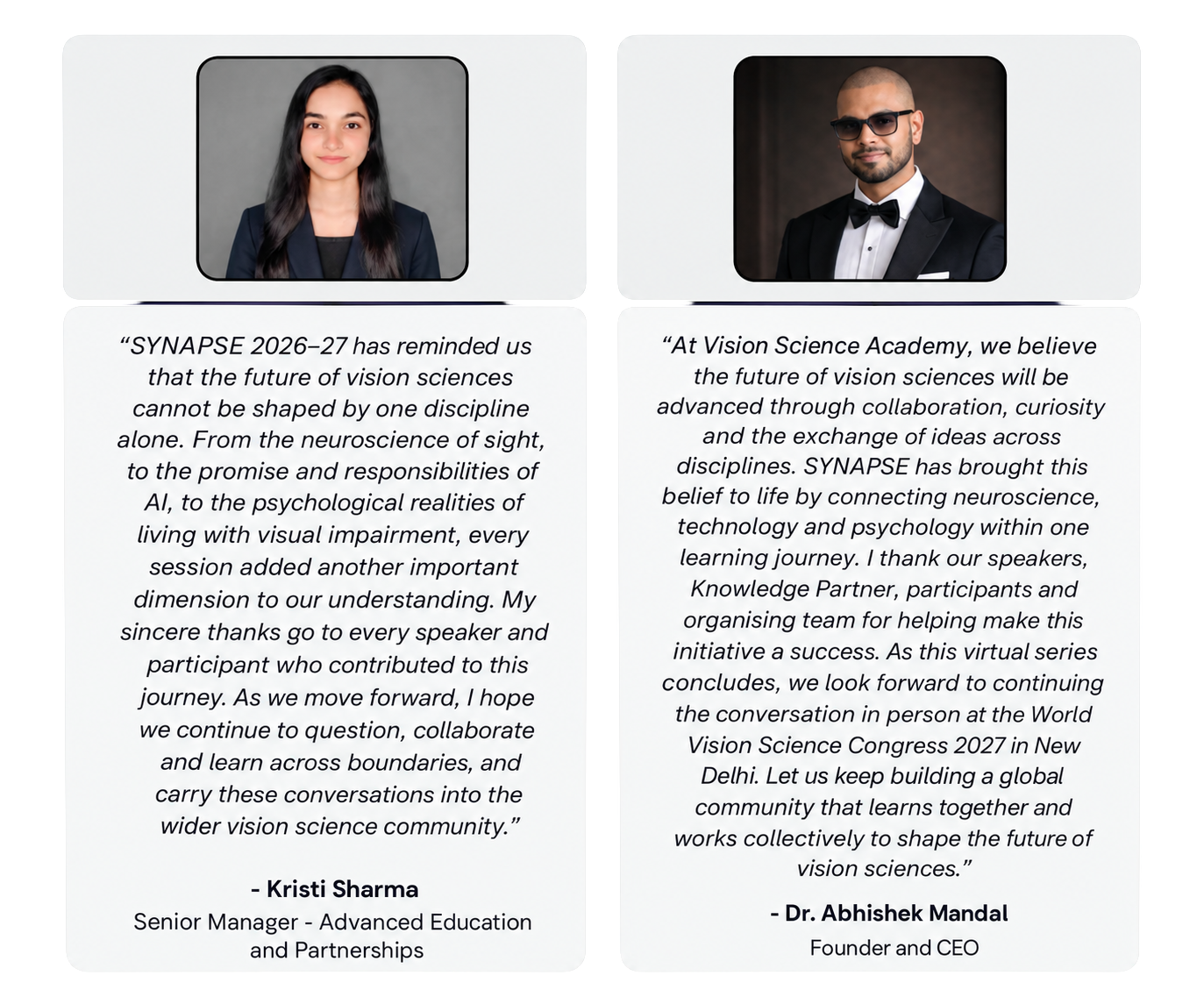

From Virtual Exchange to an In-Person Meeting of Minds
SYNAPSE 2026–27 concludes as a series, but the learning journey it represents continues. Its three sessions have explored complementary dimensions of vision sciences and helped create a shared foundation for future discussion, collaboration and discovery.
The next major gathering within the World Vision Science Day initiative is the World Vision Science Congress (WVSC) 2027, a physical congress taking place in New Delhi, India, on 6–7 February 2027. The congress will bring the vision science community together in person to exchange ideas, present work, build connections and explore the future of this interdisciplinary field.
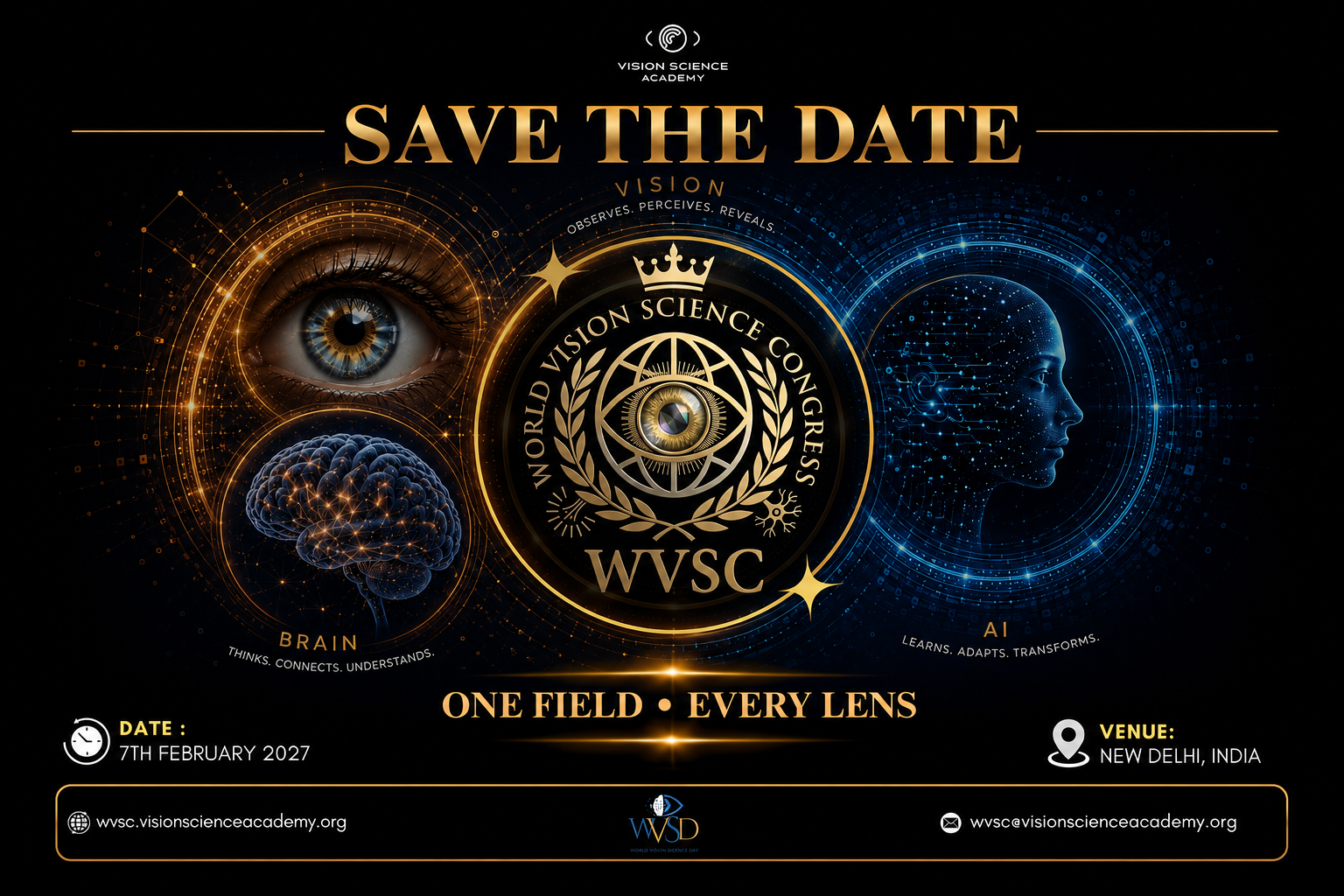

World Vision Science Congress 2027
- Dates: 6–7 February 2027
- Location: New Delhi, India
- Theme: One Field, Every Lens
- Format: In-person congress, with pre-conference activities on 6 February and the main congress on 7 February
| Continue the SYNAPSE learning journey
Join us in New Delhi to meet fellow students, clinicians, researchers, educators and innovators in person, and carry the interdisciplinary conversations from SYNAPSE into the next chapter of vision sciences. |
BE PART OF THE CONVERSATION
Explore the programme and register for WVSC 2027:
REGISTER
Let us meet, exchange ideas and shape the future of vision sciences – together.