


Vision Science Academy conducted The Vision Science Talks focusing on Visual Psychophysics
Event Overview
London, UK – May 25, 2026 – Vision Science Academy successfully hosted another insightful session under the Vision Science Talks series featuring Dr. Angelea Perez, who delivered a comprehensive scientific presentation on Colour Vision Deficiency (CVD) from molecular, neurophysiological, psychophysical, clinical, and translational perspectives.
The session brought together students, clinicians, researchers, and vision science professionals from diverse backgrounds to explore the evolving understanding of colour vision deficiency beyond the traditional concept of “colour blindness”. The event highlighted how CVD represents a complex systems-level variation involving retinal physiology, cortical processing, genetics, psychophysics, and real-world functional outcomes.
The presentation emphasised the importance of integrating clinical diagnostics, accessibility design, assistive technologies, and emerging therapeutic interventions in the management and understanding of colour vision deficiency.
Key Discussion Points
- Understanding Colour Vision Deficiency beyond colour blindness
- Genetics and molecular basis of CVD
- Retinal and cortical colour processing
- Clinical classification of CVD
- Psychophysical models and chromatic discrimination
- Contemporary diagnostic approaches
- Developmental and educational impact
- Acquired dyschromatopsia as a clinical biomarker
- Human factors and accessibility design
- Assistive technologies and emerging therapeutics
- Ethics, neurodiversity, and future research
Interactive Engagement
The session featured live polls and an interactive Q&A segment that encouraged active participation from attendees. Discussions centred around clinical experiences, psychophysical assessment challenges, pediatric screening, accessibility design, and the translational future of colour vision research.
The audience appreciated the multidisciplinary approach that connected genetics, neuroscience, psychophysics, clinical ophthalmology, and human-centred design.
Key Takeaways
- Colour vision deficiency is a complex neurovisual phenomenon rather than a simple naming deficit.
- Advances in genetics, psychophysics, and imaging are transforming diagnosis and phenotyping.
- Acquired dyschromatopsia may serve as an early biomarker for neuro-ophthalmic and systemic disease.
- Accessibility-centred design is essential for inclusive educational and occupational environments.
- Emerging therapies, including gene therapy and AI-driven assistive technologies, are opening new translational possibilities.
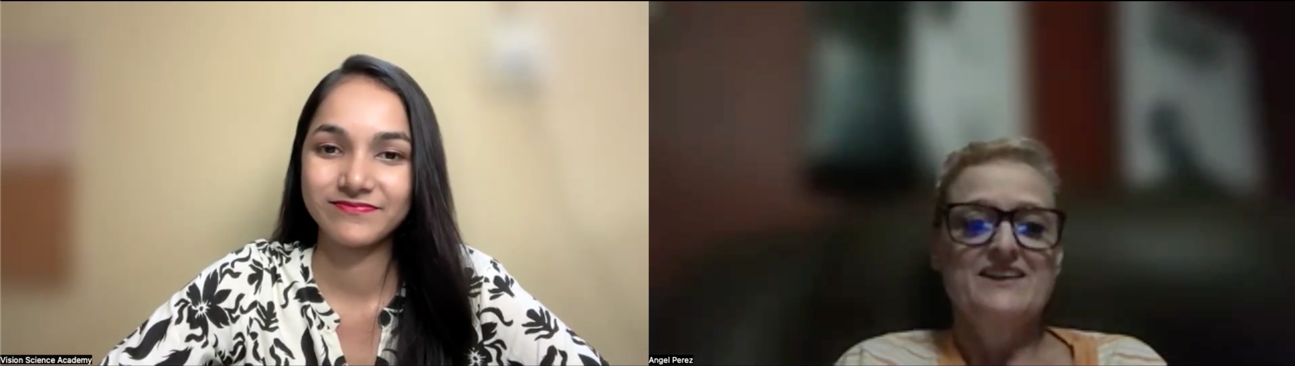

Figure A: A Clip from the Q&A Session.
Reflecting on the successful session, Kristi Sharma, Senior Manager – Advanced Education and Partnerships and host of the event, expressed her gratitude.
“The Vision Science Talks session featuring Dr. Angelea Perez successfully provided attendees with a deep scientific and clinical understanding of color vision deficiency through an interdisciplinary lens. The webinar fostered meaningful discussions on diagnostics, neurophysiology, accessibility, psychophysics, and emerging therapeutics, reinforcing the importance of translational and patient-centered approaches in modern vision science. Dr. Angelea’s expertise and the audience’s keen interest in deep exploration of the topic helped make the event successful.”
The event further strengthened Vision Science Academy’s commitment to advancing global dialogue, education, and research in vision science and clinical ophthalmic innovation.