


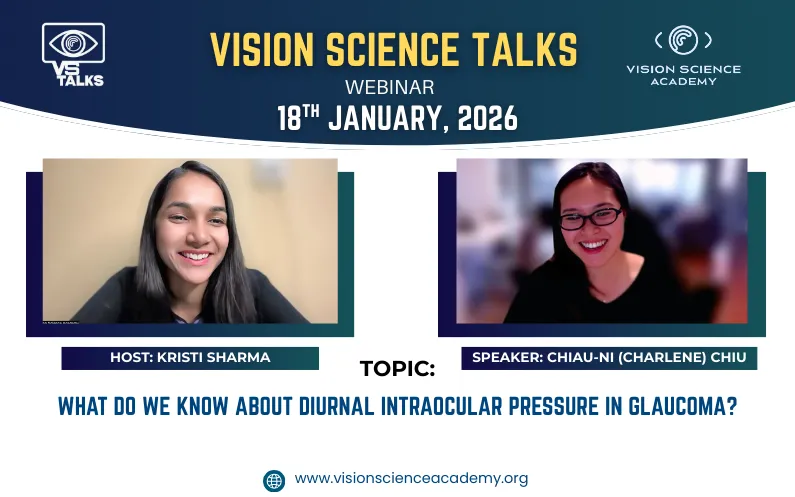
Vision Science Academy Hosts Vision Science Talks in Observance of Glaucoma Awareness Month
London, UK – January 20, 2026 – Vision Science Academy (VSA) successfully hosted a session of “The Vision Science Talks” featuring Chiau-Ni (Charlene) Chiu. The webinar focused on the critical role of Diurnal Intraocular Pressure (IOP) in the management and understanding of Glaucoma. The session provided a comprehensive overview of how circadian rhythms influence eye pressure and the challenges currently faced by clinicians in monitoring these fluctuations.
Event Purpose
The primary objective of this talk was to bridge the gap between historical observations of IOP rhythms and modern clinical practice. By featuring a researcher specialising in the characterisation of diurnal IOP, the event aimed to:
- Update eye care professionals on the latest research related to 24-hour IOP fluctuations.
- Discuss the clinical significance of these fluctuations in Glaucoma patients.
- Address the limitations of current IOP measuring devices in capturing a complete diurnal profile.
Session Details
The session was moderated by Kristi Sharma, Education Engagement Manager, who commenced the event with a warm welcome and set the stage for an engaging and insightful discussion.
The speaker of this global event was Chiau-Ni (Charlene) Chiu, a Clinical Optometrist and PhD Candidate at The University of Western Australia and Lions Eye Institute and her research focus involves characterising diurnal IOP in Glaucoma.
Key Discussion Points
During the session, several core themes were explored, including:
- The Circadian Rhythm of IOP: Recognition that IOP follows a 24-hour biological cycle, a phenomenon documented as early as 1898.
- Glaucoma and IOP Fluctuation: Discussion on how individuals with Glaucoma often experience greater diurnal IOP variations compared to healthy individuals, a trend noted in research since 1960.
- The “Snapshot” Problem: A critique of routine clinical practices where IOP is typically measured only during office hours, potentially missing peak pressure levels.
- Technological Barriers: An analysis of the limitations in current diagnostic capabilities due to the lack of accessible, non-invasive devices for continuous 24-hour IOP monitoring.
Audience Engagement
The event attracted a diverse global audience comprising vision science students and professionals. Participants joined via a virtual platform and actively engaged in a Q&A session, discussing the clinical implications of diurnal monitoring and the future prospects of home-based tonometry.
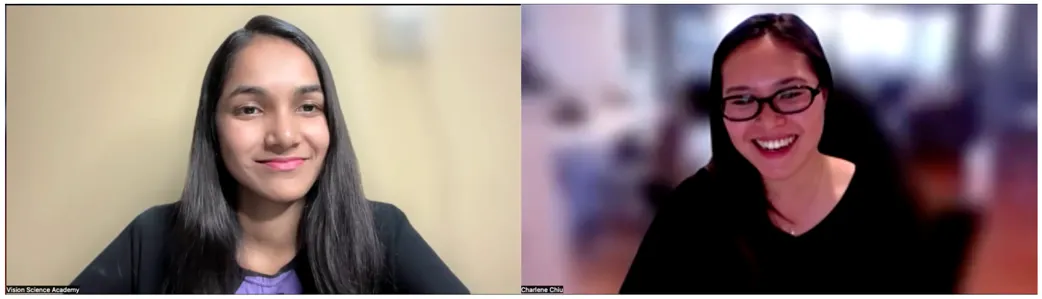

Figure: A clip from the live Q&A session
Reflecting on the successful event, Kristi Sharma, Education Engagement Manager and host of the event, expressed her sincere appreciation:
“Charlene’s session reminded us that “snapshot” measurements of eye pressure during office hours may not tell the whole story. As we move forward, the integration of diurnal data will be essential in preventing vision loss and providing personalised care to our patients. We would also like to thank our vibrant community of professionals and students who joined us from across the globe. Your engagement and insightful questions during the Q&A session underscore the importance of continuous learning in the field of Vision Science”