

Monazzah Aiman, B. Optom
Fellow Optometrist, Dr. Shroff’s Charity Eye Hospital, New Delhi, India
When we talk about the dangers of smoking, our minds generally think of lung cancer, heart attacks, and respiratory complaints. However, away from the limelight, a lesser-known yet serious consequence lurks in the shadows: vision loss. That seemingly harmless cigarette may not just harm your lungs or heart but could also be quietly damaging your eyes.
The Silent Thief: Age-Related Macular Degeneration
Age-Related Macular Degeneration (AMD) is a progressive condition that silently targets the central retina, the part of the eye responsible for sharp, detailed vision. It does not cause complete blindness but gradually steals the clarity of your central vision, making everyday tasks like reading or recognising faces difficult. (1) AMD has emerged as the foremost cause of vision loss in adults over the age of 50. (2) While genetics and ageing are major risk factors, smoking is a preventable trigger with devastating effects on eye health. (3)

Figure 1: Black Spots Due to AMD Leading to Difficulty in Central Vision
Smoking and AMD: A Dangerous Link
According to research, smokers have a roughly fourfold higher risk of developing AMD than non-smokers. (4) Even passive smoke exposure raises the risk, putting non-smokers in danger. (5)
What Happens inside your Eyes when you Smoke?
- Toxic chemicals directly damage the retinal pigment epithelium and photoreceptors. (6)
- Triggers oxidative stress, speeding up retinal cell death. (7)
- Nicotine and its by-products hinder cellular waste removal, causing harmful build-up such as lipofuscin and drusen, early signs of AMD. (8)
- Restricts blood flow to the retina, reducing oxygen and nutrient delivery.
- Depletes protective antioxidants, making the eyes vulnerable to UV and metabolic stress.
These mechanisms collectively lead to early onset and rapid progression of AMD. Smoking does not just harm your lungs; it threatens your sight.
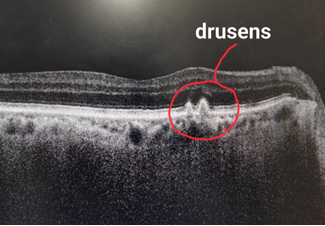
Figure 2: Fundus Image of Right Eye Showing Drusen and Retinal Pigment Epithelium Layer
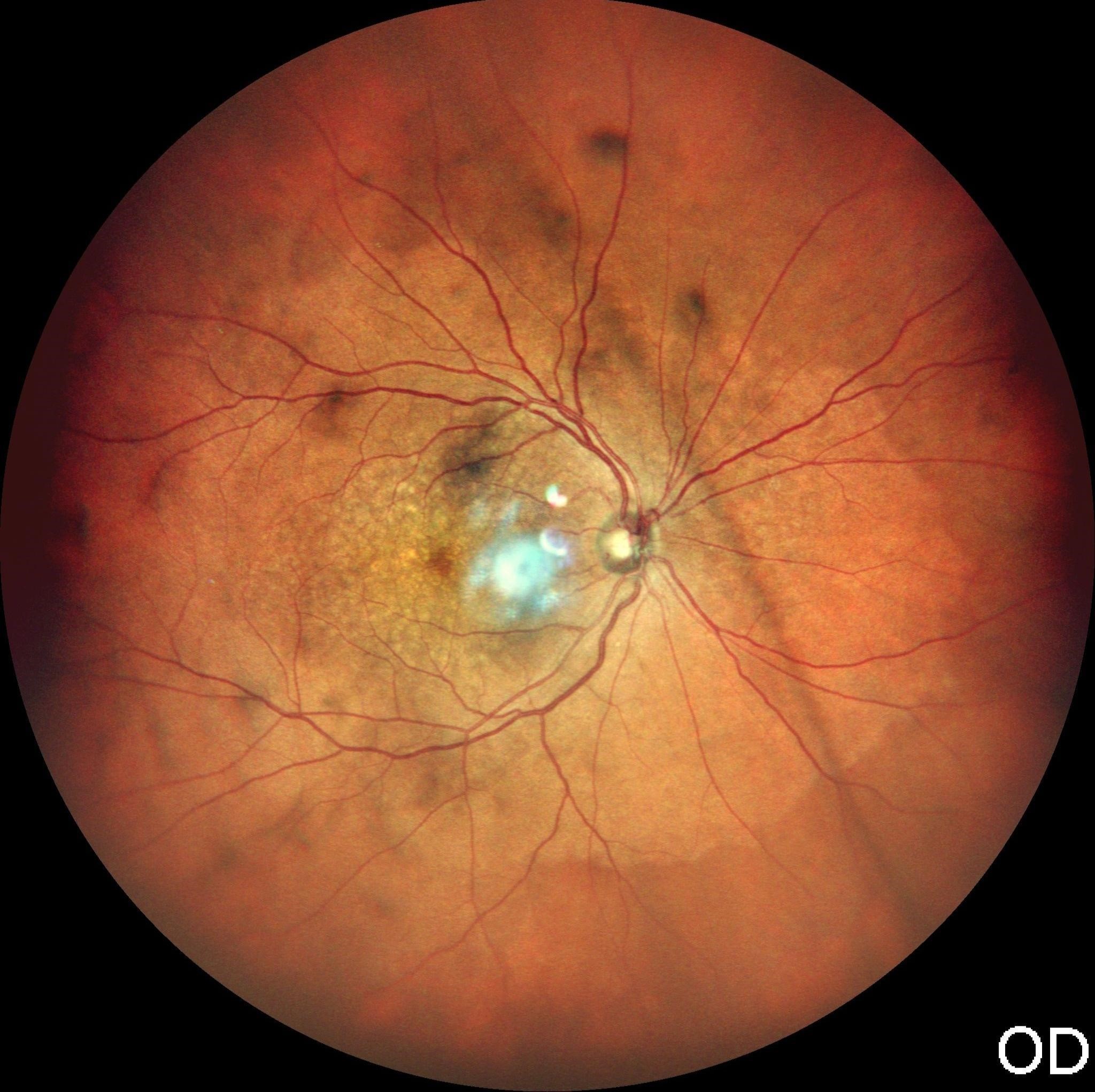
Figure 3: Optical Coherence Tomography of the Right Eye Showing Drusen
Unfortunately, there is no “safe” quantity. Even infrequent or casual smoking increases risk. If AMD has already developed, smoking can accelerate its progression.
Good News: Quitting Helps
Healing begins the moment you quit smoking. Although existing AMD damage cannot be reversed, quitting significantly slows its progression and lowers future risk. (9) Studies show that 20 years after quitting, the risk of a former smoker becomes similar to that of a non-smoker. (11) It is never too late to protect your vision.
How to Protect Your Vision
- Quit smoking, the most crucial step for eye health.
- Eat leafy vegetables, omega-3 rich foods, and antioxidant-rich diets.
- Shield your eyes with UV-protected sunglasses.
- If you have a family history or are over 50, schedule regular eye check-ups.
Conclusion
Until our vision begins to deteriorate, we frequently take it for granted and AMD sneaks in quietly, stealing precious visual moments. Smoking may seem temporary, but its impact can be lifelong. Quit today to protect not just your lungs, but also your sight. (1)
Before lighting up the next cigarette, ask yourself: Is that puff worth risking your sight? Your eyes deserve a clear future.
References
- Pennington, K. L., & DeAngelis, M. M.
- Pennington, K. L., & DeAngelis, M. M. (2016). Epidemiology of age-related macular degeneration (AMD): associations with cardiovascular disease phenotypes and lipid factors. Eye and vision, 3(1), 34.
- Gottlieb J. L. (2002). Age-related macular degeneration. JAMA, 288(18), 2233–2236.
- Wong, W. L., Su, X., Li, X., Cheung, C. M., Klein, R., Cheng, C. Y., & Wong, T. Y. (2014). Global prevalence of age-related macular degeneration and disease burden projection for 2020 and 2040: a systematic review and meta-analysis. The Lancet. Global health, 2(2), e106–e116.
- Seddon, J. M., Willett, W. C., Speizer, F. E., & Hankinson, S. E. (1996). A prospective study of cigarette smoking and age-related macular degeneration in women. JAMA, 276(14), 1141–1146.
- Parekh, N., Voland, R. P., Moeller, S. M., Blodi, B. A., Ritenbaugh, C., Chappell, R. J., Wallace, R. B., Mares, J. A., & CAREDS Research Study Group (2009). Association between dietary fat intake and age-related macular degeneration in the Carotenoids in Age-Related Eye Disease Study (CAREDS): an ancillary study of the Women’s Health Initiative. Archives of ophthalmology (Chicago, Ill. : 1960), 127(11), 1483–1493.
- Noar, S. M., Kelley, D. E., Boynton, M. H., Morgan, J. C., Hall, M. G., Mendel, J. R., Ribisl, K. M., & Brewer, N. T. (2018). Identifying principles for effective messages about chemicals in cigarette smoke. Preventive medicine, 106, 31–37.
- Liu, Z., Sun, L., Zhu, L., Jia, X., Li, X., Jia, H., Wang, Y., Weber, P., Long, J., & Liu, J. (2007).
- Hydroxytyrosol protects retinal pigment epithelial cells from acrolein-induced oxidative stress and mitochondrial dysfunction. Journal of neurochemistry, 103(6), 2690–2700.
- Cascella, R., Ragazzo, M., Strafella, C., Missiroli, F., Borgiani, P., Angelucci, F., Marsella, L. T., Cusumano, A., Novelli, G., Ricci, F., & Giardina, E. (2014). Age-related macular degeneration: insights into inflammatory genes. Journal of ophthalmology, 2014, 582842.
- Brogan, A. P., Dickerson, T. J., Boldt, G. E., & Janda, K. D. (2005). Altered retinoid homeostasis catalyzed by a nicotine metabolite: implications in macular degeneration and normal development. Proceedings of the National Academy of
- Hughes, A. E., Orr, N., Patterson, C., Esfandiary, H., Hogg, R., McConnell, V., Silvestri, G., & Chakravarthy, U. (2007). Neovascular age-related macular degeneration risk based on CFH, LOC387715/HTRA1, and smoking. PLoS medicine, 4(12), e355.
Recent Comments