by Vision Science Academy | Oct 1, 2026 | Manuscripts
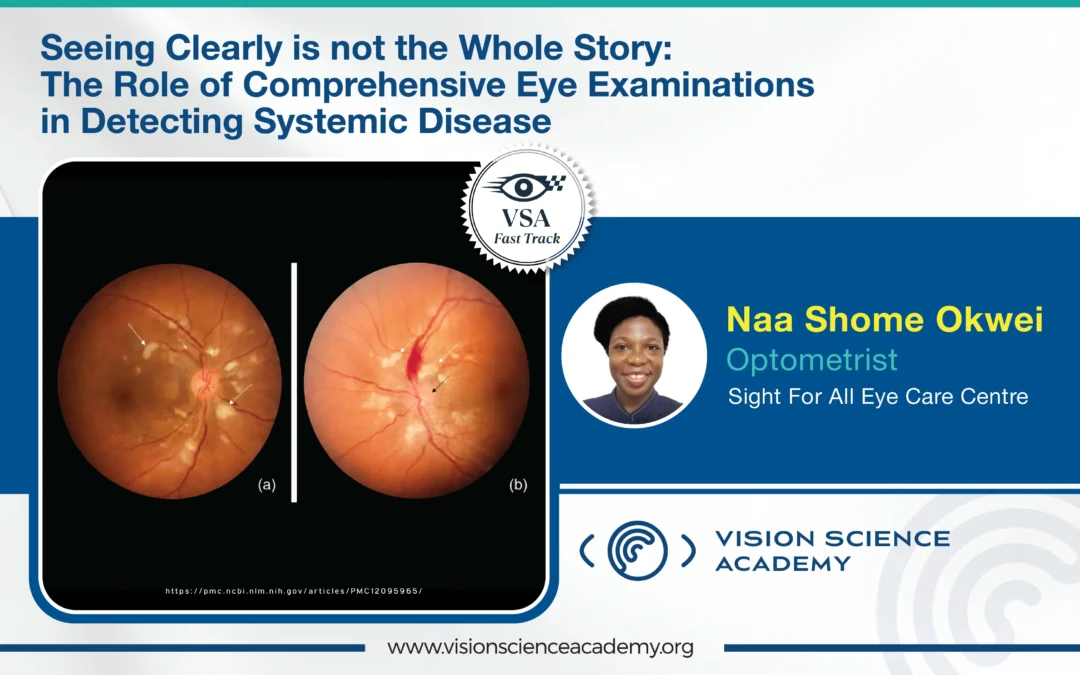
Naa Shome Okwei, OD, Optometrist, Sight For All Eye Care Centre, Winneba, Ghana Keywords comprehensive eye examination, systemic disease, hypertensive retinopathy, diabetic retinopathy, optic neuritis Declaration of Interest The blog is written solely for...
by Vision Science Academy | Oct 1, 2026 | Manuscripts
Jeba Ahmed (1), M. Optom. Student, Haziel Rynjah (2), Assistant Professor, Royal Global University, Guwahati, India Keywords colour vision deficiency, cone photoreceptors, colour perception, genes coding. Declaration of Interest No conflict of interest. The...
by Vision Science Academy | Oct 1, 2026 | Manuscripts
Rohitha S M (1), M. Optom. Student, Bharghavy S (2), Assistant Professor, Dr. Agarwals Institute of Optometry, Chennai, India Keywords predictive coding, neuro-optometry, sensorimotor integration Declaration of Interest The blog is written solely for education...
by Vision Science Academy | Oct 1, 2026 | Manuscripts
Kamesh M, B. Optom Student , IIVM College of Optometry, Coimbatore, India Keywords prescription, vision, contrast, tear film Declaration of Interest The blog is written solely for education purposes, and it does not have any financial support and conflict of...
by Vision Science Academy | Oct 1, 2026 | Manuscripts
Ranjitha Kabbinale, M. Optom Optometrist, Sri Durga Opticals, Manipal, India Keywords rapid eye movements (REM) sleep, eye movements, working memory, PTSD, smooth pursuit, trauma therapy, neurobiology of sleep Declaration of Interest The blog is written solely...
by Vision Science Academy | Oct 1, 2026 | Manuscripts
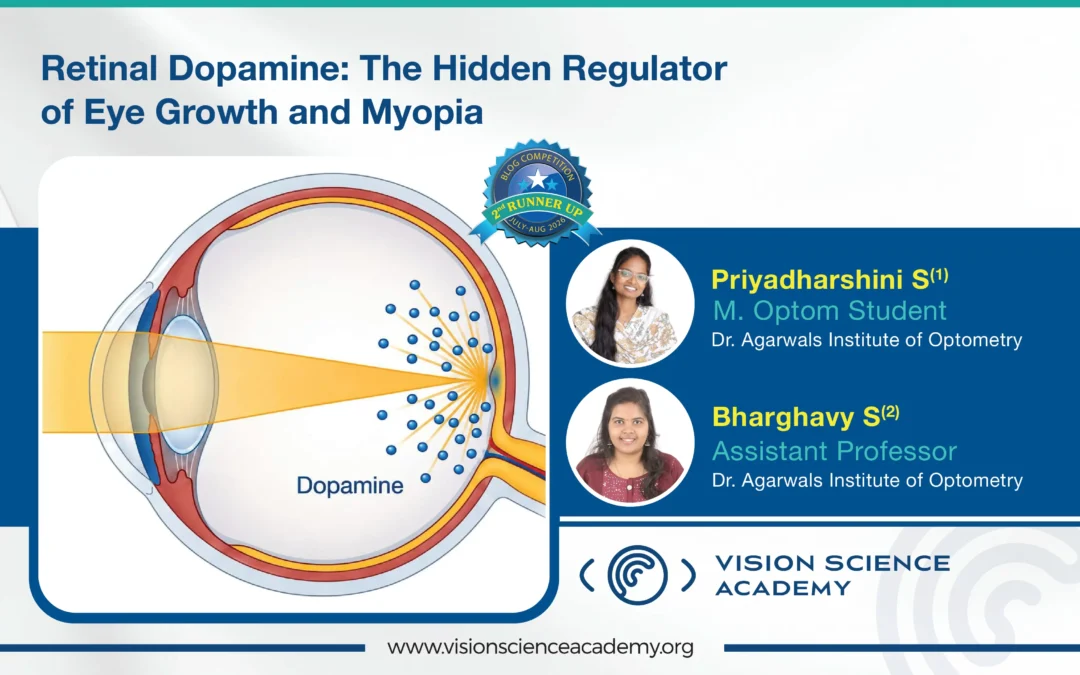
Priyadharshini S, M. Optom. Student , Bharghavy S, Assistant Professor Dr. Agarwals Institute of Optometry, Chennai, India Keywords retinal dopamine, myopia, emmetropisation, outdoor light, axial elongation Declaration of Interest The blog is written solely for...

Recent Comments