
Tiyasa Khanra, M. Optom
Assistant Professor and Head of Department, The Institute of Leadership, Entrepreneurship and Development (iLEAD), Kolkata, India
“The eye sees only what the mind is prepared to comprehend.” – Henri Bergson
For centuries, vision has been regarded as the dominant human sense, often perceived as a faithful representation of the external world. Contemporary Neuroscience, however, increasingly challenges this assumption. Perception is not merely the passive reception of sensory stimuli but an active process of interpretation, integration, and meaning-making by the brain.
Among the most intriguing phenomena that illuminate this complexity is synesthesia, a condition in which stimulation of one sensory or cognitive pathway consistently and involuntarily elicits experiences in another. Although often described as a neurological curiosity, synesthesia provides profound insights into the organisation of sensory systems, neural connectivity, and the construction of conscious experience. (1)
For clinicians and researchers working in Ophthalmology, Optometry, Neuro-ophthalmology, and Vision Science, synesthesia raises fundamental questions: Where does vision truly occur? How distinct are our sensory systems? And what can atypical perceptual experiences teach us about normal visual processing?
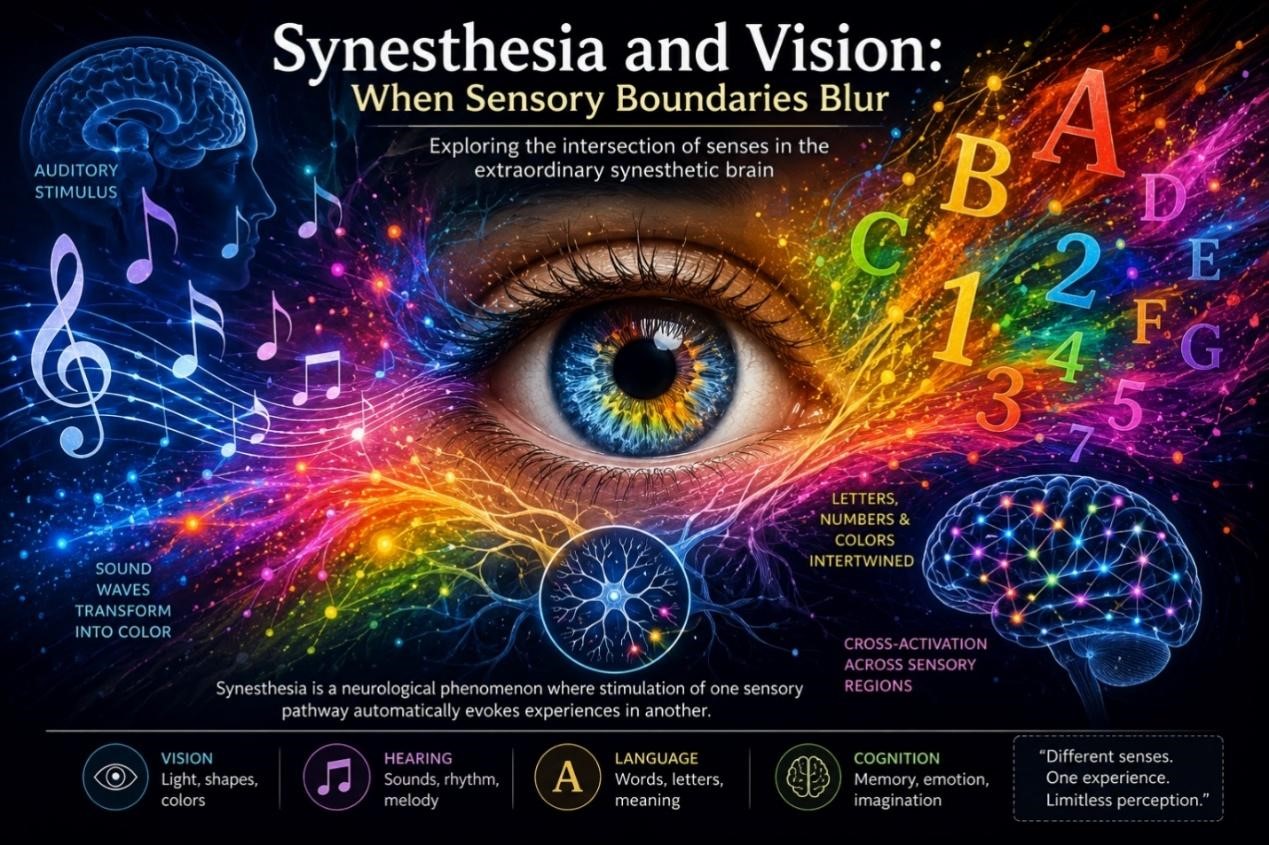
Figure 1: The image shows synesthesia and vision.
Image Courtesy: Created by the Author
Beyond the Eye: Understanding Synesthesia
The term synesthesia derives from the Greek words syn (“together”) and aisthesis (“perception”), referring to a blending of sensory experiences. Individuals with synesthesia experience automatic and stable associations between otherwise unrelated sensory or cognitive domains.
A person with grapheme-colour synesthesia, for instance, may consistently perceive the letter “A” as red or the number “7” as green. Another individual may experience colours in response to musical notes, while some may associate words with specific tastes, textures, or spatial arrangements.
Importantly, these experiences are not metaphorical. They are perceptual realities for the individual experiencing them. Unlike imagination, which is voluntary and variable, synesthetic perceptions are involuntary, highly consistent over time, and remarkably specific.
The significance of synesthesia lies not in its rarity, but in what it reveals about the brain’s capacity to integrate information across sensory domains. (2,3)
Vision as a Construct of the Brain
The study of synesthesia challenges one of the most enduring misconceptions in vision science-that seeing is primarily a function of the eyes.
While the retina captures light and transmits information through the optic pathways, the experience of vision emerges only after extensive cortical processing. Colour, motion, depth, form, and meaning are not properties directly observed by the eyes; rather, they are interpretations generated by distributed neural networks.
Synesthesia provides compelling evidence for this principle.
Neuroimaging studies have demonstrated that when individuals with grapheme-colour synesthesia view letters or numbers, activation occurs not only in regions associated with symbol recognition but also in cortical areas involved in colour processing, particularly area V4 of the visual cortex. Remarkably, this activation occurs even when no actual colour stimulus is present.
Such findings reinforce an important concept in Neuroscience: perception is not a mirror of reality but a construction of the brain. (4-6)
The Neural Architecture of Synesthesia
Although the precise mechanisms underlying synesthesia remain under investigation, several influential theories have emerged.
| Theory | Key Explanation | Supporting Evidence |
|---|---|---|
| Cross-Activation Theory | Suggests enhanced structural connectivity between adjacent sensory regions in the brain, such as grapheme and color-processing areas. This increased connectivity allows stimulation in one sensory domain to directly activate another. | Neuroimaging studies have demonstrated greater white matter connectivity in synesthetic individuals, particularly between neighboring cortical regions. |
| Disinhibited Feedback Theory | Proposes that synesthesia arises from reduced inhibitory control within neural feedback pathways, permitting normally suppressed cross-modal activations to reach conscious awareness. | Functional MRI and electrophysiological studies indicate atypical feedback processing and altered inhibitory mechanisms in synesthetes. |
| Enhanced Network Connectivity Theory | Argues that synesthesia results from widespread alterations in both structural and functional brain networks, involving not only adjacent sensory regions but also higher-order associative networks. | Whole-brain connectivity analyses have revealed increased global network integration and atypical communication between sensory and associative brain regions in synesthetic individuals. |
Table 1:
The table shows the major theories explaining synesthesia.
Cross-Activation Theory
One of the most widely accepted explanations proposes that adjacent cortical regions exhibit atypical structural connectivity.
For example, in grapheme-colour synesthesia, regions responsible for processing graphemes lie anatomically close to those involved in colour perception. Increased neural connectivity between these areas may result in simultaneous activation, allowing the perception of colour whenever letters or numbers are encountered. (6)
Disinhibited Feedback Theory
An alternative explanation suggests that synesthetic experiences arise not from additional neural connections but from reduced inhibition of existing pathways.
The human brain is characterised by extensive interconnectivity between sensory regions. Under typical circumstances, inhibitory mechanisms regulate information flow between these systems. In synesthesia, diminished inhibition may permit signals to spread across sensory networks, producing cross-modal experiences. (6-8)
Enhanced Network Connectivity
More recent studies employing diffusion tensor imaging and functional neuroimaging have identified widespread differences in structural and functional connectivity among synesthetes. These findings support the notion that synesthesia reflects alterations in large-scale neural networks rather than isolated cortical abnormalities.
Collectively, these theories underscore a broader neuroscientific principle: sensory processing is inherently interconnected rather than compartmentalised.(8)
Synesthesia and the Multisensory Brain
Historically, sensory systems were studied as discrete entities. Vision, hearing, touch, taste, and smell were viewed as separate channels transmitting independent streams of information.
Contemporary Neuroscience presents a markedly different picture.
The brain functions as a multisensory organ. Everyday perception relies on the integration of information across multiple modalities. Speech perception, for example, depends on both auditory and visual cues. Spatial orientation requires the coordinated processing of visual, vestibular, and proprioceptive inputs.
Synesthesia may represent an exaggerated manifestation of a principle that governs all perception-the continuous interaction of sensory systems.
Rather than being an anomaly, synesthesia may reveal mechanisms that operate, albeit less conspicuously, in every human brain.
Clinical Relevance to Vision Science
At first glance, synesthesia may appear distant from clinical Ophthalmology or Optometric practice. Yet its implications are surprisingly relevant.
For clinicians, synesthesia serves as a reminder that visual complaints do not always originate from ocular pathology. Visual experience is shaped not only by retinal integrity but also by cortical processing, cognitive interpretation, and neural integration.
This perspective is particularly valuable in fields such as:
- Neuro-ophthalmology
- Cerebral visual impairment (CVI)
- Visual perceptual disorders
- Neurodevelopmental conditions
- Rehabilitation following neurological injury
In these contexts, understanding vision requires looking beyond the eye and considering the broader neural systems responsible for perception.
The phenomenon of synesthesia further highlights the remarkable adaptability of the brain. The boundaries separating sensory systems are more permeable than once believed, emphasising the importance of network-based approaches to understanding visual function.
Creativity, Cognition, and Synesthetic Experience
The association between synesthesia and creativity has fascinated researchers for decades.
Several renowned artists, composers, and writers have described synesthetic experiences influencing their work, including the painter Wassily Kandinsky and the novelist Vladimir Nabokov.
Although synesthesia should not be equated with artistic talent, studies suggest that synesthetes often exhibit enhanced associative thinking and vivid mental imagery. The presence of multiple interconnected sensory representations may facilitate novel patterns of cognition and memory.
This observation aligns with broader theories of creativity, which emphasise the ability to establish connections between seemingly unrelated concepts.
In many respects, synesthesia exemplifies the brain’s extraordinary capacity for integration; a characteristic that underlies not only perception but also imagination, innovation, and learning.
Synesthesia and Consciousness
Perhaps the most profound contribution of synesthesia research lies in its implications for understanding consciousness itself.
Why does a particular neural event produce the subjective experience of red? Why does music evoke emotion? How does sensory information become conscious awareness?
These questions remain among the greatest challenges in Neuroscience.
Synesthesia offers a unique experimental model through which researchers can examine the relationship between neural activity and subjective experience. By studying how one stimulus generates multiple conscious percepts, scientists gain valuable insights into the mechanisms through which the brain constructs reality.
In this sense, synesthesia is not merely a sensory phenomenon. It is a window into the nature of consciousness.(8-10)
Conclusion
Synesthesia occupies a unique position at the crossroads of Neuroscience, Vision Science, Psychology, and Philosophy. Far from being a neurological curiosity, it challenges conventional assumptions about sensory processing and reveals the remarkable interconnectedness of the human brain.
For vision scientists and clinicians, synesthesia reinforces an essential lesson: vision is not confined to the eyes. It emerges from complex networks that integrate sensory information, memory, attention, and cognition into a unified perceptual experience.
As advances in neuroimaging and cognitive Neuroscience continue to deepen our understanding of the brain, synesthesia remains one of the most compelling demonstrations that perception is an active creation rather than a passive recording of reality.
The study of synesthesia reminds us that the boundaries between the senses-and perhaps between perception and cognition themselves-are far more fluid than we once imagined. In exploring how some individuals hear colours or see sounds, we gain a deeper appreciation of how all human beings experience the world.
References
- Baron-Cohen, S., Johnson, D., Asher, J., Wheelwright, S., Fisher, S. E., Gregersen, P. K., & Allison, C. (2013). Is synaesthesia more common in autism? Molecular Autism, 4(1), 40. https://doi.org/10.1186/2040-2392-4-40
- Cytowic, R. E., & Eagleman, D. M. (2009). Wednesday is indigo blue: Discovering the brain of synesthesia. MIT Press.
- Eagleman, D. M. (2009). The objectification of overlearned sequences. Cortex, 45(10), 1266–1277. https://doi.org/10.1016/j.cortex.2009.06.012
- Grossenbacher, P. G., & Lovelace, C. T. (2001). Mechanisms of synesthesia: Cognitive and physiological constraints. Trends in Cognitive Sciences, 5(1), 36–41. https://doi.org/10.1016/S1364-6613(00)01571-0
- Hubbard, E. M., & Ramachandran, V. S. (2005). Neurocognitive mechanisms of synesthesia. Neuron, 48(3), 509–520. https://doi.org/10.1016/j.neuron.2005.10.012
- Ramachandran, V. S., & Hubbard, E. M. (2001). Synaesthesia: A window into perception, thought and language. Journal of Consciousness Studies, 8(12), 3–34.
- Rouw, R., & Scholte, H. S. (2007). Increased structural connectivity in grapheme-colour synesthesia. Nature Neuroscience, 10(6), 792–797. https://doi.org/10.1038/nn1906
- Simner, J., Mulvenna, C., Sagiv, N., Tsakanikos, E., Witherby, S. A., Fraser, C., Scott, K., & Ward, J. (2006). Synaesthesia: The prevalence of atypical cross-modal experiences. Perception, 35(8), 1024–1033. https://doi.org/10.1068/p5469
- Ward, J. (2013). Synesthesia. Annual Review of Psychology, 64, 49–75. https://doi.org/10.1146/annurev-psych-113011-143840
- Ward, J., & Simner, J. (2003). Lexical-gustatory synaesthesia: Linguistic and conceptual factors. Cognition, 89(3), 237–261. https://doi.org/10.1016/S0010-0277(03)00122-7
About the Author

Tiyasa Khanra
Assistant Professor and Head of Department,
Recent Comments