Parbati Gaire, B. Optom
Himalaya Eye Institute, Pokhara, Nepal
Step into any classroom and a striking trend becomes evident—nearly half of the children are wearing glasses. With the advancement of teaching methods incorporating Artificial Intelligence (AI) and virtual technologies, learning and eye health appear to be developing an inverse relationship, though both remain equally important. This raises an important question: can the progression of myopia truly be attributed to screen time alone, or are there deeper underlying factors contributing to this growing epidemic? Understanding the real drivers of childhood myopia is essential for effective prevention and control.
How Big is the Problem?
Globally, childhood myopia is rising at an alarming rate. Recent studies suggest that by 2050, the global incidence of myopia may exceed 740 million cases. (1) A recent meta-analysis found that every additional hour of daily screen time increases a child’s risk of developing myopia by 21%, with the steepest rise occurring between 1–4 hours per day, while less than 1 hour may be relatively safe. (2) These findings highlight that although screens are not the sole cause, limiting screen exposure and encouraging outdoor activity play a crucial role in protecting children’s vision.
Screens and Near Work: A Key Factor to Note
Excessive screen use contributes to myopia progression primarily through sustained near work and reduced exposure to outdoor light. Prolonged near focusing places constant accommodative stress on the visual system, while limited outdoor exposure disrupts protective mechanisms that regulate eye growth.
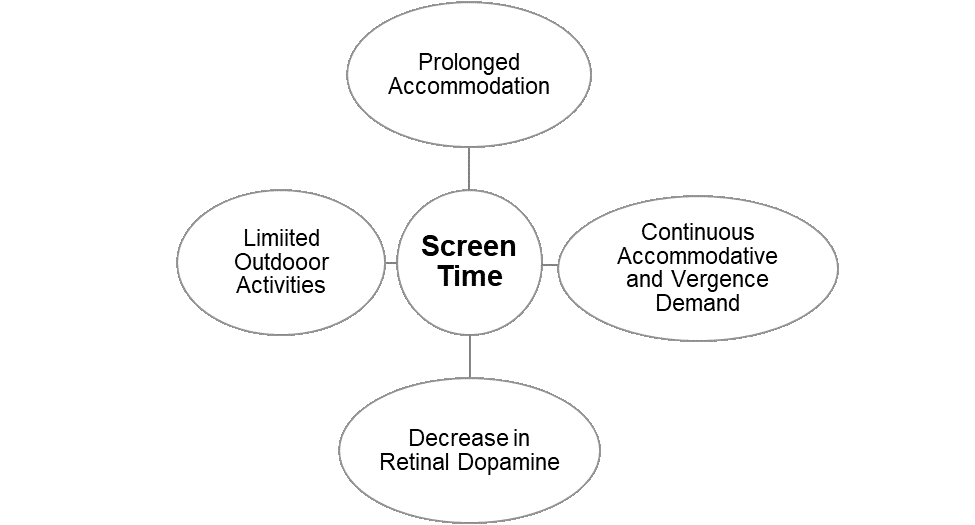

Figure 1: Mechanisms Linking Screen Time to Myopia Progression
| Mechanism / Factor | Description |
|---|---|
| Excessive Near-Work Accommodation | Constant near focus places stress on the accommodative system, contributing to myopia progression. (2) |
| Reduced Outdoor Exposure | Bright outdoor light boosts dopamine release, helping slow axial eye growth. (2) |
| Decreased Retinal Dopamine Release | Dopamine plays a critical role in regulating axial elongation of the eye. (2) |
| Irregular Sleep Patterns | Disrupts normal emmetropisation processes during ocular development. (4) |
Table 1: Explanation of the Various Mechanisms Regulating Axial Elongation
Nature vs Nurture in Myopia: Is Screen Time the Cause or Just a Trigger?
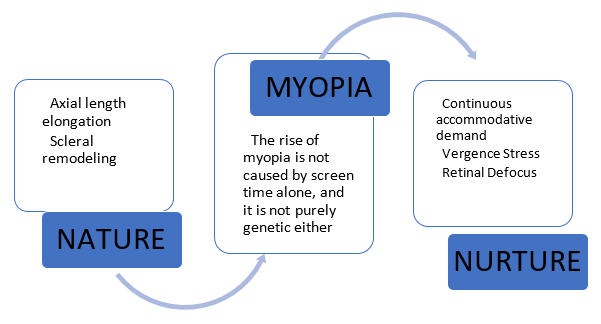

Figure 2: Interaction Between Genetic Predisposition and Environmental Factors in Myopia Development
- Genetics: Children with one Myopic parents have a higher risk; both parents double risk (5)
- Educational Demands: Longer school hours, extensive homework and tuition classes increase near-work strain (6)
- Visual Habits: Reading at a very close distance, poor lighting, and inadequate posture exacerbate Myopia risk (3)
The combination of these factors with high screen exposure accelerates early-onset Myopia and its progression.
Why Early-Onset Myopia Matters
yopia progression typically starts in childhood, usually between ages 6-14, and progresses most rapidly between ages 7-10. (7) Children who develop early Myopia are more likely to progress to high Myopia, which increases lifetime risk of:
- Retinal Detachment
- Myopic Maculopathy
- Glaucoma
- Early Cataract
Role of Optometrists
- Early detection
- Lifestyle modifications
- Myopia control interventions
- Community education
- Axial length monitoring
Conclusion
Childhood Myopia is rising due to near work, limited outdoor time, and poor visual habits, not screens alone. Early intervention with outdoor play, balanced screen use, and myopia-control strategies can help protect long-term vision.
References
- Islam, A. S., et al. (2024). Global burden of overweight-obesity and its association with economic status. Preventive Medicine Reports, 46, 102882.
- Ha, A., et al. (2025). Digital screen time and myopia: A systematic review. JAMA Network Open, 8(2).
- Zhou, X., et al. (2017). Dopamine signalling and myopia development. Progress in Retinal and Eye Research, 61, 60–71.
- Saeed, R., et al. (2020). Prevalence of convergence insufficiency and visual symptoms. Pakistan Journal of Medical & Health Sciences, 14(4).
- Jiang, X., et al. (2020). Parental myopia and risk among children. JAMA Ophthalmology, 138(5), 501–509.
- Ezinne, N. E., et al. (2025). Prevalence of binocular vision anomalies. British and Irish Orthoptic Journal, 21(1).
- Liang, J., et al. (2025). Global prevalence and projection of myopia. British Journal of Ophthalmology, 109(3), 362–371.
About the Author