
Pushpender Tewatia (1), B. Optom Student
Kritika Gautam (2), Lecturer
GD Goenka University, Gurugram, India
AI-Assisted Refraction in Optometry
Artificial Intelligence (AI) is rapidly transforming healthcare, and optometry is no exception. AI-assisted refraction is increasingly being adopted in eye care clinics to support Optometrists rather than replace them. When used responsibly, AI enhances diagnostic accuracy, improves workflow efficiency, and helps deliver better patient care. (1)
AI-Assisted Refraction Techniques Available in Optometry
AI-assisted refraction uses a range of technologies that support different stages of refractive assessment rather than relying on a single method. These techniques help improve precision, efficiency, and consistency while maintaining the central role in decision-making of the Optometrist. (2)
1. Automated Refraction Systems with AI Algorithms
Advanced autorefractors integrated with AI analyse large volumes of refractive data to generate more adaptive and refined measurements. They are commonly used as an objective starting point before subjective refinement. (3)
2. Wavefront Aberrometry-Based AI Refraction
Wavefront Aberrometry measures the way light is distorted as it passes through the eye, capturing both Lower Order Aberrations (LOA) and Higher Order Aberrations (HOA). (4)
Figure 1: Image showing Waveform Background Vector Illustration
Image Courtesy: https://www.freepik.com/free-vector/seamless-vector-waveform-background-illustration-with-text-space-horizontally repeatable_413631121.htm
3. AI-Driven Subjective Refraction Assistance
AI-enabled digital refraction platforms assist subjective refraction by predicting patient responses based on prior answers and population-level data. (5)
4. Image-Based Refraction Using Retinal and Anterior Segment Analysis
Certain AI models estimate refractive errors by analysing fundus photographs or anterior segment images. This method is useful in screening programs and tele-optometry services where full refraction setups are unavailable. (6)
5. Tele-Refraction and Remote AI Refraction Tools
AI-assisted tele-refraction systems enable remote refractive assessment under professional supervision. These tools expand access to basic refractive care in rural and underserved regions. (4)
6. Clinical Decision Support Systems in Refraction
AI-based clinical decision support systems integrate refractive findings with visual acuity, patient history, and ocular health data. (3)
Benefits of AI-Assisted Refraction in Optometry
AI-assisted refraction offers multiple advantages by combining advanced algorithms with clinical expertise to enhance accuracy, efficiency, and patient satisfaction in eye care practice. (7,8)
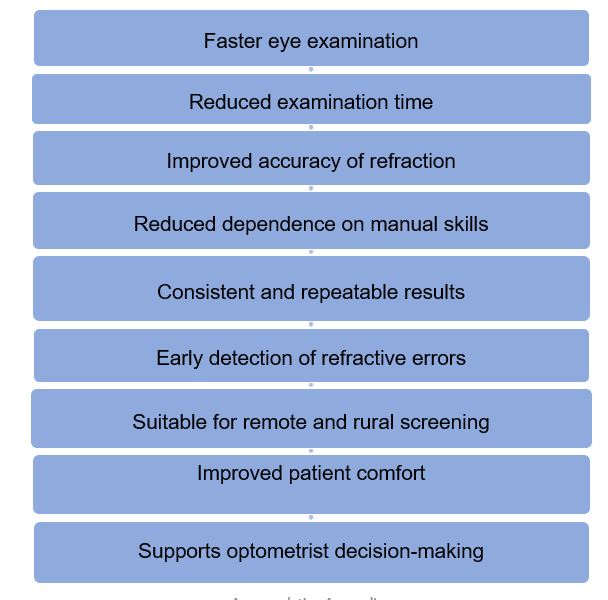
Figure 2: Image showing Benefits of AI-assisted Refraction
Image Courtesy: Created by the Author
Challenges of AI in Optometry
1. Limited Human Interaction: Clinical decision-making often requires emotional understanding, while AI is highly effective at processing large volumes of data. (9)
2. Challenges in Managing Complex Eye Conditions: AI systems may face difficulties in real-world clinical settings, especially when dealing with unclear images and multiple co-existing eye conditions. (10)
3. Concerns About Data Quality and Reliability: The accuracy of AI-based tools largely depends on the quality and diversity of the data used to train them. (11)
4. Ethical and Legal Issues: Issues related to patient privacy, data security, accountability for AI-driven decisions, and regulatory compliance continue to pose significant challenges for widespread clinical adoption. (10)
Conclusion
AI-assisted refraction is not a replacement for Optometrists but a powerful, supportive tool. The future of Optometry lies in a collaborative model where AI enhances human expertise, enabling more accurate, efficient, and patient-centred eye care. Responsible adoption of AI will help eye care professionals improve patient outcomes while staying technologically competitive. (1,8)
References
- Fuentes S, González P, Muñoz L, et al. The role of artificial intelligence in optometric diagnostics and research: deep learning and time-series forecasting applications. Technologies (Basel). 2025;13(2):77.
- Grzybowski A, Jin K, Zhou J, et al. Retina fundus photograph-based artificial intelligence algorithms in medicine: a systematic review. Ophthalmol Ther. 2024;13:2125–2149. doi:10.1007/s40123-024-00981-4.
- Alnahedh TA, Taha M. Role of machine learning and artificial intelligence in the diagnosis and treatment of refractive errors for enhanced eye care: a systematic review. Cureus. 2024;16(4): e57706. doi:10.7759/cureus.57706.
- Kovács I, Miháltz K, Kránitz K, et al. Accuracy of artificial intelligence–based objective refraction using wavefront aberrometry. J Cataract Refract Surg. 2020;46(8):1134–1140.
- Krishnan A, Dutta A, Srivastava A, Konda N, Prakasam RK. Artificial intelligence in optometry: current and future perspectives. Clin Optom (Auckl). 2025; 17:83–114.
- Varadarajan AV, Poplin R, Blumer K, Angermueller C, Ledsam J, Chopra R, et al. Deep learning for predicting refractive error from retinal fundus images. Invest Ophthalmol Vis Sci. 2018;59(7):2861–2868. doi:10.1167/iovs.18-23887.
- Sanil Joseph, Selvaraj J, Mani I, Kumaragurupari T, Shang X, Mudgil P, Ravilla T, He M. Diagnostic accuracy of artificial intelligence-based automated diabetic retinopathy screening in real-world settings: a systematic review and meta-analysis. Am J Ophthalmol. 2024;263:214–230
- Kohli P, Goud A, Barua R, et al. Real-world evaluation of AI-driven diabetic retinopathy screening in public health settings. JMIR Med Inform. 2025;13:e67529.
- Okore NE. Bridging the vision gap: role of artificial intelligence in diabetic retinopathy detection in low-resource settings. Int J Res Innov Appl Sci (IJRIAS). 2025;10(5):632–642.
- Li J, Hu Z, Zhang Y, et al. Artificial intelligence in ophthalmology: progress, challenges, and ethical implications. Eye (Lond). 2025;39(3):512–524.
- Amin S, Kumar A, Gupta R, et al. Artificial intelligence in optometry: perspectives, potential benefits, and limitations. Clin Exp Optom. 2025;108(1):15–29.
About the Author

Pushpender Tewatia
B. Optom Student
GD Goenka University, Gurugram, India

Kritika Gautam
Lecturer
Recent Comments