


Sathishkumar Sundaramoorthy, M. Sc. in Neuroscience
PhD Student, Nantes University, Nantes, France
Surgical procedures have progressively evolved from traditional open surgery to Minimally Invasive Surgery (MIS) and microsurgery. This transition has resulted in significant patient-related benefits such as reduced complications, faster recovery, and decreased risk of postoperative complications. (1) However, from the perspective of the surgeon, this progression has introduced specific challenges, primarily due to changes in
intraoperative visual access and depth perception.
In open surgeries, surgeons operate under direct visualisation. The use of natural binocular vision offers access to disparity-based depth cues, which support greater precision and spatial accuracy. (1) These visual mechanisms are fundamental to the safe manipulation of tissue and the reliable execution of procedural steps.
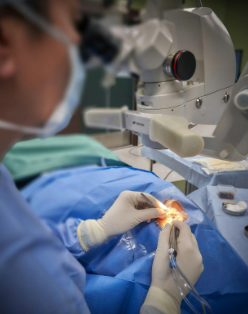

Figure 1: Minimally Invasive Surgery With a Binocular Microscope.
Image Courtesy
https://unsplash.com/photos/a-person-in-a-surgical-gown-is-performing-surgery-j2WaWX2_IpA
The Challenge of 2D Visualisation in MIS
With MIS, the visual modality is transformed, and surgeons operate using 2D video feeds obtained through endoscopic or laparoscopic monocular camera systems. This removes binocular disparity from the visual environment and forces reliance on monocular depth cues such as shading, motion parallax, and texture gradient. These cues are comparatively weak and task dependent, and their absence of disparity compromises depth estimation accuracy.
Emergence of 3D Imaging Platforms
In response to these limitations, 3D imaging platforms have been developed. These systems use dual lens cameras to record stereoscopic video, which is displayed using active or passive stereoscopic technologies. (2) These approaches recreate horizontal disparity and allow for simulated binocular depth cues to be presented on screen. The visual enhancement provided by these systems has been shown to improve task accuracy, reduce surgical time, and reduce the workload associated with reconstructing spatial orientation from flat imagery.
Evidence from Surgical Studies
The evidence from surgical studies highlights the positive impact of disparity-based systems on intraoperative performance. (3,4) However, the clinical application of these technologies must also consider ergonomic factors, long-term ocular comfort, and the disparate demands of different procedural types.
Further research is required to determine the optimal baseline settings, screen distances, and disparity rendering modes that provide maximal benefit without inducing visual discomfort. Additionally, incorporating individual visual profiles into surgical workstation design may improve user adaptation and long-term visual efficiency.
| Visualisation Modality | Depth Cues Available | Impact on Performance |
|---|---|---|
| Open Surgery | Natural binocular disparity + monocular cues | High precision, spatial accuracy |
| MIS (2D video) | Only monocular cues (shading, texture, parallax) | Increased errors, longer task time |
| 3D Stereoscopic Systems | Simulated binocular disparity + monocular cues | Improved accuracy, reduced task time, better training |
Table 1: Comparative Impact of Visualisation Modalities in Surgery
Image Courtesy
Created by the Author
Conclusion
Binocular disparity is a fundamental determinant of visuomotor accuracy in surgery. The transition from open surgery to MIS has highlighted the limitations of monocular cues in complex tasks, especially for novice surgeons. The introduction of 3D stereoscopic visualisation has partially restored these cues. Future surgical platforms must optimize visual ergonomics and personalisation of disparity rendering to maximise clinical benefit and long-term ocular comfort.
References
- Bogdanova, R., Boulanger, P., & Zheng, B. (2016). Depth perception of surgeons in minimally invasive surgery. Surgical innovation, 23(5), 515-524.
- Rahman, R., Wood, M. E., Qian, L., Price, C. L., Johnson, A. A., & Osgood, G. M. (2020). Head-mounted display use in surgery: a systematic review. Surgical innovation, 27(1), 88-100.
- Restaino, S., Scutiero, G., Taliento, C., Poli, A., Bernardi, G., Arcieri, M., … & Vizzielli, G. (2023). Three-dimensional vision versus two-dimensional vision on laparoscopic performance of trainee surgeons:
a systematic review and meta-analysis. Updates in Surgery, 75(3), 455-470. - Read, J. C., & Bohr, I. (2014). User experience while viewing stereoscopic 3D television. Ergonomics, 57(8), 1140-1153.
About the Author


Sathishkumar Sundaramoorthy
PhD Student