


Faisal Khurshid, B. Optom Student
M. Optom Student, Dolphin PG College, Fatehgarh Sahib, India
Introduction
A mental illness can be defined as a health condition that changes a person’s thinking, feelings, or behavior (or all three) and that causes the person distress and difficulty in functioning. (1) There are many different mental illnesses, including Depression, Schizophrenia, Attention Deficit Hyperactivity Disorder (ADHD), Autism, and Obsessive Compulsive Disorder. (2) According to a recent research, the retina, a direct extension of the brain, may be used as a non-invasive biomarker for the detection and tracking of a number of neurological and psychiatric conditions, including Multiple Sclerosis (MS), Parkinson’s disease (PD), and Alzheimer’s disease (AD). (3) This development offers a new frontier where Optometrists may play a key role in mental health care.
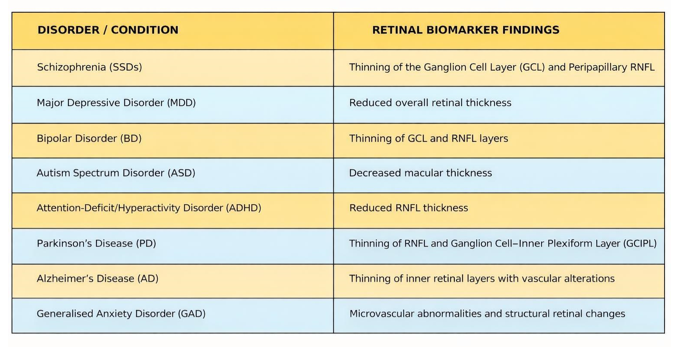

Table 1: This table shows retinal biomarkers observed in psychiatric and neurodegenerative disorders
Scientific Background: The Eye-Brain Connection
There is a strong morphological and physiological bond between the retina and brain since they both have the same embryological origin, having been produced from the neuroectoderm. (4) Optical Coherence Tomography (OCT), Electroretinography (ERG), and Optical Coherence Tomography Angiography (OCTA) are examples of advanced imaging techniques that enable clinicians to see structural and functional alterations in the retina that correspond with neurological diseases. (5)
Key Evidence: Retinal Biomarkers Across Psychiatric Disorders
- OCT has shown notable thinning in the ganglion cell and peripapillary retinal nerve fibre layer (pRNFL) in Schizophrenia Spectrum Disorders (SSDs). Retinal thinning is linked to the length and intensity of symptoms of Schizophrenia. (6)
- Retinal thickness is also decreased in patients with Major Depressive Disorder (MDD), which may be a reflection of brain grey matter atrophy. (7)
- Bipolar disorder (BD) has also been connected to alterations in the retina, including thinning of the ganglion cell and RNFL layers, which may be related to the severity of symptoms and length of illness. (8)
- Research indicates that adults with Autism exhibit decreased macular thickness, whereas people with ADHD frequently have thinner RNFL. (9,10)
- Parkinson’s Patients exhibit thinning of the RNFL and ganglion cell-inner plexiform layer (GCIPL), which correlates with the severity of the disease, whereas Alzheimer’s patients exhibit thinning of inner retinal layers and alterations in retinal vasculature. (11,12)
- In Parkinson’s decreased DLS values occur because retinal dopamine loss and nerve thinning impair light sensitivity. This makes the whole pattern show lower dB numbers compared to a healthy control.
- Additionally, retinal imaging is showing promise in identifying alterations associated with anxiety. OCT and OCTA show microvascular abnormalities and retinal structural changes in patients with Generalized Anxiety Disorder (GAD). (13)
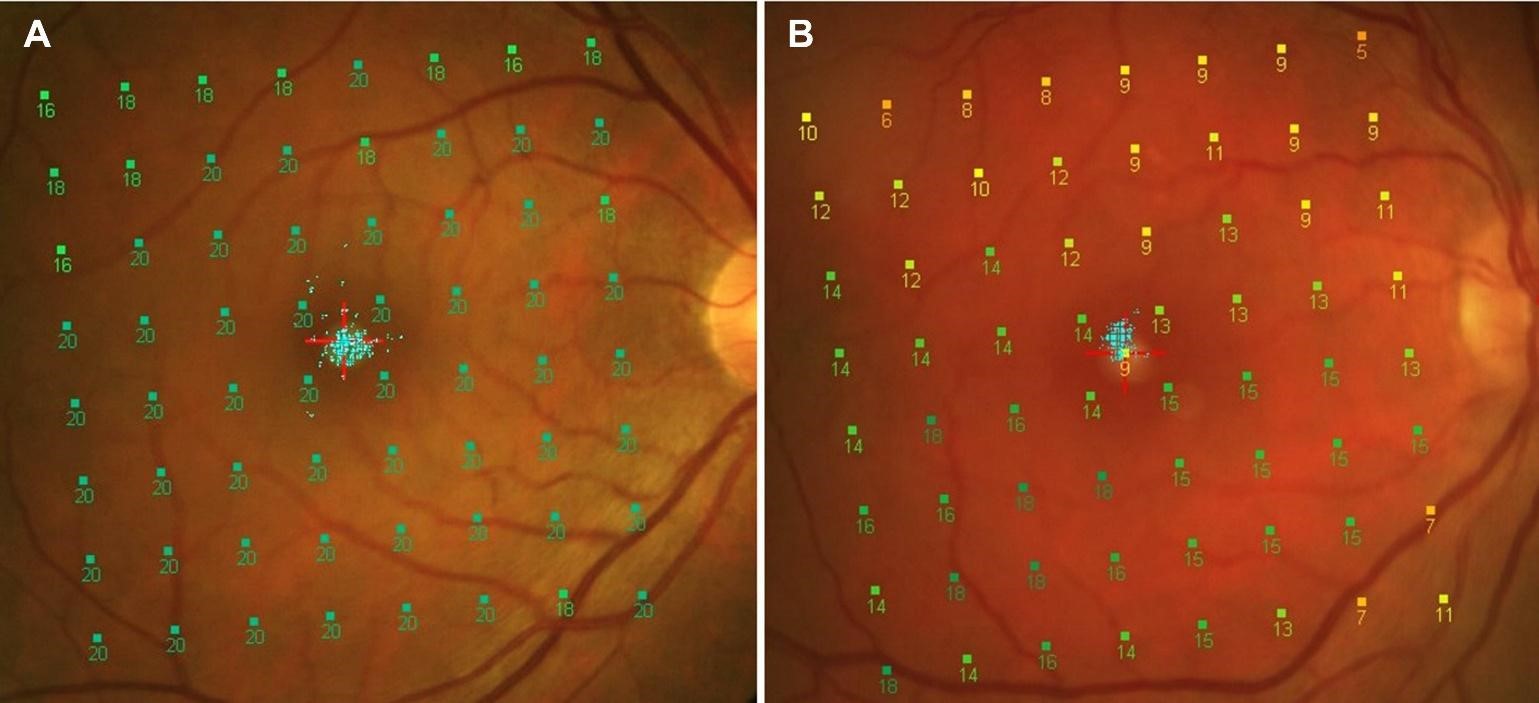

Figure 1: This image shows PPole MP1 maps comparing a healthy control (A) with normal sensitivity to a Parkinson’s patient (B), who shows a widespread decrease in retinal DLS values
Image Courtesy:
https://pmc.ncbi.nlm.nih.gov/articles/PMC8500491/
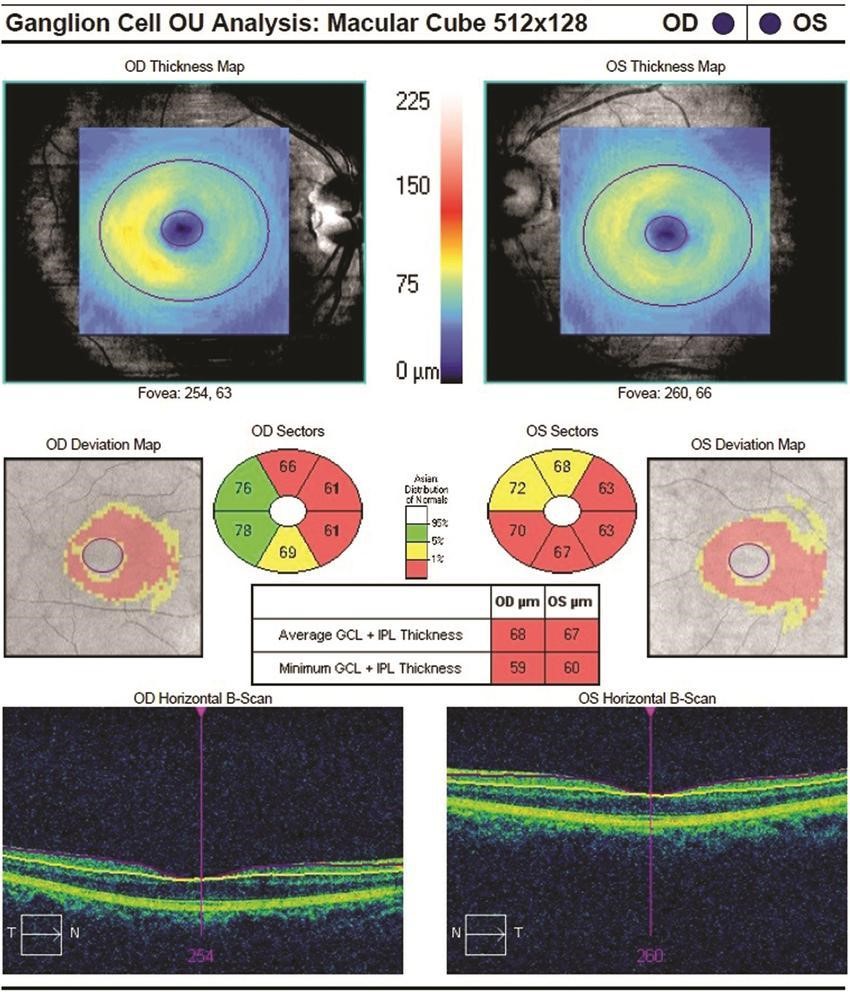

Figure 2: This image shows decreased retinal thickness in patients with Alzheimer’s disease is correlated with disease severity
Image Courtesy:
https://pmc.ncbi.nlm.nih.gov/articles/PMC6830808/
Conclusion
These advancements raise the possibility that Optometrists will soon use easily accessible instruments like OCT to engage in mental health screening. But there are ethical issues that need to be addressed, including patient consent, privacy, and the possibility of stigmatisation. Furthermore, longitudinal research is needed to confirm these results in a variety of demographics.
To sum up, the retina might develop into an essential window into mental wellness. As research continues, Optometrists may be able to protect the mind in addition to maintaining vision through early, accessible, and objective diagnostics.
References
- Study BS, National Institutes of Health. Information about Mental Illness and the Brain. InNIH Curriculum Supplement Series [Internet] 2007. National Institutes of Health (US).
- Yap TE, Balendra SI, Almonte MT, Cordeiro MF. Retinal correlates of neurological disorders. Therapeutic advances in chronic disease. 2019 Nov;10:2040622319882205.
- Kashani AH, Asanad S, Chan JW, Singer MB, Zhang J, Sharifi M, Khansari MM, Abdolahi F, Shi Y, Biffi A, Chui H. Past, present and future role of retinal imaging in neurodegenerative disease. Progress in retinal and eye research. 2021 Jul 1;83:100938.
- Suh A, Ong J, Kamran SA, Waisberg E, Paladugu P, Zaman N, Sarker P, Tavakkoli A, Lee AG. Retina oculomics in neurodegenerative disease. Annals of Biomedical Engineering. 2023 Dec;51(12):2708-21.
- Shew W, Zhang DJ, Menkes DB, Danesh-Meyer HV. Optical coherence tomography in schizophrenia spectrum disorders: A systematic review and meta-analysis. Biological Psychiatry Global Open Science. 2024 Jan 1;4(1):19-30.
- Liu Y, Chen J, Huang L, Yan S, Gao D, Yang F. Association between changes in the retina with major depressive disorder and sleep quality. Journal of Affective Disorders. 2022 Aug 15;311:548-53.
- Schönthaler E, Aminfar H, Dalkner N, Fellendorf FT, Georgi J, Lenger M, Wedrich A, Reininghaus EZ. Retinal Optical Coherence Tomography in Bipolar Disorder: A Scoping Review. Neuropsychobiology. 2025 Apr 1;84(2):100-12.
- Montazeri F, Liu YA, Emami-Naeini P. Retinal Structures in Autism Spectrum Disorder: Results from a Case-Control Study. Ophthalmology Science. 2025 Jun a3:100842.
- Li SL, Kam KW, Chee AS, Zhang XJ, Chen LJ, Yip WW, Tham CC, Young AL, Wong IC, Ip P, Yam JC. The association between attention-deficit/hyperactivity disorder and retinal nerve fiber/ganglion cell layer thickness measured by optical coherence tomography: a systematic review and meta-analysis. International Ophthalmology. 2021 Sep;41(9):3211-21.
- Chrysou A, Jansonius NM, van Laar T. Retinal layers in Parkinson’s disease: a meta-analysis of spectral-domain optical coherence tomography studies. Parkinsonism & related disorders. 2019 Jul 1;64:40-9.
- Yuan A, Lee CS. Retinal biomarkers for Alzheimer disease: the facts and the future. Asia-Pacific Journal of Ophthalmology. 2022 Mar 1;11(2):140-8.
- Abdala MA, Geilani NA, Masuod SM, Abdulkarim NA, ILSAKER IA. Retinal morphology and microvasculature density alterations in generalized anxiety disorders. Journal of the Egyptian Ophthalmological Society. 2024 Oct 1;117(4):286-91.
About the Author


Faisal Khurshid
M. Optom Student
Dolphin PG College, Fatehgarh Sahib, India