


Muskan Kumari(1), B. Optom
Roshni Sengupta(2) B. Optom Student(1)
Assistant Professor(2), GD Goenka University, Gurugram, Haryana, India
Cat Scratch Disease (CSD) is a zoonotic infection principally caused by the bacterium Bartonella henselae. Domestic cats serve as the primary source, making CSD the most common presentation of human bartonellosis. (1) The bacterium’s unique tropism for erythrocytes and vascular endothelium underpins its diverse clinical pathology. Approximately 55% of cases occur in children younger than 18 years, with 60% affecting males. (2)
The Path Less Clean: How the Microbe Travels
The organisms’ journey involves a complex cycle between the cat reservoir and the cat flea (Ctenocephalides felis). (3) Humans are infected via intradermal inoculation of B. henselae laden flea faeces, which is present on a cat’s claws or oral cavity, through a scratch, bite, or lick (Figure 1). Kittens under one year are significantly more likely to be bacteremic than adult cats. (4) Stray, feral, or outdoor cats also have a higher prevalence of infection and flea infestation, substantially increasing the human transmission risk. (5)
While CSD affects individuals across all age groups, immunosuppression is the primary risk factor for severe angioproliferative disease such as bacillary angiomatosis. (6) However, serious ocular and neurological complications frequently occur in immunocompetent individuals as well. (2)
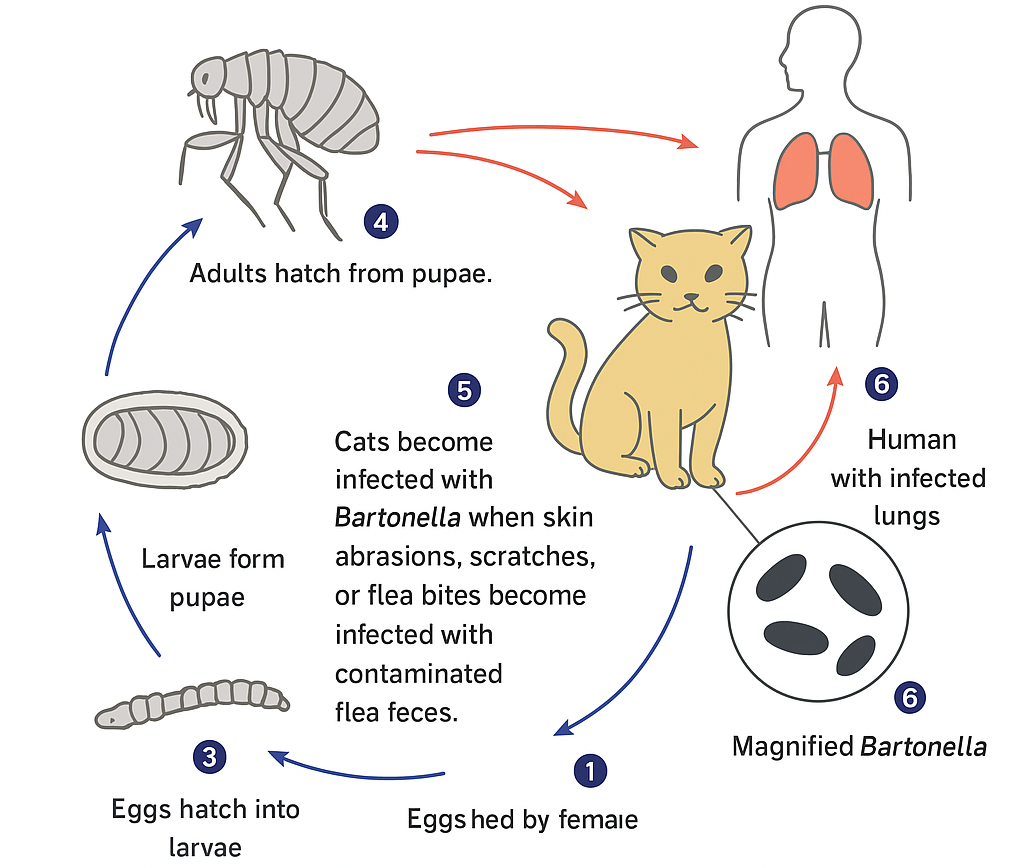

Figure 1: The Life Cycle of Bartonella
Beyond a Scratch: Recognising the Hidden Foe
The classic presentation of CSD begins with a primary inoculation papule, followed by tender regional lymphadenopathy developing one to three weeks later, which may suppurate. (2) Systemic symptoms and atypical manifestations, particularly ocular complications, occur in approximately 5–10% of patients. (7) Diagnosis relies on clinical suspicion, supported by serology using the Indirect Fluorescence Antibody Test as a first-order investigation, and Polymerase Chain Reaction (PCR) as the gold standard for specificity, including intraocular fluid PCR in cases of ocular CSD. (6)
When Vision Blurs: The Sight-Threatening Fallout
Ocular CSD is a potentially sight-threatening condition that often presents without systemic symptoms or classic lymphadenopathy, creating a significant diagnostic challenge. (2)
Neuroretinitis is the most characteristic ocular manifestation and typically presents as a triad:
- Sudden, generally unilateral, profound loss of vision.
- Optic disc oedema representing swelling of the optic nerve head.
- Macular star formation characterised by lipid exudates in a star-shaped pattern around the macula
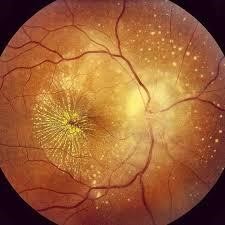

Figure 2: Cat-scratch Neuroretinitis
This constellation of findings is often labelled as idiopathic neuroretinitis when the aetiology is unclear; however, B. henselae remains one of the leading identifiable pathogens. (7) Other ocular manifestations include Parinaud’s oculoglandular syndrome, uveitis, focal retinochoroiditis, and retinal vascular occlusions. (2)
Prompt medical evaluation is essential to prevent long-term sequelae, particularly irreversible vision loss. (6)
The Best Defence: Strategies for Prevention
In immunocompetent individuals, mild systemic CSD without ocular involvement typically requires observation, although a short course of azithromycin may hasten lymphadenopathy resolution. Severe disease necessitates prolonged combination therapy, commonly doxycycline with rifamycin. (6) Preventive strategies include immediate wound cleansing, strict flea control, avoidance of rough play with cats, and maintaining appropriate hygiene to minimise the risk of vision-threatening outcomes. (3,5)
Conclusion
Cat scratch disease is usually a mild, self-limiting condition but can lead to serious ocular or systemic complications. This highlights the importance of early recognition, preventive measures, and timely medical intervention to safeguard visual and overall health.
References
- Cheslock, M. A., & Embers, M. E. (2019). Human bartonellosis: An underappreciated public health problem? Tropical Medicine and Infectious Disease, 4(2), 69.
- Nelson, C. A., Saha, S., & Mead, P. S. (2016). Cat-scratch disease in the United States, 2005–2013. Emerging Infectious Diseases, 22(10), 1741–1746.
- Florin, T. A., Zaoutis, T. E., & Zaoutis, L. B. (2008). Beyond cat scratch disease. Pediatrics, 121(5), e1413–e1425.
- Chomel, B. B., & Kasten, R. W. (2010). Bartonellosis, an increasingly recognized zoonosis. Journal of Applied Microbiology, 109(3), 743–750.
- Okaro, U., et al. (2017). Bartonella species and emerging infections. Clinical Microbiology Reviews, 30(3), 709–746.
- das Neves, L. F., et al. (2025). Zoonotic variants of Bartonella henselae. Comparative Immunology, Microbiology and Infectious Diseases, 123, 102398.
- Rolain, J.-M., et al. (2004). Recommendations for treatment of human infections caused by Bartonella species. Antimicrobial Agents and Chemotherapy, 48(6), 1921–1933.
About the Author


Muskan Kumari
B. Optom.
GD Goenka University, Gurugram, Haryana, India
