


Siva Priya S, M. Optom
Optometrist, Sankara Nethralaya, Chennai, India
Artificial Intelligence (AI) is rapidly transforming healthcare, and eye care is among the fields experiencing significant advancement. (1) In Optometry and Vision Science, the integration of AI with image analysis has created new opportunities for early disease detection, large-scale screening, and improved clinical decision-making. AI is emerging as a powerful tool to enhance efficiency and accuracy in clinical practice as eye care becomes increasingly data-driven. (2)
AI and Image Analysis in Eye Care
Artificial Intelligence refers to computer systems capable of learning from data and performing tasks such as classification and prediction without explicit programming. (2,3) In Optometry, AI primarily operates on ocular images, including fundus photographs, Optical Coherence Tomography (OCT) scans, corneal topography maps, and visual field plots. (3,4) Image analysis involves processing these images to extract clinically relevant features such as retinal nerve fibre layer thickness, blood vessel morphology, optic disc parameters, or corneal curvature indices. (3)
Most ophthalmic AI systems rely on deep learning techniques, particularly Convolutional Neural Networks (CNNs), which are highly effective in recognising complex patterns in medical images. These models are trained on large datasets of labelled images, enabling them to differentiate between normal and pathological findings with high accuracy. (2)
Development of AI Models in Optometry
The development of an AI model begins with identifying a clearly defined clinical problem, such as detecting Diabetic Retinopathy from fundus images or screening for keratoconus using corneal topography. Following the problem definition, large datasets of high-quality images are collected. (5)
A critical step in this process is data labelling, where trained Optometrists or Ophthalmologists annotate images based on clinical findings. Accurate labelling is essential, as it directly influences the reliability of the model. The images then undergo pre-processing steps such as noise reduction, normalisation, and resizing to standardise inputs. The AI model is subsequently trained and validated using independent datasets, with performance evaluated through metrics including sensitivity, specificity, and the receiver operating characteristic that is Area Under the Curve (AUC). (2,5)
Current Applications in Optometry
AI-based image analysis is already being applied in several areas of optometric care, including refractive screening, amblyopia screening, glaucoma detection using OCT and visual fields, keratoconus identification, age-related macular degeneration analysis, and Myopia progression prediction. (2,4) These applications are particularly valuable in community eye care programs and tele-optometry settings, where access to specialists may be limited and early detection is crucial. (6)
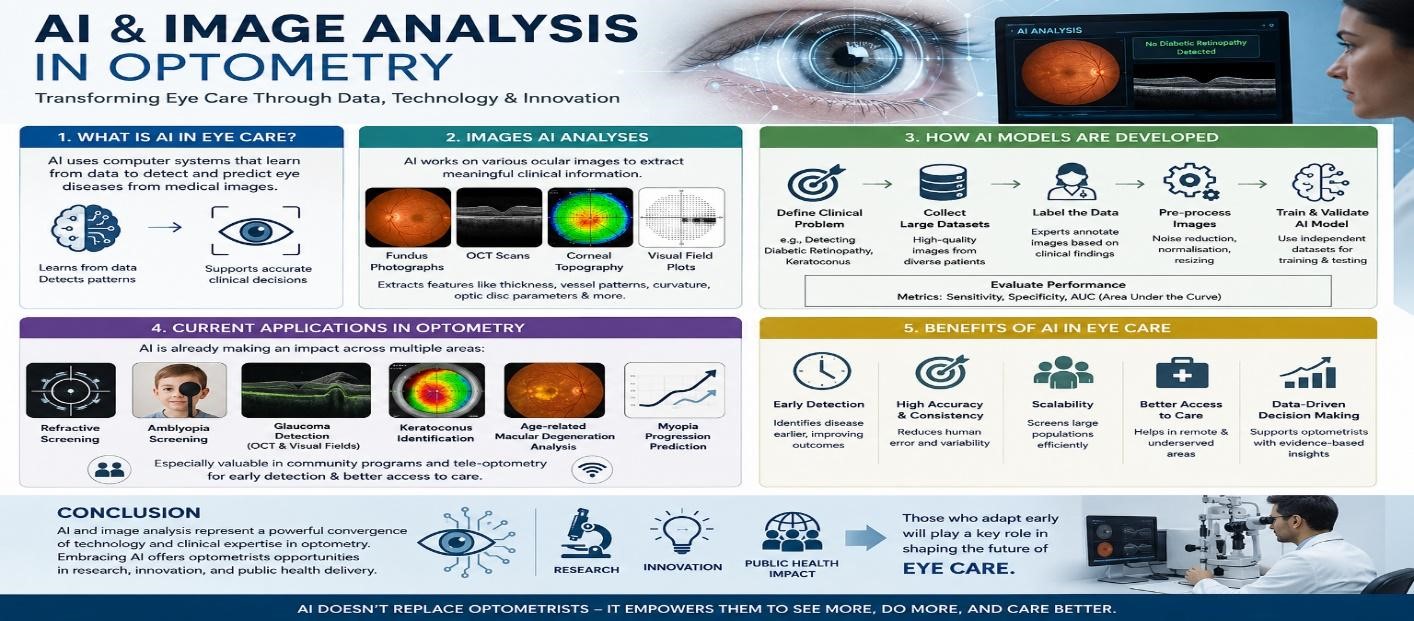

Figure 1: This image shows the AI and image analysis in Optometry.
Image Courtesy: Created by the Author
Conclusion
AI and image analysis represent a powerful convergence of technology and clinical expertise in Optometry. Embracing AI offers optometrists opportunities in research, innovation, and public health delivery. Those who adapt early will play a key role in shaping the future of eye care.
References
- Khosravi, M., Zare, Z., Mojtabaeian, S. M., & Izadi, R. (2024). Artificial Intelligence and Decision-Making in Healthcare: A Thematic Analysis of a Systematic Review of Reviews. Health Services Research and Managerial Epidemiology, 11, 23333928241234863.
- Krishnan, A., Dutta, A., Srivastava, A., Konda, N., & Prakasam, R. K. (2025). Artificial Intelligence in Optometry: Current and Future Perspectives. Clinical Optometry, 17, 83–114.
- Li, F., Chen, H., Liu, Z., Zhang, X. D., Jiang, M. S., Wu, Z. Z., & Zhou, K. Q. (2019). Deep learning-based automated detection of retinal diseases using optical coherence tomography images. Biomedical Optics Express, 10(12), 6204–6226.
- Kang, D. H., Yuan, L., Feng, J., Zhan, J., Grzybowski, A., Sun, W., & Jin, K. (2025). AI-assisted automated interpretation of corneal topography in orthokeratology patients: enhancing diagnostic precision and efficiency. International Journal of Ophthalmology, 18(12), 2217–2224.
- Uppamma, P., & Bhattacharya, S. (2023). Deep Learning and Medical Image Processing Techniques for Diabetic Retinopathy: A Survey of Applications, Challenges, and Future Trends. Journal of Healthcare Engineering, 2023, 2728719.
- Li, Y., Yip, M. Y. T., Ting, D. S. W., & Ang, M. (2023). Artificial intelligence and digital solutions for myopia. Taiwan Journal of Ophthalmology, 13(2), 142–150.
About the Author


Siva Priya S
Optometrist