


Bavirisetty Sai Balakrishna1, Head of Department
Kajal Shriprakash Singh2, Head of Department
1Pushpagiri Eye Foundation, Cuddapah, India; 2Krishna Eye Centre – An ASG Enterprise, Mumbai, India
The relationship between gastritis and the nervous system is a complex, bidirectional interplay, often referred to as the brain-gut axis. While gastritis is primarily an inflammatory condition of the stomach lining, its progression and symptoms are heavily influenced by the autonomic and central nervous systems, as well as endocrine mediators.
1. The Autonomic Nervous System (ANS) Connection
The ANS is the primary regulator of gastric function, balancing digestion and mucosal protection through two main branches: (1)
The Vagus Nerve (Parasympathetic): The vagus nerve stimulates the release of acetylcholine, which increases gastric acid secretion and promotes motility. In a healthy state, it also plays an “anti-inflammatory” role. However, overstimulation can lead to hyperacidity, exacerbating gastritis.
The Sympathetic Nervous System: During periods of high stress, the sympathetic nervous system triggers the “fight- or -flight” response. This reduces blood flow to the stomach lining (ischemia), weakens the protective mucus barrier and makes the stomach more susceptible to damage from acid or H. pylori.
2. The Central Nervous System (CNS) and Endocrinology
The CNS processes external stressors and internal pain signals, communicating with the stomach via the Hypothalamic Pituitary Adrenal (HPA) axis: (2)
Cortisol Release: Stress triggers the hypothalamus to signal the adrenal glands to release cortisol. While initially anti-inflammatory, chronic cortisol elevation can interfere with prostaglandin synthesis. Prostaglandins are essential for maintaining the stomach’s protective lining. (3)
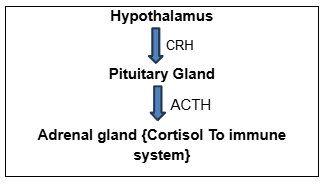

Figure 1: This flowchart shows the flow of cortisol release.
Image Courtesy: Created by the Author
Visceral Hypersensitivity: The CNS can “rewire” how it perceives pain. In chronic gastritis, the brain may become hypersensitive to normal digestive processes, leading to increased discomfort even when inflammation is minimal. (4)
3. The “Ciliary Body” and Ocular Connections
While the ciliary body (located in the eye) and the stomach seem unrelated, they are linked through shared autonomic pathways and systemic conditions:
Shared Nerve Supply: Both the stomach and the ciliary body are heavily regulated by the autonomic nervous system. The ciliary body controls accommodation and aqueous humor production via parasympathetic (muscarinic) and sympathetic receptors the same types of receptors that regulate gastric acid and mucus secretion.
The “Vicious Cycle” of Medications:Some medications used to treat gastric issues (like anticholinergics) can inadvertently affect the ciliary body, leading to blurred vision or changes in intraocular pressure. Conversely, systemic inflammatory conditions can sometimes manifest in both the gastrointestinal tract and the uveal tract (which includes the ciliary body).
4. Accommodation and Crystalline Lens Changes
The relationship between the stomach and the lens is often mediated by metabolic and biochemical shifts:
Biochemical Signaling:Chronic inflammation in the gut can lead to the release of systemic cytokines. These inflammatory markers can potentially reach ocular tissues, affecting the microenvironment of the crystalline lens.
Hydration and Osmotic Balance: Gastritis, especially if associated with malabsorption or endocrine imbalances, can affect systemic hydration. Since the lens is a highly hydrated structure, significant shifts in osmotic pressure can lead to subtle refractive changes or fluctuations in accommodative amplitude.
The Lens and Aging (Presbyopia): While gastritis does not “cause” presbyopia, the systemic oxidative stress associated with chronic gastrointestinal inflammation can theoretically accelerate the stiffening of crystalline lens fibers over time. (5)
Conclusion
Wearing spectacles can lead to accommodative changes. Accommodation is indirectly related to the ANS and CNS, and this may be associated with a perceived reduction in gastric complaints.
The eyes and digestive system are not directly connected anatomically, but they are both influenced by the nervous system, particularly the autonomic nervous system (ANS). Stress, fatigue, and visual strain can activate the sympathetic system (“fight or flight”), which can negatively affect digestion.
Wearing spectacles does not directly relieve digestive issues, but it can improve overall comfort, reduce visual stress, and promote a more relaxed physiological state. This relaxation may indirectly support digestive function, especially in individuals in whom stress plays a significant role.
However, spectacles should be viewed as a supportive factor for general well-being, not a treatment for gastrointestinal conditions.
References
- Burford N, Webster N, Cruz-Topete D. Hypothalamic-Pituitary-Adrenal Axis Modulation of Glucocorticoids in the Cardiovascular System. International Journal of Molecular Sciences. 2017;18(10):2150.
- Gibbins I. Functional organization of autonomic neural pathways. Organogenesis. 2013;9(3):169–175. doi:10.4161/org.25126.
- Jin H, Guo J, Liu J, Lyu B, Foreman RD, Yin J, Shi Z, Chen JDZ. Anti-inflammatory effects and mechanisms of vagal nerve stimulation combined with electroacupuncture in a rodent model of TNBS-induced colitis. American Journal of Physiology-Gastrointestinal and Liver Physiology. 2017;313(3):G192–G202. doi:10.1152/ajpgi.00254.2016.
- Mukhtar K, Nawaz H, Abid S. Functional gastrointestinal disorders and gut-brain axis: What does the future hold? World Journal of Gastroenterology. 2019;25(5):552–566. doi:10.3748/wjg.v25.i5.552.
- Horng CT, Ma JW, Shieh PC. Improvement of presbyopia using a mixture of traditional Chinese herbal medicines, including Cassiae semen, wolfberry, and Dendrobium huoshanense. Evidence-Based Complementary and Alternative Medicine. 2021;2021:1–13. doi:10.1155/2021/9902211.
About the Author


Bavirisetty Sai Balakrishna
Head of Department
Pushpagiri Eye Foundation, Cuddapah, India

Kajal Shriprakash Singh
Head of Department