


Sudarsan T S, B. Optom Student
Sharmila A G, Assistant Professor
Vinayaka Missions Research Foundation, Chennai, India
Child abuse and emotional trauma frequently produce involuntary physiological, ocular, oral, and behavioural responses that are difficult to consciously suppress due to autonomic nervous system activation and stress-related neurobiological changes. (1,2)
A multimodal biosensing system is proposed, which integrates ocular, oral – facial, physiological, and motion-based sensors to objectively identify stress, fear, and anxiety patterns commonly associated with abuse. (2)


Figure 1: Image showing multimodal biosensing system integrating ocular, facial, physiological, and motion sensors for stress detection.
Image Courtesy: Created by the Author
System Overview
The proposed prototype comprises four integrated sensing modules: an ocular module, an oral – facial module and jaw pressure, and a motion module. Sensor outputs are synchronised and processed through a central microcontroller to enable real-time multimodal analysis, improving detection reliability through multi-sensor data fusion. (3)
Ocular Module
An infrared-based eye-tracking sensor monitors fixation duration, saccadic activity, gaze direction, and gaze avoidance without causing discomfort. Stress and fear are commonly associated with reduced fixation stability, increased saccadic frequency, and avoidance of direct gaze, particularly in emotionally distressed or traumatised children. (3,4)
Blink rate and other blink activities are assessed using an infrared emitter–photodiode arrangement. Psychological stress is characterised by increased blink rate, reduced blink duration, and incomplete blinks due to heightened sympathetic arousal. (5)
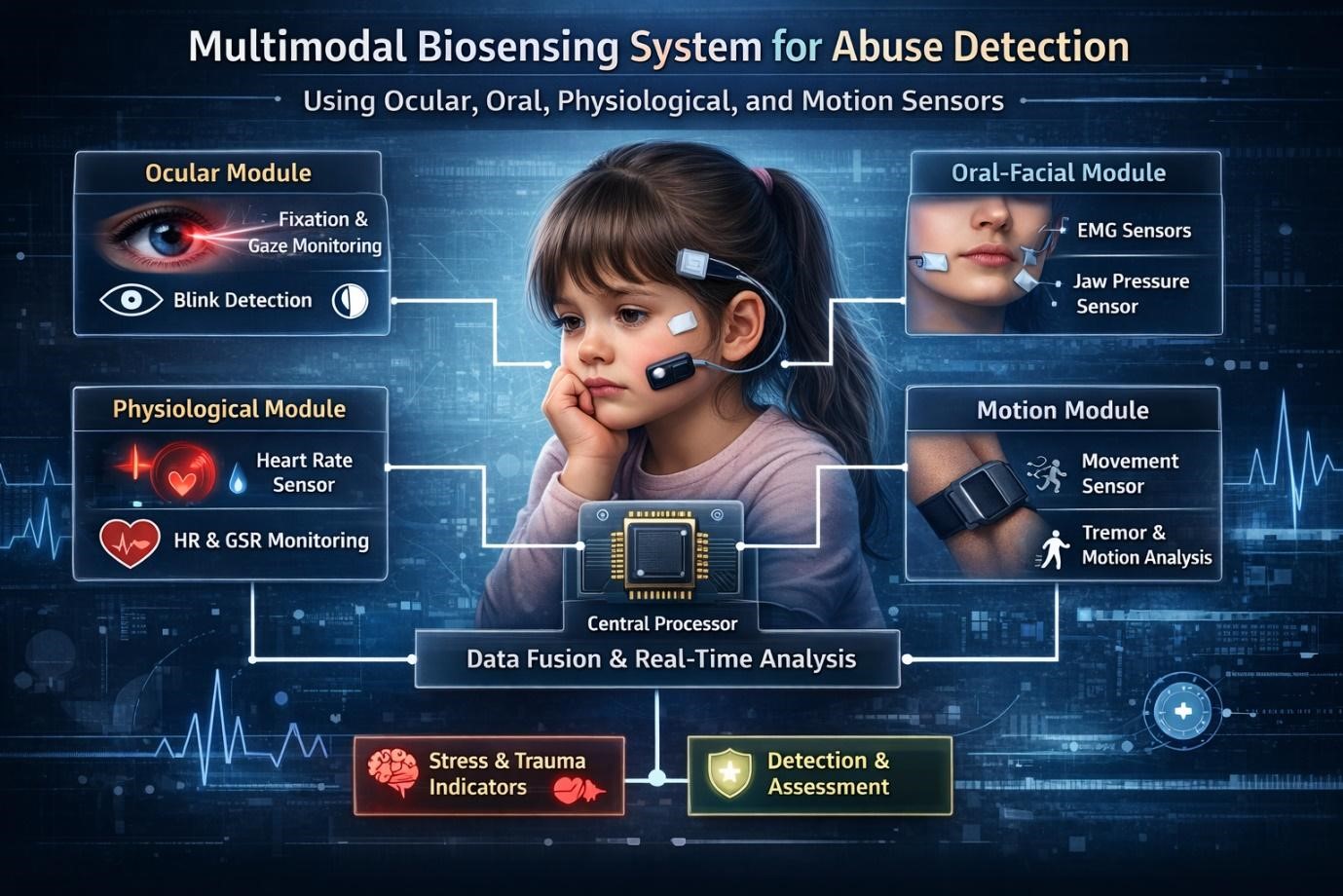

Figure 2: Image showing a multimodal biosensing system for abuse detection
Image Courtesy: Created by the Author
Oral and Facial Module
Electromyography sensors record electrical activity from facial muscles such as the masseter and orbicularis oculi. Emotional trauma often results in increased jaw tension, involuntary facial contractions, and sustained muscular activity mediated by stress-related neuromuscular activation. (6) These responses are difficult to consciously control, making electromyography a valuable objective indicator.
Jaw pressure is measured using a piezoelectric or capacitive pressure sensor to detect clenching, bruxism, and increased bite force, which are frequently observed in emotionally distressed children and individuals exposed to chronic stress. (7)
Physiological Module
A photoplethysmography sensor continuously monitors heart rate and heart rate variability. Sympathetic nervous system activation during stress produces tachycardia and reduced heart rate variability, both recognised biomarkers of anxiety and trauma exposure. (8,9)
Galvanic skin response sensing measures changes in skin conductance related to sweat gland activity. Elevated conductance levels reflect increased emotional arousal and are widely used in psychophysiological research and stress detection systems. (10,11)
Motion Module
A tri-axial accelerometer detects tremors, sudden defensive movements, abnormal posture, and freeze responses. Motion analysis adds a behavioural dimension that supports differentiation between routine stress and abuse-related fear responses, particularly when combined with physiological and ocular indicators. (12,14)
| Module | Sensors Used | Parameters Measured | Significance |
|---|---|---|---|
| Ocular Module | Infrared eye tracker, blink sensor | Fixation, gaze direction, blink rate | Indicates stress, gaze avoidance, emotional distress |
| Oral–Facial Module | Electromyography (EMG), jaw pressure sensor | Facial muscle activity, clenching, bruxism | Detects neuromuscular tension related to trauma |
| Physiological Module | Photoplethysmography (PPG), Galvanic Skin Response (GSR) | Heart rate, HRV, skin conductance | Reflects autonomic nervous system activation |
| Motion Module | Tri-axial accelerometer | Tremor, freeze response, defensive movements | Captures behavioral reactions to fear or anxiety |
Table 1: Table showing the overview of sensing modules used in the multimodal biosensing system.
Conclusion
This multimodal biosensing and multi-sensor data fusion improves diagnostic reliability, reduces false positives, and offers a non-invasive, child-friendly tool with potential applications in clinical screening, research, and forensic evaluation. (13,14)
References
- Gunnar MR, Quevedo KM. The neurobiology of stress and development. Annual Review of Psychology. 2007;58:145–173.
- McEwen BS. Protective and damaging effects of stress mediators. New England Journal of Medicine. 1998;338(3):171–179.
- Dadds, M. R., Allen, J. L., McGregor, K., Woolgar, M., Viding, E., & Scott, S. (2014). Callous‐unemotional traits in children and mechanisms of impaired eye contact during expressions of love: A treatment target?. Journal of Child Psychology and Psychiatry, 55(7), 771-780.
- Kleinke CL. Gaze and eye contact: A research review. Psychological Bulletin. 1986;100(1):78–100.
- Stern JA, Walrath LC, Goldstein R. The endogenous eyeblink. Psychophysiology. 1984;21(1):22–33.
- Fridlund AJ, Cacioppo JT. Guidelines for human electromyographic research. Psychophysiology. 1986;23(5):567–589.
- Lobbezoo F, Ahlberg J, Glaros AG, Kato T, Koyano K, Lavigne GJ, et al. Bruxism defined and graded: An international consensus. Journal of Oral Rehabilitation. 2013;40(1):2–4.
- Shaffer F, Ginsberg JP. An overview of heart rate variability metrics and norms. Frontiers in Public Health. 2017;5:258.
- Kim HG, Cheon EJ, Bai DS, Lee YH, Koo BH. Stress and heart rate variability: A meta-analysis and review of the literature. Psychiatry Investigation. 2018;15(3):235–245.
- Boucsein W. Electrodermal activity. Springer science & business media; 2012 Feb 2.
- Dawson ME, Schell AM, Filion DL. The electrodermal system. Handbook of psychophysiology. 2007 Mar 5;2:200-23.
- Porges SW. The polyvagal theory: Neurophysiological foundations of emotions, attachment, communication, and self-regulation. WW Norton & Company; 2011 Apr 25.
- Poh MZ, McDuff DJ, Picard RW. Non-contact, automated cardiac pulse measurements using video imaging and blind source separation. Optics express. 2010 May 7;18(10):10762-74.
- Patel S, Park H, Bonato P, Chan L, Rodgers M. A review of wearable sensors and systems with application in rehabilitation. Journal of neuroengineering and rehabilitation. 2012 Dec;9(1):21.
About the Author


Sudarsan T S
B. Optom Student
Vinayaka Missions Research Foundation, Chennai, India

Sharmila A G
Assistant Professor