


J.D. Danie Joseph, M. Optom (Final Year);
Sandhiya Parthiban, Assistant Professor
VELS School of Allied Health Sciences, (VISTAS), Periyapalayam Campus, India
Keywords
eye-hand dominance, cross-dominance, sports vision, archery, shooting
Declaration of Interest
The author declares no conflict of interest.
Cross-dominance
When a person uses one eye as the dominant eye but the other hand as the dominant hand for skill-based activities. For example, shooting with the right eye but handling sports equipment in the left hand. When the eye and hand are on the same side, that condition is called same-side dominance or uncrossed dominance. Eye dominance is the eye used for tasks such as aiming. Hand dominance is the hand used for activities. (1)
Why is Eye-Hand Dominance Important in Sports?
Many sports use visual-motor coordination. The athlete may assess a target, ball, or an opponent and respond with an appropriate motor action. A systematic review found that the relationship between eye-hand dominance and performance differs between sports. Uncrossed profiles were particularly relevant in some target sports, while crossed profiles were also common in other sports. (1)
Cross-Dominance in Archery
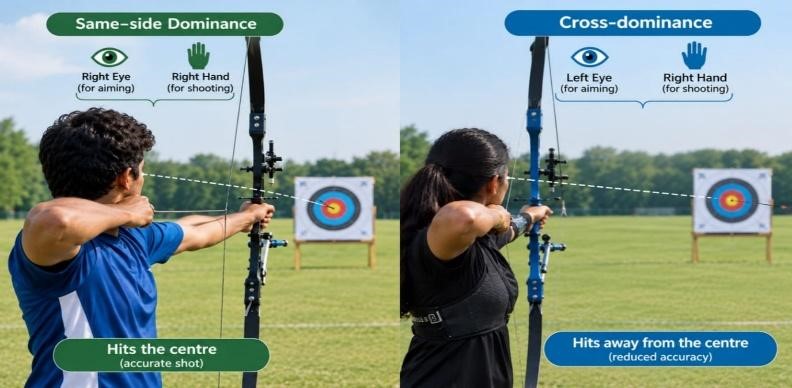

Figure 1: This image shows same-side and cross-dominance in archery.
Image Courtesy: Created by Author using OpenAI
Archery depends on proper coordination between the bow, target, and dominant eye. Studies have shown that beginner archers with matching eye and hand dominance can show greater accuracy than cross-dominant archers. However, experienced athletes may adapt through training. (2)
A sports vision evaluation could be useful in figuring out the eye most commonly used to aim, as well as the effect on performance of using a different eye for aiming. The evaluation could also include assessment of head position, body alignment, and maintenance of fixation during multiple aiming trials.
Cross-Dominance in Shooting
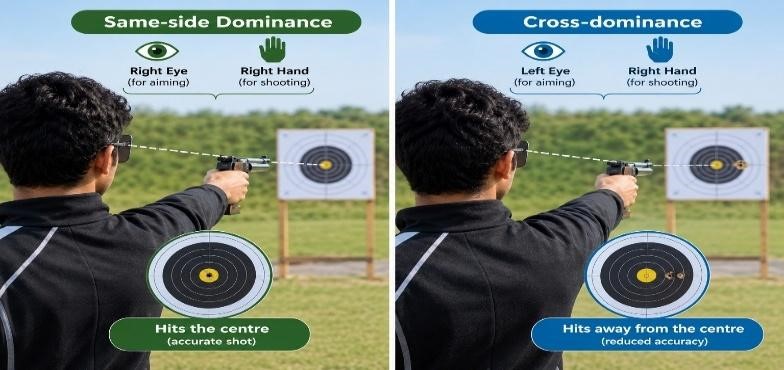

Figure 2: This image shows same-side and cross-dominance in shooting
Image Courtesy: Created by Author using OpenAI
Shooting requires precise coordination among the eyes, firearm, and target. A study of 308 military recruits reported lower rifle qualification performance among participants with cross-dominance than those with same-side dominance. However, cross-dominance alone cannot be used as an indicator of success. (3)
In athletes with cross-dominance, assessment may help determine the effectiveness of a change to aiming position or technique. In this case, assessment may involve comparing natural aiming with an alternative pattern during controlled sport-specific tasks.
What About Other Sports?
Cross-dominance may differ in sports involving moving targets, changing positions, and decisions. In 410 professional baseball players, no significant difference was found in batting average or earned run average between same-side and cross-dominant eye–hand profiles. (4) Basketball research suggested that adapting shooting technique to dominance may influence performance in some situations. (5)
Can Athletes Adjust to Cross-Dominance?
Repetition, practice, and training may help athletes develop visual and motor patterns that support effective performance despite their dominance pattern. Sport-specific training may help athletes adapt. (1)
Role of Sports Vision Assessment
Eye–hand dominance is one component of sports vision assessment and should not be evaluated alone. Visual acuity, binocular vision, depth perception, eye movements, reaction time, and visual attention should also be considered. (1)
An Optometrist can assess eye and hand dominance using standardized dominance tests and compare the athlete’s natural aiming pattern with alternative aiming conditions during sport-specific tasks. These findings can help sports vision experts and coaches identify the athlete’s visual-motor pattern.
Conclusion
Cross-dominance may not be generally considered either an advantage or disadvantage for all athletes. It appears that understanding an athlete’s eye-hand dominance pattern could be helpful to sports vision experts and coaches for individualised visual-motor evaluation and sport-specific training.
References
- Moreno M, Capdevila L, Losilla JM. Could hand-eye laterality profiles affect sport performance? A systematic review. PeerJ. 2022 Nov 17;10:e14385. doi:10.7717/peerj.14385
- Laborde S, Dosseville FEM, Leconte P, Margas N. Interaction of Hand Preference with Eye Dominance on Accuracy in Archery. Percept Mot Skills. 2009 Apr;108(2):558–64. doi:10.2466/pms.108.2.558-564
- Jones LF, Classe JG, Hester M, Harris K. Association between eye dominance and training for rifle marksmanship: a pilot study. J Am Optom Assoc. 1996 Feb;67(2):73–6. PubMed PMID: 9120204.
- Laby DM, Kirschen DG, Rosenbaum AL, Mellman MF. The effect of ocular dominance on the performance of professional baseball players. Ophthalmology. 1998 May;105(5):864–6. doi:10.1016/S0161-6420(98)95027-8
- Lopez-Diaz CJ, Niño García N, Sillero Quintana M, Lorenzo Calvo A. ¿Puede el principio de lateralidades múltiples mejorar el porcentaje de acierto en el tiro a canasta? Cuad Psicol Deporte. 2015 Sep;15(3):211–8. doi:10.4321/S1578-84232015000300024
About the Authors


J.D. Danie Joseph
M. Optom (Final Year),
VELS School of Allied Health Sciences, (VISTAS), Periyapalayam Campus, India.

Sandhiya Parthiban
Assistant Professor,