



Sakhi Gautam, B. Optom Student
Debapriyo Chatterjee, Assistant Professor
NSHM College of Management and Technology, Durgapur, India
Have you ever wondered how our body manages to function smoothly while navigating through a continuously moving environment? The human body is capable of detecting even the slightest movement around us, allowing us to maintain balance and orientation in space. However, some individuals experience discomfort during long journeys in cars, buses, or ferries, often feeling dizzy or nauseous. These sensations are closely related to a specialised sensory system known as the vestibular system, which plays a crucial role in maintaining balance and spatial awareness. (1)
The Vestibular System and Balance
The vestibular system is a complex network of neurons responsible for detecting head movements and maintaining equilibrium. It consists primarily of the balance organs located within the inner ear, which sense changes in motion and head position. The visual system also contributes significantly to spatial orientation by detecting movement in the surrounding environment.
Together, these systems send sensory information to the brain, allowing us to maintain balance and coordinate body movements effectively. (1)
Vestibulo-Ocular Reflex and Vestibulo-Spinal Reflex
Two important reflex pathways assist the vestibular system in maintaining stability: the Vestibulo-Ocular Reflex (VOR) and the Vestibulo-Spinal Reflex (VSR).
The VOR stabilises vision during head movements. When we focus on an object and move our head in the opposite direction, the inner ear detects the motion and sends neural impulses to the brain. The brain then signals the extraocular muscles to move the eyes, accordingly, enabling us to maintain focus on the target despite head movement. (2)
The VOR connects the vestibular system to the musculoskeletal system through neural pathways to the spinal cord. This reflex helps regulate posture and balance by coordinating muscle activity in the neck, trunk, and limbs. (2)
Visual Motion and Optic Flow
Another important concept involved in spatial perception is optic flow. Optic flow occurs when we move through an environment, and surrounding objects appear to move past us. For example, when walking through supermarket aisles, objects on either side of the visual field appear to stream outward as we move forward. This motion pattern is often described as divergence, where objects on the left appear to move further left and objects on the right move further right. Normally, the brain can differentiate between motion caused by our own movement and motion occurring within the environment. This ability helps us remain oriented and navigate accurately. (4)
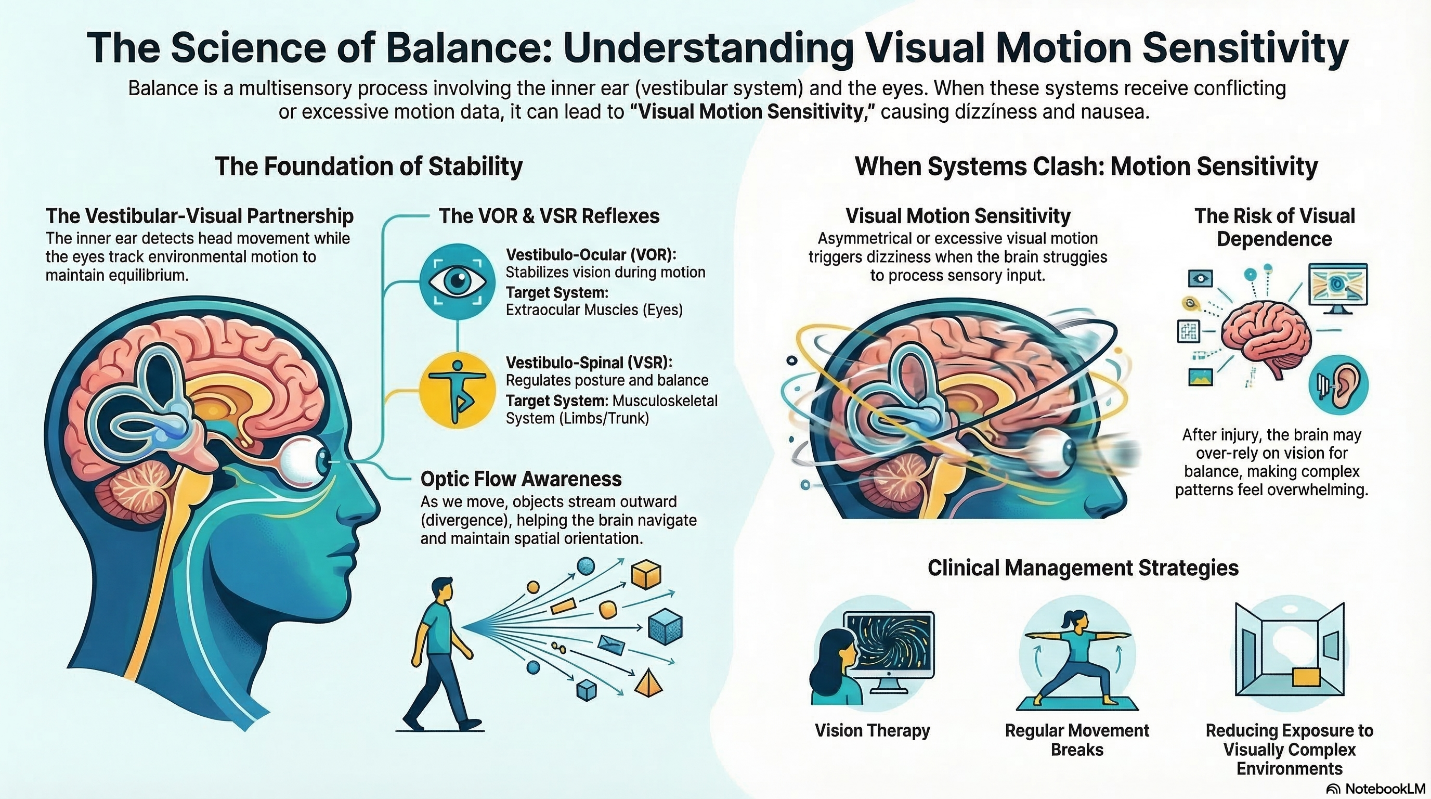

Figure 1: This image shows the understanding of visual motion sensitivity.
Image Courtesy: Created by the Author
Visual Motion Sensitivity
When the visual motion becomes asymmetrical or excessive, it may trigger visual vertigo, also known as visual motion sensitivity. In such situations, the brain struggles to process the sensory information received from the visual and vestibular systems. As a result, individuals may experience dizziness, nausea, or visual discomfort. (3)
Visual motion sensitivity is commonly observed in individuals with vestibular disorders or those recovering from concussions. Injuries involving the cervical spine or traumatic brain injury can also contribute to this condition. When vestibular and proprioceptive inputs are compromised, the brain becomes increasingly dependent on visual information to maintain balance. This phenomenon is known as Visual Dependence. Although this compensatory mechanism helps prevent immediate loss of balance, excessive reliance on visual input makes it difficult for the brain to process visually complex or repetitive patterns, resulting in dizziness or vertigo. (5)
Management and Clinical Assessment
Managing visual motion sensitivity involves reducing exposure to visually triggering environments and improving sensory integration. Strategies include limiting exposure to visually complex surroundings, avoiding environments that may create sensory conflict, and taking regular breaks during continuous motion. In some cases, assistive devices such as a walking cane may help provide additional stability.
Clinical visual assessment plays an important role in identifying underlying causes. Evaluations may include eye movement and binocular vision assessments, as well as vision therapy, which can help improve visual-vestibular coordination and reduce symptoms.
Conclusion
Visual Motion Sensitivity can happen to anyone, but sometimes normal situations may point to a bigger issue; timely evaluation and check-ups will help you experience and explore with the utmost safety.
References
- Angelaki, D. E., & Cullen, K. E. (2008). Vestibular system: the many facets of a multimodal sense. Annu. Rev. Neurosci., 31(1), 125-150.
- Bronstein, A. M. (1995). Visual vertigo syndrome: clinical and posturography findings. Journal of Neurology, Neurosurgery & Psychiatry, 59(5), 472-476.
- Herdman, S. J., & Clendaniel, R. (2014). Vestibular rehabilitation. FA Davis.
- Gibson, J. J. (1950). The perception of the visual world.
- Whitney, S. L., & Rossi, M. M. (2000). Efficacy of vestibular rehabilitation. Otolaryngologic Clinics of North America, 33(3), 659-672.
About the Author


Sakhi Gautam
B. Optom Student
NSHM College of Management and Technology, Durgapur, India

Debapriyo Chatterjee
Assistant Professor