


Sankhajyoti Saha, M. Optom
Assistant Professor, NSHM Knowledge Campus, Kolkata, India
Introduction
Every autumn, Limosa limosa baueri, a bar-tailed godwit, leaves Alaska and reaches New Zealand across the Pacific with astonishing precision and without GPS, maps, or any geographic landmarks. (1) In the expanse of sky, does a bird resort to a point of reference or perhaps something increasingly delicate to establish its direction? What if the sense of sight appears as an observatory rather than merely a lens, and light itself contains directional relevance? What if vision is not only about an imaging device, albeit additionally involves perceiving subconscious cues?
Radical Pair Dynamics: A Sixth Sense in the Animal Kingdom
Evidence implies that birds exhibit a light-dependent magnetic compass that is coordinated by Radical Pair Mechanism (RPM) within retinal cryptochrome molecules – a light-based quantal magnetosensor; although the exact biophysical mechanisms are yet unknown. It signifies that magnetic polarity becomes activated under specific spectral demands, signifying that certain electromagnetic radiation is capable of initiating magnetically sensitive radical pairs. This considerably validates RPM as a photochemical, visual-driven pathway by establishing that magnetic perception may be altered on or off by modulating the wavelength of light. (2-5)
| Animal / Organism | Effective Light Wavelength for RPM Activation |
|---|---|
| Migratory birds | Blue-green light (≈ 370–565 nm) |
| Newts | Blue light (< 475 nm) |
| Drosophila melanogaster | UV-A / blue light (< 420 nm) |
| Pigeons | Green (565 nm) or white light |
| Pigeons | Red light (660 nm) |
| European robins | Low-intensity radio-frequency (RF) fields under blue/green light |
| Zebra finches | RF fields (spin interference) |
| Rodents | RF fields |
| Cockroaches | RF fields |
Table 1: Table showing RPM’s Light-Wavelength Sensitivity Across Species
Therefore, the RPM emerges as a spectrum-gated, vision-modulated sensory pathway instead of behaving as a universal light-independent navigation system, wherein certain wavelengths stimulate quantum spin dynamics, facilitating the eye to discern Earth’s magnetic arena independent of the visual synthesis. (4,5)
Photochemical Activation of Cryptochrome: A Visual Molecule with Quantum Navigation
In numerous species of life, Cryptochrome tend to be photoreceptors that specialise in governing photomorphogenesis within plant tissues in the presence of blue or ultraviolet light and are active in the primary circadian system of biological brains. (14)
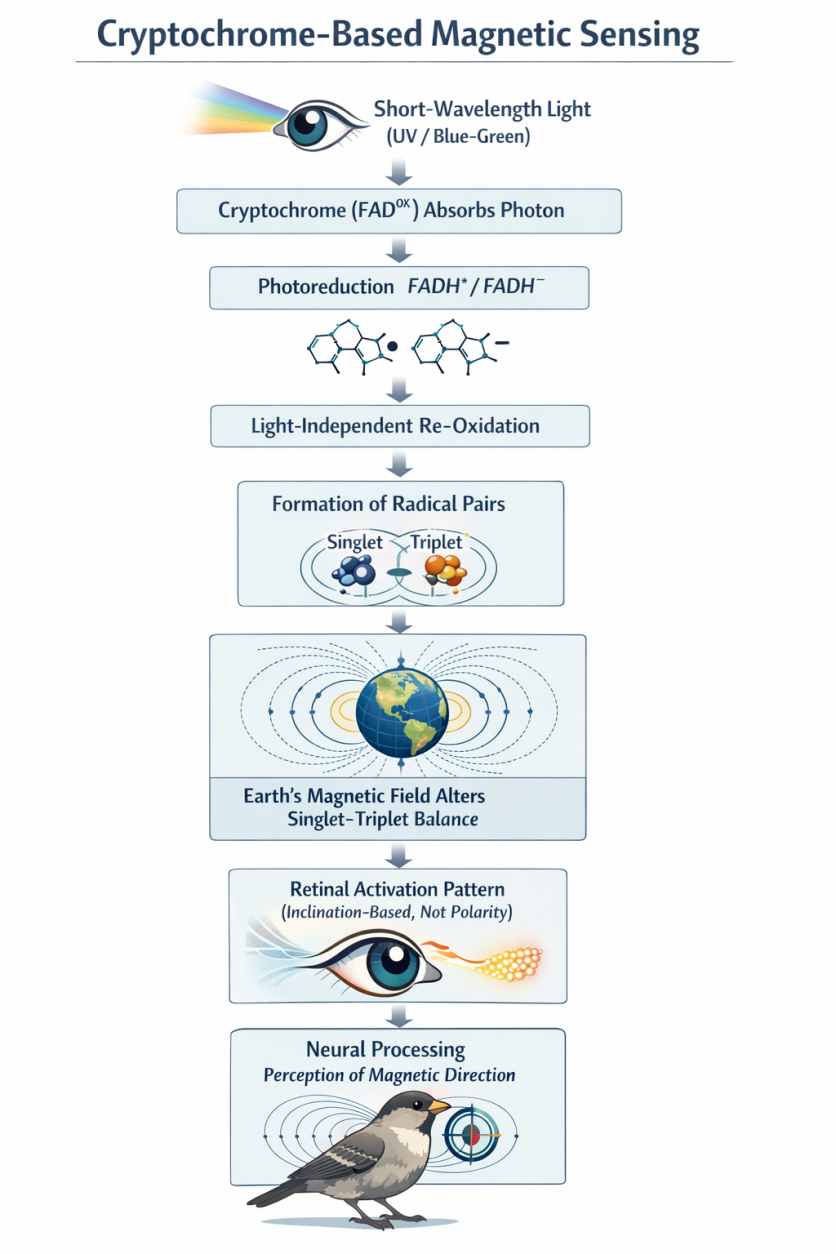

Figure 1: Image showing cryptochrome-based magnetic sensing
Image Courtesy: Created by Author
In avian retinal structure, a flavoprotein photoreceptor identified as cryptochrome conducts spin-dependent chemical pathways to hyperlink light perception and geomagnetic awareness. Its chromophore, flavin adenine dinucleotide (FAD), oxidises in the dark; light absorption conduces to photoreduction and radical coupling. (15-18)
Magnetically Modulated Retinal Photoreceptor Signaling for Spatial Orientation
The primitive protein lineage of photolyases, which employ light radiation to reconstruct UV-damaged DNA, is where cryptochromes evolved. Since their precise roles diverge greatly, the majority of species cryptochromes are involved in the circadian clock. The intricate molecular framework of circadian rhythms is regulated by cryptochromes, which are phylogenetically evolved from DNA-repairing photolyases and have retained their primitive light sensitivity. (19) The transition among singlet and triplet radical configurations is modulated by the Earth’s magnetic field, which additionally impacts a longitudinal waveform that traverses across the retina. The magnetic framework in birds is unable to configure magnetic north and magnetic south (polarity). Alternatively, it analyses the angle across which the magnetic field circulates through the Earth’s exterior, or the inclination of Earth’s magnetic field patterns. Conforming to field inclination, this indication facilitates birds in visualising geomagnetic orientation, as mentioned in Figure 1. In consequence of this, birds do not interpret orientations as north or south; instead, they perceive them as a universal inclination compass that detects magnetic field dip rather than polarity. This orients them “poleward” (downward tilt) or “equatorward” (upward tilt) based on the field lines’ angle. (17-19)
Quantum–Sensory Integration in Avian vs Human Retina
For the aforementioned instance, clinically reversing magnetic polarity does not mislead birds, but disrupting the inclination does. Magnetic sensibility is a perception of the profound structure of reality, since vision is generally the sense of appearances.


Figure 2: Image showing quantum–sensory integration in avian vs human retina
Image Courtesy: Created by Author
Employing retinal CRY4 proteins to precisely incorporate quantum magnetic sensing within the visual pathways, migratory birds exhibit an amazing integration of sensations. By deciphering geomagnetic waves as optical sequences that facilitate navigation, such physiological adaptation translates the eye into a multi-processor sensor. On the contrary, this sensory component is incomprehensible to humans. (18-19)
Considering the fact that hCRY1 and hCRY2 are encoded by the human body, their only intent is to govern internal biological rhythm rather than analyse data from sensory receptors. Humans possess the precise cerebral organisation and retinal mechanism required to translate quantum-level responses into comprehensible information that can be understood. The electromagnetic field of the earth appears entirely imperceptible to humans as human biology isolates magnetic sensitivity regarding perception, in contrast to the bird visual system, which employs a quantum coherence to determine direction. (20)
Additionally, its apparent association with magnetoreception, cryptochrome (CRY), is an important circadian homeostasis moderator and a potential objective to employ as a therapy in chronic ailments. Within the circadian feedback-mechanism, mammalian CRY1 and CRY2 function as transcriptional inhibitors that affect inflammation, metabolism, cell cycle regulation, and the restoration of DNA. Diabetes mellitus, chronic obesity, chronic inflammation, and certain kinds of cancer are all attributed to CRY instability. By stabilising or destabilising CRY proteins, small-molecule CRY modulators can adjust circadian amplitude and subsequent metabolic or inflammatory processes. In chronic, rhythm-linked ailments, targeting CRY constitutes a chronotherapy-inspired approach that enables time-driven intervention to restore biological patterns and enhance health outcomes. (21)
Cryptochrome: Beyond a Single Molecular Identity
Cryptochrome reveals how, contingent on the cellular and systemic context, a single molecule may execute a variety of biological activities in various species, from circadian rhythms to sensory functions. It demonstrates that the space surrounding us is replete with resources and guidance rather than being uninhabited. Given that pursuing the same molecule can have diverse therapeutic consequences across pathologies and species, this functional spectrum emphasises its research potential. The recognition of molecular flexibility broadens the application of precision medicine and translational biology. What kind of biology, and medicine, might develop from comparable molecules functioning pursuant to completely different planetary environments if one molecule can influence time, metabolism, immunity, and perception distinctively across inhabitants on Earth? Is the “real world” we experience just a thin curtain concealing the authentic workings of existence if the unseen is this apparent to our tissues? Not only can the eye view the world, but it can also silently read the planet.
References
- Hedenström, A., & Hedh, L. (2024). Seasonal patterns and processes of migration in a long-distance migratory bird: energy or time minimization?. Proceedings. Biological sciences, 291(2024), 20240624. https://doi.org/10.1098/rspb.2024.0624
- Johnsen, S., & Lohmann, K. J. (2005). The physics and neurobiology of magnetoreception. Nature reviews. Neuroscience, 6(9), 703–712. https://doi.org/10.1038/nrn1745
- Ritz, T., Adem, S., & Schulten, K. (2000). A model for photoreceptor-based magnetoreception in birds. Biophysical journal, 78(2), 707–718. https://doi.org/10.1016/S0006-3495(00)76629-X
- Hore, P. J., & Mouritsen, H. (2016). The Radical-Pair Mechanism of Magnetoreception. Annual review of biophysics, 45, 299–344. https://doi.org/10.1146/annurev-biophys-032116-094545
- Wiltschko, W., & Wiltschko, R. (2001). Light-dependent magnetoreception in birds: the behaviour of European robins, Erithacus rubecula, under monochromatic light of various wavelengths and intensities. The Journal of experimental biology, 204(Pt 19), 3295–3302. https://doi.org/10.1242/jeb.204.19.3295
- Phillips, J. B., & Borland, S. C. (1992). Behavioural evidence for use of a light-dependent magnetoreception mechanism by a vertebrate. Nature, 359(6391), 142-144.
- Gegear, R. J., Casselman, A., Waddell, S., & Reppert, S. M. (2008). Cryptochrome mediates light-dependent magnetosensitivity in Drosophila. Nature, 454(7207), 1014–1018. https://doi.org/10.1038/nature07183
- Wiltschko, R., & Wiltschko, W. (1998). Pigeon homing: effect of various wavelengths of light during displacement. Naturwissenschaften, 85(4), 164-167.
- Engels, S., Schneider, N. L., Lefeldt, N., Hein, C. M., Zapka, M., Michalik, A., Elbers, D., Kittel, A., Hore, P. J., & Mouritsen, H. (2014). Anthropogenic electromagnetic noise disrupts magnetic compass orientation in a migratory bird. Nature, 509(7500), 353–356. https://doi.org/10.1038/nature13290
- Ritz, T., Thalau, P., Phillips, J. B., Wiltschko, R., & Wiltschko, W. (2004). Resonance effects indicate a radical-pair mechanism for avian magnetic compass. Nature, 429(6988), 177–180. https://doi.org/10.1038/nature02534
- Pinzon-Rodriguez, A., & Muheim, R. (2017). Zebra finches have a light-dependent magnetic compass similar to migratory birds. The Journal of experimental biology, 220(Pt 7), 1202–1209. https://doi.org/10.1242/jeb.148098
- Malkemper, E. P., Eder, S. H., Begall, S., Phillips, J. B., Winklhofer, M., Hart, V., & Burda, H. (2015). Magnetoreception in the wood mouse (Apodemus sylvaticus): influence of weak frequency-modulated radio frequency fields. Scientific reports, 4, 9917. https://doi.org/10.1038/srep09917
- Vácha, M., Puzová, T., & Kvícalová, M. (2009). Radio frequency magnetic fields disrupt magnetoreception in American cockroach. The Journal of experimental biology, 212(Pt 21), 3473–3477. https://doi.org/10.1242/jeb.028670
- Lin, C., & Todo, T. (2005). The cryptochromes. Genome biology, 6(5), 220. https://doi.org/10.1186/gb-2005-6-5-220
- Wiltschko, R., Nießner, C., & Wiltschko, W. (2021). The Magnetic Compass of Birds: The Role of Cryptochrome. Frontiers in physiology, 12, 667000. https://doi.org/10.3389/fphys.2021.667000
- Astakhova, L. A., Rotov, A. Y., Cherbunin, R. V., Goriachenkov, A. A., Kavokin, K. V., Firsov, M. L., & Chernetsov, N. (2020). Electroretinographic study of the magnetic compass in European robins. Proceedings. Biological sciences, 287(1940), 20202507. https://doi.org/10.1098/rspb.2020.2507
- Bischof, H. J., Nießner, C., Peichl, L., Wiltschko, R., & Wiltschko, W. (2011). Avian ultraviolet/violet cones as magnetoreceptors: The problem of separating visual and magnetic information. Communicative & integrative biology, 4(6), 713–716. https://doi.org/10.4161/cib.17338
- Bolte, P., Bleibaum, F., Einwich, A., Günther, A., Liedvogel, M., Heyers, D., Depping, A., Wöhlbrand, L., Rabus, R., Janssen-Bienhold, U., & Mouritsen, H. (2016). Localisation of the Putative Magnetoreceptive Protein Cryptochrome 1b in the Retinae of Migratory Birds and Homing Pigeons. PloS one, 11(3), e0147819. https://doi.org/10.1371/journal.pone.0147819
- Wiltschko, R., Nießner, C., & Wiltschko, W. (2021). The Magnetic Compass of Birds: The Role of Cryptochrome. Frontiers in physiology, 12, 667000. https://doi.org/10.3389/fphys.2021.667000
- Foley, L. E., Gegear, R. J., & Reppert, S. M. (2011). Human cryptochrome exhibits light-dependent magnetosensitivity. Nature communications, 2, 356. https://doi.org/10.1038/ncomms1364
- Toda, T., & Hirota, T. (2025). Targeting Cryptochromes in Chronic Diseases. Cell biology international, 49(12), 1579–1590. https://doi.org/10.1002/cbin.70087
About the Author


Sankhajyoti Saha is an experienced academic and Optometrist based in Kolkata, currently serving as an Assistant Professor in the Department of Vision Science at NSHM Knowledge Campus. His professional journey includes prior roles as a departmental faculty member at I.P.T.S.T., Durgapur, and as an Optometrist at B. R. Singh Hospital, Sealdah. He has also contributed to the field as an editorial assistant for the Vision Science Academy. Holding a Master of Optometry, he has further specialised with a Fellowship in Low Vision from Dr. Shroff’s Charity Eye Hospital and is currently pursuing a Ph.D. in Optometry. An active