


Puja Sarkar, M. Optom
Clinical Optometrist, Dr. Shroff’s Charity Eye Hospital, New Delhi, India
Corneal transplantation is often perceived as the final step in restoring vision for patients with advanced corneal disease. However, while surgery may successfully replace damaged corneal tissue, achieving optimal visual outcomes frequently requires a long and often overlooked process of visual rehabilitation. For many patients, the journey does not end in the operating room, it begins there. (1)
The success of a corneal transplant should not be measured solely by graft clarity or surgical outcomes, but also by the patient’s ability to regain functional vision and return to daily activities. (2)
Understanding Corneal Transplantation
Corneal transplantation, or keratoplasty, involves replacing diseased or damaged corneal tissue with healthy donor tissue. (1)
Common indication include:
-
Corneal Scarring
-
Keratoconus
-
Corneal dystrophies
-
Infectious Keratitis
-
Corneal edema
-
Trauma related corneal damage (2)
Different surgical techniques include:
-
Penetrating Keratoplasty (PK)
-
Deep Anterior Lamellar Keratoplasty (DALK)
-
Descemet Stripping Automated Endothelial Keratoplasty (DSAEK)
-
Descemet Membrane Endothelial Keratoplasty (DMEK) (3)
Although surgical methods continue to evolve, visual recovery remains highly variable among patients. (3)
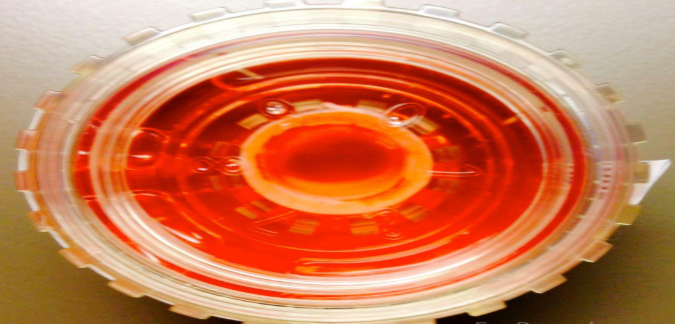

Figure 1: This image shows the corneal tissue store in the viewing chamber after pre-cut preparation.
Image Courtesy: Captured by the Author
Why Surgery Alone Does Not Restore Vision
Many patients expect immediate visual improvement after transplantation. However, postoperative visual quality can be influenced by several factors: (2)
-
Residual refractive error
-
Irregular astigmatism
-
High order aberrations
-
Ocular surface disease
-
Suture-induced changes
-
Pre-existing retinal or optic nerve pathology
Even with a clear graft, patients may continue experiencing blurred or distorted vision. (4)
The Forgotten Phase: Visual Rehabilitation
Vision rehabilitation after corneal transplantation aims to maximise functional vision and improve quality of life. The process often involves a multidisciplinary approach including Ophthalmologists, Optometrists, Contact Lens specialists and Low Vision professionals. (2)
Spectacle Correction
In patients with mid residual refractive errors, spectacles may provide acceptable visual improvement. However, irregular corneal surfaces, frequently limit spectacle effectiveness. (3)
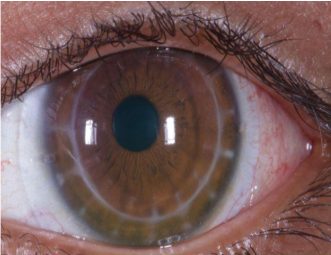

Figure 2: Postoperative appearance of the eye with contact lens.
Image Courtesy: Captured by the Author
Contact Lens Rehabilitation
Contact lenses often play a critical role in post-transplant visual rehabilitation.
Options may include: (4)
-
Rigid gas permeable (RGP) lenses
-
Hybrid lenses
-
Scleral lenses
-
Speciality soft lenses
Scleral lenses have gained increasing importance between they vault over corneal irregularities and create a smooth optical surface, improving and create a smooth optical surface, improving visual quality and comfort. (4)
Low Vision Rehabilitation
Some patients continue to experience reduced vision despite successful transplantation and refractive management. Low vision rehabilitation strategies may include: (5)
-
Magnification devices
-
Electronic assistive technologies
-
Contrast enhancement methods
-
Training for activities of daily living
The objective shifts from improving visual acuity alone to improving functional independence.(5)
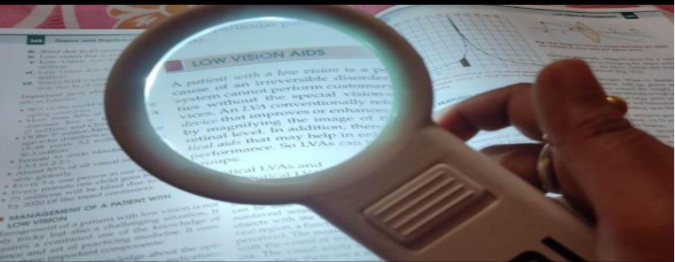

Figure 3: The image shows a hand held illuminated magnifier for near vision enhancement.
Image Courtesy: Captured by the Author
Psychological and Social Challenges
Visual recovery after transplantation is not purely physical.
Patients may experience: (2)
-
Anxiety regarding graft survival
-
Frustration with delayed visual improvement
-
Reduced confidence in performing routine activities
-
Emotional stress associated with prolonged recovery
Patient counselling and expectation management are essential components of rehabilitation but are often underemphasised. (2)
The Role of Optometrists
Optometrist contributes significantly during the post-transplants journey through: (3)
-
Refraction and visual assessment
-
Speciality contact lens fitting
-
Monitoring ocular surface health
-
Patient education
-
Low vision assessment and rehabilitation
The transition from surgical success to functional vision often depends on continued Optometric care.
Conclusion
Corneal transplantation restores the possibility of vision, but rehabilitation transforms that possibility into meaningful visual function. (1)
A clear graft does not always guarantee clear vision. True success lies in helping patients regain independence, confidence, and quality of life. Visual rehabilitation after corneal transplant is often the forgotten chapter in patient care, yet it may be one of the most important parts of the entire journey.
References
- Kanski JJ, Bowling B. Kanski’s Clinical Ophthalmology: A Systematic Approach. 9th ed.
- American Academy of Ophthalmology. Corneal Transplantation and Postoperative Management Guidelines.
- Javadi MA, Feizi S. Deep anterior lamellar keratoplasty: indication, surgical techniques, and outcomes. Middle East African Journal of Ophthalmology. 2010;17(1):28–37.
- Tan DT, Dart JK, Holland EJ, Kinoshita S. Corneal transplantation. The Lancet. 2012;379(9827):1749–1761.
- Schornack MM. Scleral lenses: a literature review. Eye & Contact Lens. 2015;41(1):3–11.
About the Author


Puja Sarkar
Clinical Optometrist
Dr Shroff’s Charity Eye Hospital, New Delhi, India