


Dhekshitha Jaikumar, B. Optom Student,
Sri Manakula Vinayagar Medical College and Hospital, Puducherry, India
The stability of our body is maintained by the central nervous system which requires continuous information from the visual, the vestibular, and the somatosensory systems. However, for controlling and balancing postural movement, the information from the visual and vestibular is quite important. (1,2)
By combining information from these systems, the brain performs a consistent perception of body movement which is essential in maintaining perception, stability, guiding navigation and supportive position. Balance is a complex function which has these systems in it. (1,2)
Role of Visual and vestibular systems
Our visual system has two main systems: The central visual system and peripheral visual system. For recognising objects and object motion (central), then for sensitivity of moving scenes (peripheral). To determine spatial orientation, we need to balance these systems. (1)
Our vestibular system also has central and peripheral systems and both functions postural control, gaze stabilisation, conscious perception, autonomic regulation and navigation. The peripheral vestibular receptors show information in three dimensions about the motion of head then the central vestibular pathway uses this information for controlling and perceiving. (1)
Vestibulo – Ocular Reflex (VOR) Mechanism
Semicircular canals and otolith organs of the vestibular apparatus analyses head motion and the impulses travel through vestibular nerve to vestibular nuclei, which initiates extraocular motor nuclei (motor nerve) to stimulate compensatory eye movements opposite head motion. (3)
Visual – Vestibular Integration
A) Optic flow gives information to the CNS about self-motion, allowing the body to move with the visual cues.
B) Retinal slip activates the VOR mechanism.
C) Visual fixation focuses on postural stability on stationary objects.
By integrating these signals with vestibular feedback in the cerebellum and vestibular nuclei, the brain maintains postural control and balance. (1)
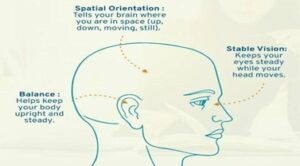

Figure 1: This image is showing the Visual – Vestibular integration.
Image courtesy:
Optic Flow (A)
ꜜ
Retinal Slip (B)
ꜜ
Visual Fixation (C)
Figure 2: This flowchart shows the pathway of visual-vestibular integration.
Visual Input (Optic flow, fixation)
ꜜ
Vestibular Input (Semicircular canals, otoliths)
ꜜ
Central Integration (Vestibular nuclei and cerebellum)
ꜜ
Vestibulo – Ocular Reflex Mechanism
ꜜ
Gaze Stabilisation and Postural Control
Figure 3: This flowchart shows the pathway of coordination.
Factors Affecting Coordination
Multiple cortical and sub cortical mechanisms regulate the sensory inputs, one of the major ones is the Parieto – Insular Vestibular Cortex (PIVC), which integrates vestibular signals with visual motion information. It contributes to perception and self-motion. Lesions in this area cause tilt perception and lateropulsion. Our visual and vestibular signals relate to sensitive cortical areas and therefore if any improper signal of the network leads to gaze orientation problems. Additionally, hemispheric dominance stimulates this coordination – mainly right. (4)
When the flow between the visual and vestibular interaction cues affects – people experience motion sickness, perception disturbances, Autism, Parkinson’s disease. (2)
For example: While travelling in a passive motion – reading a book inside a moving vehicle where the input signals of body motion do not match visual information and hence mismatch processed around vestibular and visual areas causing symptoms like nausea, vomiting, dizziness, sweating etc. (2)
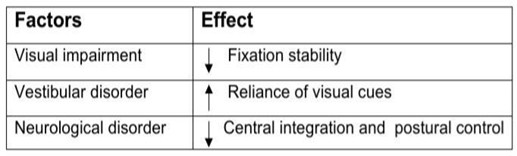

Table 1: This table shows the factors and their effect in coordination.
Conclusion
Visual – Vestibular coordination is necessary for maintaining postural control through dynamic multi-sensory integration. This interaction often maintains and stabilises gaze and balance. Disturbances in those signaling networks cause disruption in equilibrium. Thus postural stability emerges from fine-tuned partnership with visual and vestibular inputs.
References
- Chaudhary, S., Saywell, N., & Taylor, D. (2022). The differentiation of self-motion from external motion is a prerequisite for postural control: a narrative review of visual-vestibular interaction. Frontiers in human neuroscience, 16, 697739.
- Liu, J., & Zeng, F. (2025). The Neural Mechanisms of Visual and Vestibular Interaction in Self-Motion Perception. Biology, 14(7), 740.
- Fetter M. (2007). Vestibulo-ocular reflex. Developments in ophthalmology, 40, 35–51. https://doi.org/10.1159/000100348
- Brandt, T., & Dieterich, M. (1999). The vestibular cortex: its locations, functions, and disorders. Annals of the new York Academy of Sciences, 871(1), 293-312.
About the Author


Dhekshitha Jaikumar
B. Optom Student,