


Prasanna Kumar R, B. Optom Student
Dhanalakshmi Srinivasan University, Trichy, India
Eye injuries are among the most preventable workplace hazards in construction work. (1,2,5) However, on many construction sites, especially in unorganised sectors, protective eyewear is often underused or entirely overlooked. (6,8) This ongoing gap between recognised risks and actual practices is not a coincidence; it stems from several well-documented factors. (1,6)
Lack of Awareness of Eye Hazards
Many construction workers know that injuries can happen but do not have detailed information about how and when eye injuries occur. (1,2) They often underestimate common hazards like dust particles, cement splashes, metal fragments, and chemical exposure. (1,3) Studies repeatedly show a lack of understanding regarding long-term effects on vision, such as corneal scarring and permanent vision loss. (4,5)
Inadequate Safety Training
Formal safety training is uncommon in unregulated construction sites. (1,8) Workers usually get informal training from coworkers, which emphasises speed and finishing tasks instead of safety. (6) Without organised guidance on eye protection, workers view protective eyewear as optional, not necessary. (6,8)
Discomfort and Poor Design of Protective Eyewear
Workers often say that safety goggles fog up, cause sweating, press on the nose, or reduce visual clarity. These problems get worse in hot and humid climates. When eyewear affects visibility or comfort, workers take it off, sometimes for good. (6)
Attitudinal Factors and Risk Normalisation
Repeated exposure to dangerous environments without any immediate injury creates a false sense of security. (2) Workers might think that just having experience keeps them safe or that injuries are simply “part of the job”. (2,6) This normalising of risk is a well-known behaviour in occupational health. (2)
Lack of Enforcement and Supervision
Construction sites frequently have lax enforcement of safety regulations, even when they are in writing. (8) Penalties for non-compliance are rare, and supervisors may prioritise productivity over safety. (2, 8)
Economic and Employer-Related Constraints
In many cases, employers do not provide protective eyewear or they offer low-quality options. (6,8) Workers may not want to buy safety goggles on their own. (6) The use of protective eyewear rapidly declines in the absence of accountability. (6,8)
Limited Access to Eye Care and Follow-Up
Minor eye injuries are often overlooked because people cannot access eye care services. (5,7) Workers do not recognise the effects of untreated injuries, which leads them to underestimate the seriousness of eye trauma. (4,5)
This continues unsafe practices which places the responsibility for safety on individuals instead of on systems. (8)
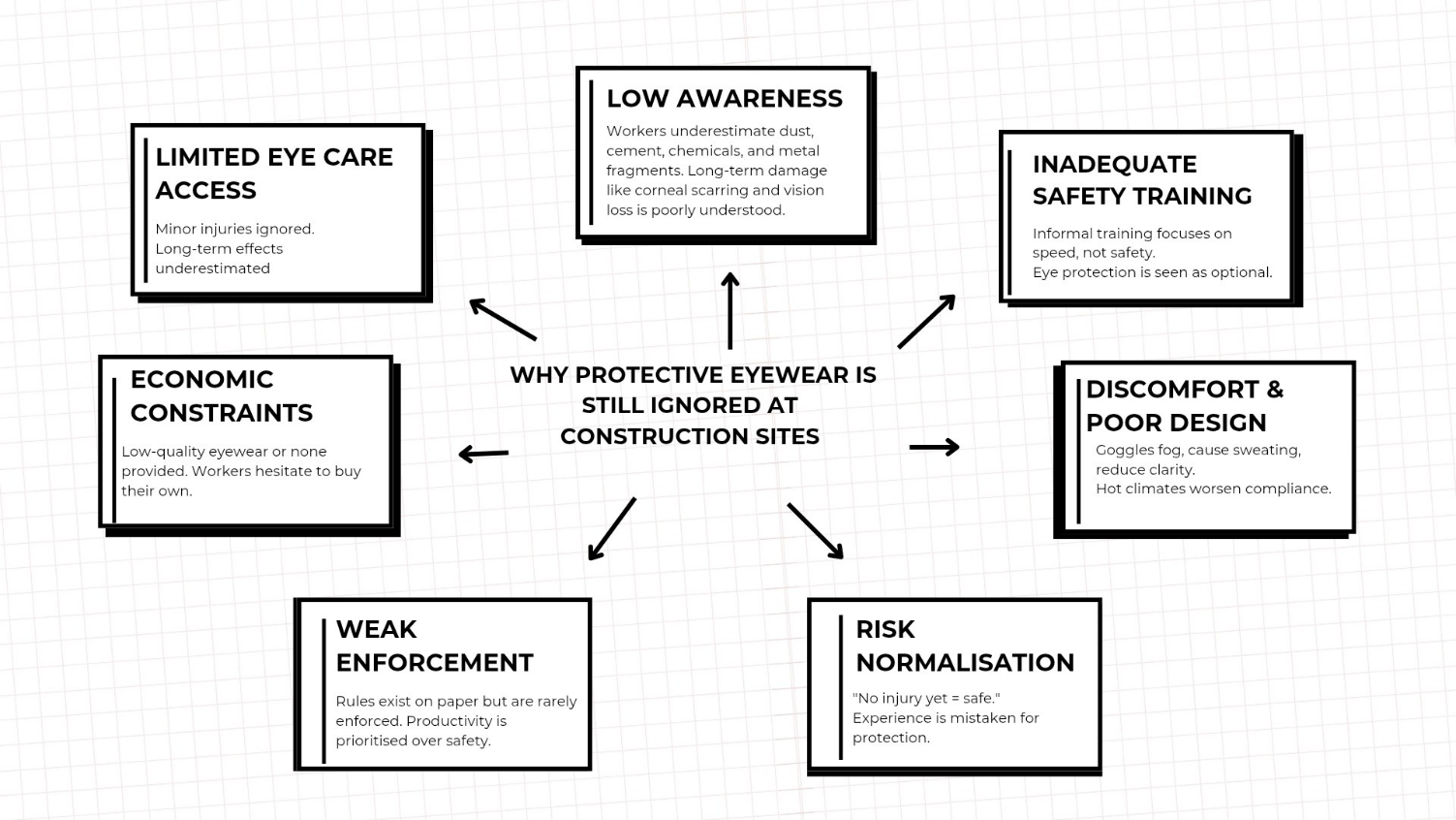

Figure 1: This image shows why protective eyewear is still ignored at construction sites.
Image Courtesy: Created by the Author
Conclusion
Protective eyewear is not overlooked because workers are careless. It is overlooked due of gaps in knowledge, poor training, discomfort, and weak enforcement. (1,6,8) Solving this requires more than just handing out goggles. It needs education, improved design, strict enforcement, and shared responsibility among employers, workers, and policymakers. (5,8)
References
- Welch LS, Hunting KL, Mawudeku A. Injury surveillance in construction: eye injuries. Applied Occupational and Environmental Hygiene. 2001;16(7):755-762.
- Xiang, H., Stallones, L., Chen, G., & Smith, G. A. (2005). Work-related eye injuries treated in hospital emergency departments in the US. American journal of industrial medicine, 8(1), 57–62. https://doi.org/10.1002/ajim.20179
- Lombardi DA, Pannala R, Sorock GS, et al. Welding-related occupational eye injuries: a narrative analysis. Injury Prevention. 2005;11(3):17-179.
- MacEwen CJ. Ocular injuries. Journal of the Royal College of Surgeons of Edinburgh. 1999;(5):317-323.
- Negrel AD, Thylefors B. The global impact of eye injuries. Ophthalmic Epidemiology. 1998;5(3):13-169.
- AlMahmoud T, Grivna M, Abu-Zidan FM. Personal protective eyewear usage among industrial workers in small-scale enterprises. Injury Epidemiology. 2020;7:55.
- Vats S, Murthy GVS, Chandra M, Gupta SK, Vashist P, Gogoi M. Epidemiological study of ocular trauma in an urban slum population in Delhi, India. Indian Journal of Ophthalmology. 2008;56(:313-316.)
- National Institute for Occupational Safety and Health. Eye Safety for Workers. Centers for Disease Control and Prevention.
About the Author


Prasanna Kumar R
B. Optom Student