
Haziel Rynjah, M. Optom
Assistant Professor, Royal Global University, Assam, India
Introduction
Clear vision is essential to a child’s physical, cognitive, emotional, and social development. Vision is essential to how children learn and engage with the environment, from identifying faces and investigating their surroundings in infancy to reading textbooks and utilising digital gadgets in school. However, since children may not be able to express visual difficulties or may not be aware that their vision is affected, childhood vision disorders frequently go undiagnosed. Therefore, early vision care is an important investment in a child’s future rather than just a clinical prescription. Through early detection, prompt management, and ongoing monitoring, Optometry plays a critical role in protecting children’s eye health. (1) Parents, teachers, and medical experts can work together to guarantee that young eyes develop as best they can, opening the door to successful academic and personal results, by placing a high priority on paediatric vision care. (2)
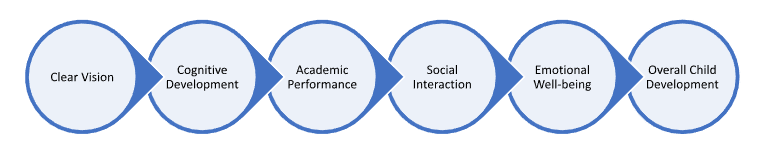
Figure 1: Role of Vision in Child Development
Early Childhood Visual Development
The development of vision starts at birth and lasts into early childhood. Newborns have an undeveloped visual system while being able to see. Together, the brain and eyes develop visual acuity, binocular vision, depth perception, and eye-hand coordination during the first few years of life. If not treated right once, any disturbance at this crucial time, such as uncorrected refractive problems, strabismus, or amblyopia, might have a lasting impact on visual development.(3)
Because of the visual system’s plasticity, early childhood is both a susceptible and a favorable phase. Regular paediatric eye exams are crucial because many visual abnormalities can be reversed or their effects greatly lessened with early detection and treatment.
Common Vision Problems in Children
Children are commonly affected by a range of ocular and visual conditions:
Refractive Errors: Astigmatism, Myopia, and Hyperopia can all impair sharp vision up close or at a distance. One of the main causes of vision impairment in children globally is uncorrected refractive errors.(4)
| Condition | Key Symptoms | Effect on Child |
|---|---|---|
| Myopia | Blurred distance vision | Difficulty reading board |
| Hyperopia | Blurred near vision | Reading strain |
| Astigmatism | Distorted vision | Headaches |
| Amblyopia | Reduced vision in one eye | Poor depth perception |
| Strabismus | Misaligned eye | Double vision |
| Convergence Insufficiency | Eye strain | Reading difficulty |
Amblyopia (Lazy Eye): Reduced vision in one or both eyes due to abnormal visual development, often without obvious external signs. (3,4)
Strabismus (Squint): Misalignment of the eyes that can disrupt binocular vision and lead to amblyopia if untreated. (4)
Binocular Vision Disorders: Conditions such as convergence insufficiency may cause headaches, eye strain, and difficulty with near tasks like reading. (4,5)
Colour Vision Deficiency: Often overlooked, yet important for educational guidance and future career counselling. (4)
Relying solely on a child’s complaints or academic performance may delay diagnosis, as many of these conditions are asymptomatic in their early stages.
Learning and Vision: An Invisible Connection
Most of the knowledge a child acquires in a classroom is thought to be influenced by their vision. Effective visual abilities are essential for writing, utilising digital devices, reading from the board, and concentrating on textbooks. (2,3) Due to visual hurdles that impede learning, children with undetected vision issues may experience scholastic difficulties not because they lack intelligence or effort.
Learning disabilities, attention problems, and behavioural challenges can all be mimicked or made worse by poor vision. Youngsters may avoid close activities, seem distracted, or exhibit a diminished enthusiasm in learning. Early vision care supports equal learning opportunities for all children by preventing visual deficiencies from becoming barriers to academic success.
Optometry’s Function in Early Vision Care
Paediatric Optometrists are in a unique position to offer complete eye care. Paediatric eye exams evaluate eye alignment, focusing capacity, binocular vision, ocular health, and visual perception skills in addition to visual acuity. This holistic approach allows Optometrists to identify subtle issues that routine screenings may miss.
- Vision treatment for binocular or accommodative abnormalities and the prescription of glasses or contact lenses are examples of early Optometric intervention. (6)
- Advice on maintaining good eye hygiene and using digital devices. (5,6)
- Referrals for medical or surgical care when required. (5)
- Optometrists use ongoing observation to make sure a child’s visual system develops and matures properly. (6)
Vision Screening Programs’ Significance
Programs for community and school-based vision screening are crucial in detecting children who may have visual issues, particularly those from under-privileged backgrounds. In order to prevent preventable childhood vision loss, organisations like the World Health Organisation highlight early detection of visual impairment as a public health priority. (7) Screenings, however, cannot take the place of thorough eye exams. They act as a first step, identifying kids who need a thorough examination by eye care specialists. For significant impact, the connection between screenings and follow-up care must be strengthened.
Challenges to Children’s Vision in the Digital Age
Childhood in the modern era is becoming more and more computerised. Children’s Myopia and Digital Eye Strain have been linked to increased screen usage, decreased outside activity, and close work. The prevalence of symptoms like headaches, impaired vision, dry eyes, and short attention spans is rising.
Teaching parents and kids about good visual habits is part of early vision care:
Promoting frequent outdoor play and adhering to sensible screen-time standards
- Adhering to the 20-20-20 rule. (2,4)
- Keeping appropriate lighting and posture when performing near activities. (3,4)
- Optometry promotes long-term vision health by addressing these lifestyle issues at a nearly stage. (3)
Parental Awareness and Involvement
In order to ensure early vision care, parents play an important role. Timely eye exams can be prompted by awareness of warning symptoms, which include frequent eye rubbing, squinting, sitting too near to screens, poor academic performance, or headache complaints. Crucially, at critical developmental periods, regular eye exams are advised even in the absence of symptoms. (8) Teaching parents the value of paediatric eye care encourages proactive health-seeking behaviour and reaffirms the notion that eye exams are just as important as routine physicals.
Benefits of Early Vision Care in the Long Run
Early vision treatment has several advantages that go well beyond childhood. A pleasant and clear vision improves social interaction, self-esteem, academic performance, and general quality of life. (9) Early intervention lessens the long-term strain on healthcare systems and minimises the chance of persistent visual impairment.
From the standpoint of public health, funding children’s vision care helps create a future generation that is more capable, self-assured and productive.
Conclusion
Bright futures are genuinely shaped by young eyes. Early vision treatment is essential to a child’s overall development and is not elective. Most childhood vision issues can be successfully managed or avoided with prompt exams, family education, school screenings, and expert optometric care. (10) In order to guarantee that every kid has the visual foundation necessary to study, develop, and flourish, Optometry’s role in paediatric eye health is still crucial. Making early eye care a priority now is an investment in better vision, more robust learning, and healthier lifestyles down the road.
References
- Marsh-Tootle, W. L., Russ, S. A., & Repka, M. X. (2015). Vision and eye health in children. Optometry and Vision Science, 92(1), 17–23.
- Oam, B. A., & Resnikoff, S. (2002). The role of optometry in Vision 2020. Community Eye Health, 15(43), 33–36.
- Ghani, N. D. H., et al. (2024). Parents’ knowledge and practices of child eye health care. PLOS One, 19(11), e0313220.
- Cassetti, V., Sanders, T., & Bruce, A. (2019). Challenges of eye health care in children. British and Irish Orthoptic Journal, 15(1), 96.
- Coles, R. (2018). Vision and eye health in children. The Pharmaceutical Journal, 301(7920).
- Nottingham Chaplin, P. K., et al. (2015). Vision screening in the digital age. NASN School Nurse, 30(3), 154–160.
- Wan, K., et al. (2024). Holistic eye care for children with special needs. BMC Medical Education, 24(1), 1340.
- Masarwa, D., et al. (2023). Parental health beliefs and eye examinations. BMC Ophthalmology, 23(1), 269.
- Lipton, B. J., & Decker, S. L. (2015). Vision benefits and health outcomes. Journal of Health Economics, 44, 320–332.
- Müller, A., Keeffe, J. E., & Taylor, H. R. (2007). Eye health promotion campaigns. Clinical & Experimental Ophthalmology, 35(4), 305–309.
About the Author

Haziel Rynjah is an Assistant Professor in the Department of Optometry at Royal Global University in Guwahati, Assam, India. She is very dedicated to improving vision science education, research, and community awareness of eye health. She has a master’s degree in Optometry and has been involved in teaching, research, and clinical training for both undergraduate and graduate Optometry students.
Her main academic and research interests are early vision screening, Myopia and Binocular Vision disorders, ocular public health, and how visual health affects how well children do in school. She is especially passionate about raising awareness about early detection and treatment of childhood vision problems to avoid long-term vision loss and learning problems.
Haziel Rynjah has written academic articles, reviews, and educational content for vision science platforms. Her work focuses on evidence-based Optometric practice and community-based eye care strategies. She is also very interested in writing and publishing for academics. Her goal is to make clinical knowledge and research findings easier for both professionals and the general public to understand. Along with her schoolwork, she is involved in vision screening programs, awareness campaigns, and professional development activities that stress the importance of taking care of your eyes before they get worse. She tries to connect clinical optometry and public health through her teaching, research, and writing. Her goal is to improve the health of people’s eyes across all age groups.
Recent Comments