
Subhanjan Datta, B. Optom Student
Dr. Biswajit Mondal, Principal
NSHM College of Management and Technology, Durgapur, India
Most people believe that achieving 6/6 vision means their eyes are perfectly healthy. While 6/6 indicates good clarity on an eye chart, it does not always mean the visual system is comfortable, efficient, or functioning optimally in real-world conditions.
What Does 6/6 Vision Really Mean?
6/6 vision means a person can clearly see at 6 meters what a person with standard vision should see at the same distance. It reflects accurate focusing of light onto the retina for sharp distance vision, nothing more, nothing less. Most people believe that achieving 6/6 vision means their eyes are perfectly healthy. While 6/6 indicates good clarity on an eye chart, it does not always mean the visual system is comfortable, efficient, or functioning optimally in real-world conditions. (1)
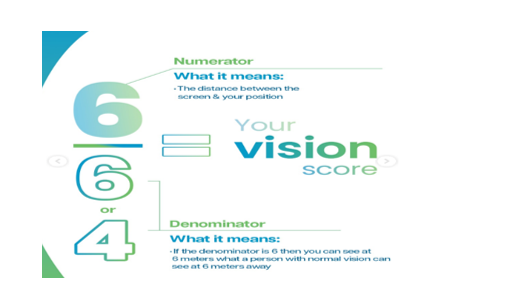
Figure 1: This illustration explains the meaning of 6/6 visual acuity in vision testing.
Image Courtesy: https://encryptedtbn0.gstatic.com/images?q=tbn:ANd9GcTvjRrm0UbGKE6DgsfLzZwk6WTTrFl4JEh1kQ&s
Why Eye Charts Do Not Tell the Full Story
Standard visual acuity charts measure only a small part of vision. They:
- Assess high-contrast central vision only
- Do not measure contrast sensitivity
- Ignore glare and light sensitivity
- Miss binocular vision and eye coordination problems
- Fail to evaluate visual comfort or fatigue
- Use static letters, not real-world dynamic vision
- Do not assess peripheral vision
- Overlook accommodation (focusing ability)
- Miss early functional vision loss
- A patient can read the chart perfectly and still struggle daily. (2)
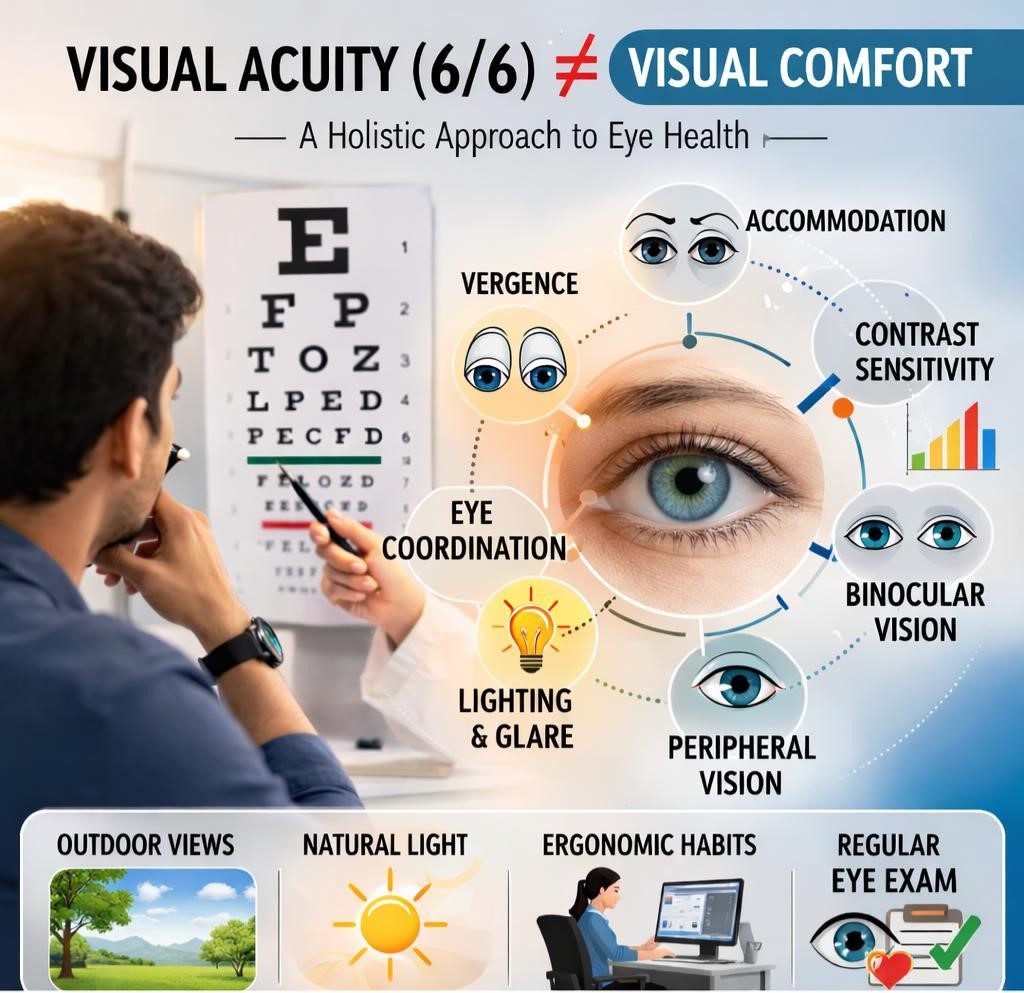
Figure 2: Figure showing Visual acuity (6/6) does not necessarily represent overall visual comfort.
Image Courtesy: Created by the Author
When Vision Charts Look Normal but Vision Is Not
Many eye conditions may show normal 6/6 acuity while visual comfort is compromised:
- Early glaucoma: peripheral vision loss with preserved central vision
- Early cataract: glare and reduced contrast before acuity declines
- Dry eye disease: fluctuating vision and eye fatigue
- Binocular vision anomalies: headaches, eye strain, or double vision
- Accommodative insufficiency: near-work discomfort despite clear sight
- Post-refractive surgery: glare and halos with good acuity
Visual Comfort Goes Beyond Acuity and Lighting
Visual comfort depends on the coordinated performance of:
- Accommodation (focusing)
- Vergence (eye teaming)
- Retinal processing over time
These systems must function harmoniously, not just momentarily during an eye test.
Environmental Factors That Improve Visual Comfort
- Outdoor Views: Periodic viewing of distant objects reduces accommodative and vergence stress, lowering eye strain during prolonged near work.
- Daylight: Natural light enhances contrast sensitivity and retinal clarity while supporting circadian rhythm regulation. However, excessive daylight can cause glare and discomfort.
- Uniform Luminance: Even light distribution across the visual field prevents excessive pupil adaptation, reducing visual fatigue.
- Balanced Natural and Artificial Lighting: A stable mix of lighting throughout the day minimizes visual stress caused by fluctuating illumination levels. (3)
Conclusion
Visual acuity of 6/6 is often considered the benchmark for normal vision, but it does not represent the complete picture of visual performance. Visual comfort depends on multiple factors including binocular coordination, accommodation, contrast sensitivity, and environmental lighting conditions. Therefore, comprehensive eye examinations should evaluate not only visual acuity but also the functional aspects of vision to ensure optimal visual comfort in everyday life.
References
- Visual acuity.American Optometric Association. Available from : https://www.aoa.org/healthy-eyes/vision-and-vision-correction/visual-acuity
- What is visual comfort? Saint-Gobain UK & Ireland. Available from: https://www.saint-gobain.co.uk/what-is-visual-comfort
- Visual comfort.Moorfields Eye Hospital. Available from: https://www.moorfields.nhs.uk/children-and-young-people/paediatric-low-vision-assessment/visual-comfort.
About the Author

Subhanjan Dutta
B. Optom Student
NSHM College of Management and Technology, Durgapur, India

Dr. Biswajit Mondal
Principal
Recent Comments