
Naa Shome Okwei, OD
Optometrist, Sight For All Eye Care Centre, Winneba, Ghana
Keywords
comprehensive eye examination; systemic disease; hypertensive retinopathy; diabetic retinopathy; optic neuritis
Declaration of Interest
The blog is written solely for education purpose, and it does not have any financial support and conflict of interest.
Introduction
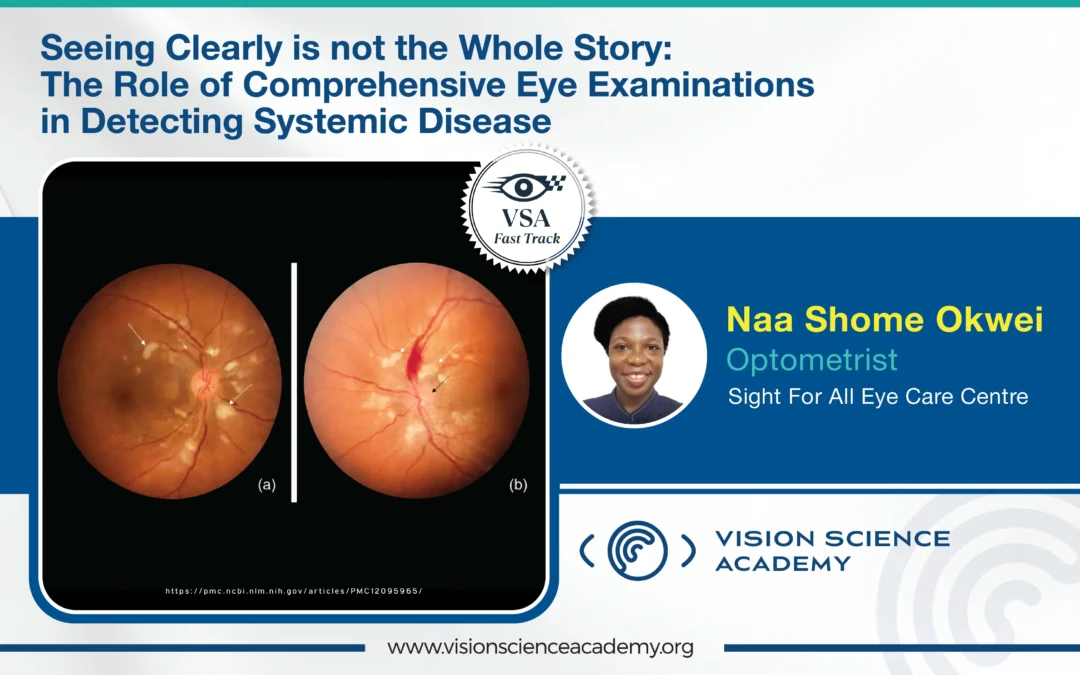
A young adult presented to the eye clinic with blurred vision and persistent headaches. Examination revealed bilateral optic disc swelling, and blood pressure was markedly elevated, prompting urgent medical referral. This encounter illustrates why eye examinations should extend beyond refractive error and visual acuity.
Why the Eye is Unique
Unlike any other vascular bed in the body, the retina allows clinicians to view living blood vessels directly through the pupil, without any invasive procedure. (1) This makes retinal examination valuable not only for identifying ocular disease but also for recognising vascular abnormalities associated with systemic conditions. The World Health Organization (WHO) emphasises integrated, people-centred eye care that addresses the full spectrum of eye conditions and coordinates care across health services. (2)
Hypertension
Hypertensive Retinopathy may be the presenting sign of a hypertensive emergency. Retinal findings can include arteriolar narrowing, arteriovenous nicking, haemorrhages, cotton-wool spots and hard exudates; severe Hypertensive Retinopathy may include optic disc swelling. (3) In patients without a previous diagnosis of hypertension, marked Hypertensive Retinopathy warrants prompt blood-pressure measurement and urgent referral for systemic management. (3) In this patient, bilateral optic disc swelling together with markedly elevated blood pressure raised concern for severe hypertension and necessitated urgent medical evaluation.
Diabetes Mellitus
Diabetes can damage the small blood vessels supplying the retina, resulting in Diabetic Retinopathy. Early retinal changes may include microaneurysms, retinal haemorrhages, intraretinal microvascular abnormalities and changes in venous calibre. In Proliferative Diabetic Retinopathy, pathological neovascularisation can develop on the retinal surface. Diabetic Macular Oedema can occur at any stage and remains an important contributor to vision loss. (4) Regular eye examinations therefore help detect and monitor these complications.
Neurological Disease
Optic Neuritis is another example of why visual complaints need more than a refraction. In its typical form, it affects one eye, with vision loss unfolding over days and pain particularly during eye movement. (5) Atypical features include marked optic disc swelling, loss of vision in both eyes and recurrent episodes, prompting consideration of other underlying causes. (5) Diagnosis and treatment of Optic Neuritis remain areas of ongoing clinical debate, particularly regarding atypical presentations. (6)
The role of Optometrists in Early Detection and Referral
Optometrists are often the first point of contact for people presenting with visual symptoms. A comprehensive examination can identify ocular findings that require systemic investigation. Recognising an abnormality is only the first step; appropriate blood-pressure assessment, timely referral, communication with other healthcare professionals and patient education are essential components of care. (3)
Conclusion
Comprehensive eye examinations are about more than achieving clear vision. They can reveal retinal and optic nerve abnormalities that warrant further systemic investigation. The patient who presents with blurred vision may leave with more than an explanation for the visual complaint. They may leave with an opportunity for earlier recognition of a potentially serious systemic condition.
References
- Patton N, Aslam TM, MacGillivray T, Deary IJ, Dhillon B, Eikelboom RH, et al. Retinal image analysis: Concepts, applications and potential. Prog Retin Eye Res. 2006;25(1):99–127.
- World Health Organization. World report on vision. Geneva: World Health Organization; 2019.
- Tsukikawa M, Stacey AW. A review of hypertensive retinopathy and chorioretinopathy. Clin Optom (Auckl). 2020;12:67–73.
- Duh EJ, Sun JK, Stitt AW. Diabetic retinopathy: current understanding, mechanisms, and treatment strategies. JCI Insight. 2017;2(14):e93751.
- Phuljhele S, Kedar S, Saxena R. Approach to optic neuritis: An update. Indian J Ophthalmol. 2021;69(9):2266–2276.
- Meltzer E, Prasad S. Updates and controversies in the management of acute optic neuritis. Asia Pac J Ophthalmol (Phila). 2018;7(4):251–256.
About the Author

Naa Shome Okwei
Optometrist
Recent Comments