

Vanshika Malhotra, B. Optom,
M. Optom Student, Chandigarh University, Chandigarh, India
Near-sightedness or myopia is projected to affect almost 5 billion people globally by 2050, which is why it has become a public health concern worldwide. (1) With the rapid increase especially amongst children and adolescents, the need for personalised management and early detection has never been more urgent. In the present day, the use of Artificial Intelligence (AI) technology has the potential to change how clinicians predict, understand and manage the progression of myopia.
Screening and Predicting Myopia with AI
Advanced AI algorithms, more specifically the use of machine learning (ML) and deep learning (DL), can predict the onset and progression of myopia by analysing large datasets. AI systems can identify children at high risk of developing myopia by analysing axial length, corneal curvature, refractive history, lifestyle data and other risk factors, well before any major refractive error is present. (2)
DL models analyse fundus images can identify early myopia by detecting changes in the retina and allowing automated early screening to be implemented at schools and community programs. (2) In countries that lack eye care resources, this technology has the potential to change population myopia surveillance for the better. (2)
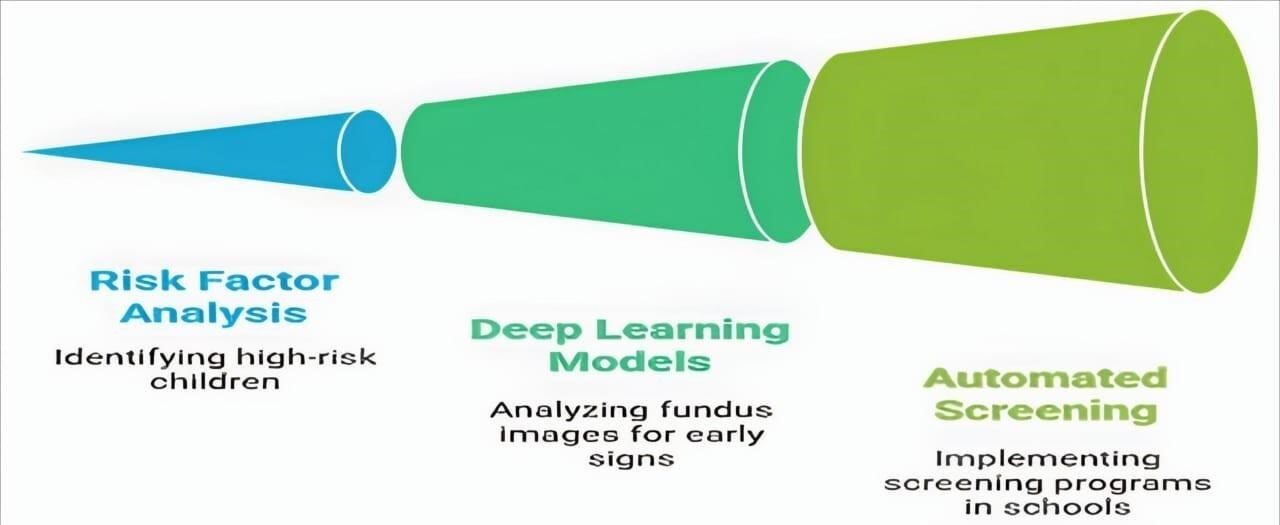
Figure 1: AI-driven Myopia Prediction and Screening
AI in Treatment Planning and Monitoring
Personalised treatment planning stands as one of the most exciting potential uses of AI. AI tools can evaluate longitudinal data and predict the future progression of an individual’s myopia, helping determine the most suitable treatment option at any given moment, whether it be low-dose atropine, orthokeratology or optical defocus lenses. (3,4)
AI-enabled mobiles and wearables go one step further, helping to track screen time, outdoor time and near-work activities. These tools provide behavioural feedback to parents and clinicians in real time. Such data-driven feedback enables a comprehensive and flexible approach to myopia management, in contrast to more rigid, one-size-fits-all plans. (3–5)
| Aspect | Role of AI | Key Features |
|---|---|---|
| Personalised Myopia Treatment Planning | AI assesses longitudinal patient information and predicts future myopia progression |
|
| Behaviours and Environmental Tracking via AI Devices | Monitors daily activities using AI-enabled mobile devices and wearables |
|
| Clinical and Parental Guidance | Provides real-time actionable recommendations |
|
Table 1: AI-powered Myopia Management
Challenges and Future Directions
Though promising, the application of AI in everyday clinical practice is limited due to poor quality and over-simplified data, lack of robust data privacy regulations and insufficient validation in diverse and unique populations. It is crucial that myopia control becomes a collaborative responsibility involving clinicians, data scientists and policy-makers so that AI is applied in an ethical, safe and rational manner. (3,4)
Potential future advancements include AI powered smart contact lenses that monitor axial elongation or other more advanced closed loop systems that can automatically change optical power in real time. (3,4)
Conclusion
Artificial Intelligence is an important element in addressing the myopia epidemic and is no longer a futuristic concept. Integrating predictive analytics with personalised interventions and ongoing monitoring, AI will allow clinicians to provide precision eye care and help lessen the burden of myopia on the world. With the advancement of technology including AI in the field of optometry will ensure vision is preserved for coming generations.
References
- Fricke, T. R., Jong, M., Naidoo, K. S., Sankaridurg, P., Naduvilath, T. J., Ho, S. M., … & Resnikoff, S. (2018). Global prevalence of visual impairment associated with myopic macular degeneration and temporal trends from 2000 through 2050: systematic review, meta-analysis and modelling. British Journal of Ophthalmology, 102(7), 855–862.
- Kang, M., Hu, Y., Gao, S., Liu, Y., Meng, H., Li, X., … & Li, S. (2024). Deep learning-based longitudinal prediction of childhood myopia progression using fundus image sequences and baseline refraction data. arXiv preprint arXiv:2407.21467.
- Ali, S. G., Zhang, C., Guan, Z., Chen, T., Wu, Q., Li, P., … & Wen, Y. (2024). AI-enhanced digital technologies for myopia management: advancements, challenges, and future prospects. The Visual Computer, 40(6), 3871–3887.
- Zhang, C., Zhao, J., Zhu, Z., Li, Y., Li, K., Wang, Y., & Zheng, Y. (2022). Applications of artificial intelligence in myopia: current and future directions. Frontiers in Medicine, 9, 840498.
- Lin, H., Long, E., Ding, X., Diao, H., Chen, Z., Liu, R., … & Liu, Y. (2018). Prediction of myopia development among Chinese school-aged children using refraction data from electronic medical records: a retrospective, multicentre machine learning study. PLoS Medicine, 15(11), e1002674.
Very knowledgeable
Very informative
Very helpful
Very informative 👍