
Siva Priya S, B. Optom
M. Optom Student, The Sankara Nethralaya Academy, Chennai, India
Aripiprazole is considered a second-generation antipsychotic drug. It is used in various other treatments like Schizophrenia, Bipolar disorder with Depression, and Obsessive Compulsive Disorder (OCD). (1) However, this drug is used in combination with other medications to treat various kinds of disorders; it also has its own limitations. Systemic effects include nausea, vomiting, headache, fatigue, sleep deprivation, weight gain, constipation, and akathisia. (2) Ocular side-effects such as Diplopia, Acute Angle Closure, and Chorioretinopathy have also been reported to occur with the usage of the drug. Several systemic medications contribute to the effect of transient Myopia, and one of them includes aripiprazole. The most common ocular side effect of the drug causes transient Myopia, which leads to the blurring of vision in many cases. (3-9)
Mechanism of Action
The administration of aripiprazole has been associated with several mechanisms of action that contribute to the onset of transient Myopia. Due to the intake of the drug, an idiosyncratic reaction occurs in the body, which contributes to the systemic and ocular side effects. In the eye, it causes swelling of the ciliary body, choroidal effusion occurs and following which the choroidal blood flow is also altered, resulting in fluid accumulation within the ciliary body. (10) This swelling may cause anterior rotation of the ciliary body, leading to forward displacement of the iris and crystalline lens, which results in the development of transient myopia. Subtle lens thickening also takes place in contrast to the forward movement of the iris-lens diaphragm. (11)
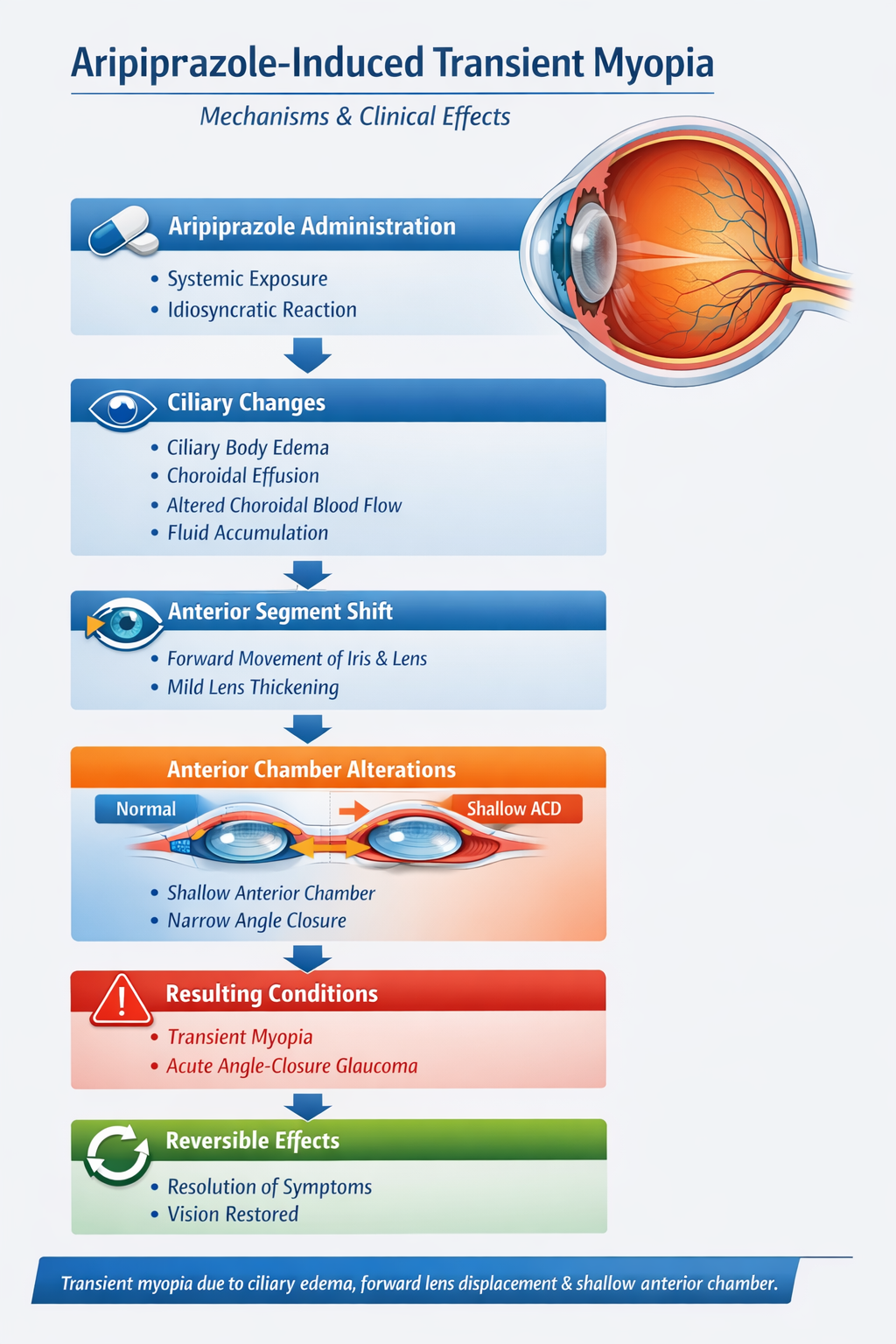
Figure 1: Image showing mechanism and clinical effects of aripiprazole induced transient myopia
Image Courtesy: Created by the Author
Summary of Previously Reported Ocular Findings
- Ciliary muscle spasm, which leads to spasm of accommodation (8)
- Transient Myopia (3-9)
- Increased thickness of the crystalline lens (8)
- Increased thickness of the crystalline lens (8)
- Choroidal effusion (10)
- Shallow anterior chamber depth (5)
- Acute Angle Closure Glaucoma (12)
Conclusion
Patients prescribed aripiprazole should be informed about the acute vision changes and other visual disturbances. Optometrists are advised to prescribe the spectacles only after the discontinuation of the drug, as the power may vary due to the adverse side effects of the drug.
Patients prescribed aripiprazole should be informed about the acute vision changes and other visual disturbances. Optometrists are advised to prescribe the spectacles only after the discontinuation of the drug, as the power may vary due to the adverse side effects of the drug.
References
- Shapiro, D. A., Renock, S., Arrington, E., Chiodo, L. A., Liu, L. X., Sibley, D. R., … & Mailman, R. (2003). Aripiprazole, a novel atypical antipsychotic drug with a unique and robust pharmacology. Neuropsychopharmacology, 28(8), 1400-1411.
- Luan, S., Wan, H., Zhang, L., & Zhao, H. (2018). Efficacy, acceptability, and safety of adjunctive aripiprazole in treatment-resistant depression: a meta-analysis of randomized controlled trials. Neuropsychiatric disease and treatment, 467-477.
- Cumurcu, T., Cumurcu, B. E., Yesil, B., & Gunduz, A. (2020). Aripiprazole-induced transient myopia. Northern Clinics of İstanbul, 7(5), 516-518.
- Abreu, T., & Pinheiro, J. (2019). Aripiprazole induced myopia-case report and literature review: Aripiprazole induced myopia. Clinical Schizophrenia & Related Psychoses.
- Kumar, K. P., Chiranjeevi, P., & Alam, M. S. (2018). Aripiprazole-induced transient myopia: A rare entity. Indian Journal of Ophthalmology, 66(1), 130-131.
- Nair, A. G., Nair, A. G., George, R. J., Biswas, J., & Gandhi, R. A. (2012). Aripiprazole induced transient myopia: a case report and review of literature. Cutaneous and Ocular Toxicology, 31(1), 74-76.
- Karadağ, H., Özdel, K., & Acar, M. (2015). Aripiprazole induced acute transient bilateral myopia: A Case report. Balkan Medical Journal, 32(2), 230-232.
- Selvi, Y., Atli, A., Aydin, A., & Yener, H. I. (2011). Aripiprazole-related acute transient myopia and diplopia: a case report. Journal of clinical psychopharmacology, 31(2), 249-250.
- Sinanoğlu, G. K., & Yavrum, F. (2022). Aripiprazole-Related Acute Myopia: A Case Report. Journal of Clinical Psychopharmacology, 10-1097.
- Ikeda, N., Ikeda, T., Nagata, M., & Mimura, O. (2002). Ciliochoroidal effusion syndrome induced by sulfa derivatives. Archives of Ophthalmology, 120(12), 1775-1775.
- Postel, E. A., Assalian, A., & Epstein, D. L. (1996). Drug-induced transient myopia and angle-closure glaucoma associated with supraciliary choroidal effusion. American journal of ophthalmology, 122(1), 110-112.
- Lee, J. T. L., Skalicky, S. E., & Lin, M. L. (2017). Drug-Induced myopia and bilateral angle closure secondary to zolmitriptan. Journal of Glaucoma, 26(10), 954-956.
About the Author

Siva Priya S
M. Optom Student
The Sankara Nethralaya Academy, Chennai, India
Recent Comments