
Nilanjan Samanta,B. Optom Student
Shoubhik Chakraborty, Assistant Professor
NSHM College of Management and Technology, Durgapur, India
Vision Therapy is a form of treatment that utilises the concept of brain plasticity to rehabilitate the ability of the brain to interpret visual stimuli. The goal of vision therapy is to improve visual performance by enhancing how the brain interprets the images sent to it by both eyes. (1)
An Important Component of Vision Therapy
For optimal success with vision therapy, it is important to include an assessment of the entire eye health system and a detailed evaluation of all aspects of visual behaviour. There must also be a structured plan for progressing through several levels of therapy to enable the individual to achieve his or her overall visual performance goals. (2)
Understanding the Amblyopic Brain
In Amblyopia, abnormal visual experience causes cortical suppression and reduced neural input from the affected eye, despite a structurally normal eye. As a result, vision from the amblyopic eye decreases, and visual perception, such as depth, distance, and speed is mainly guided by the dominant eye. (3)
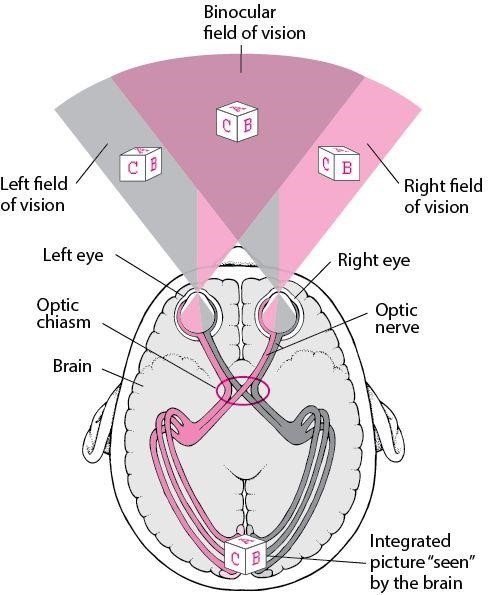
Figure 1: The image shows the schematic representation of binocular visual processing and neural integration.
Image Courtesy: https://in.pinterest.com/pin/1044905551016127153/
How Amblyopia Affects Visual Perception
Amblyopia not only causes poor vision but also affects how a child perceives the environment. Children may respond differently to physical stimuli and spatial distances when using one eye instead of both. Even when objects appear similar, depth and distance perception can vary significantly. (1)
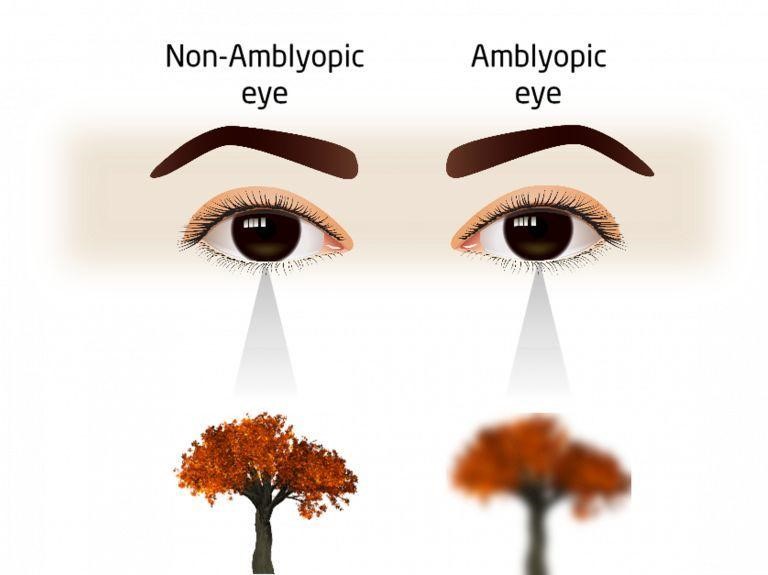
Figure 2: This image shows the visual perception in the non-Amblyopic and Amblyopic eye.
Image Courtesy: https://in.pinterest.com/pin/766034217893528991/
Visual Processing System Training
Vision therapy can be described as a structured and evidence-based program to provide treatment to the visual processing system of the brain. Rather than focusing on just the eye, this program retrains the brain to work together with both eyes maximally effectively. Neurons that fire together, wire together.
Vision therapy aims to provide customised exercises and activities to help:
- Decrease the amount of suppression on the amblyopic eye.
- Increase the coordination and teaming of the eyes.
- Improve and/or develop neural connections between the eyes and the brain.
- Restore and/or develop binocular vision and depth perception.
In generic terms, vision therapy will retrain the brain to use its visual ability. (4)
Amblyopia Treatment and Age
A breakthrough in vision science is understanding that the brain has the capability of neuroplasticity. The brain continuously creates new neural connections in its lifetime; therefore, it was previously thought that Amblyopia treatment was only effective during childhood. There is now evidence that with appropriate vision therapy, improvements can occur in Amblyopia, even in adolescents and adults. (5)
Conclusion: The Responsibilities of an Optometrist
Optometrists have a key role in detecting Amblyopia at an early age, determining the cause of Amblyopia, and developing an individualised vision therapy program for each patient. Early diagnosis is most effective; however, timely intervention may result in meaningful improvement at any age.
References
- Levi, D. M., & Li, R. W. (2009). Perceptual learning as a potential treatment for amblyopia: a mini-review. Vision Research, 49(21), 2535–2549.
- Scheiman, M., & Wick, B. (2008). Clinical Management of Binocular Vision: Heterophoric, Accommodative, and Eye Movement Disorders. Lippincott Williams & Wilkins.
- Levi, D. M. (2006). Visual processing in amblyopia: human studies. Strabismus, 14(1), 11–19.
- Scheiman, M., & Wick, B. (2008). Clinical Management of Binocular Vision: Heterophoric, Accommodative, and Eye Movement Disorders. Lippincott Williams & Wilkins.
- Chakraborty, S., Optom, B., Parida, S., & Hajira, R. Treatment of Anisometropic Amblyopia Using a Combination Approach.
About the Author

Nilanjan Samanta
B. Optom
NSHM College of Management and Technology, Durgapur, India

Dr. Shoubhik Chakraborty
Assistant Professor
Recent Comments