
Gopi Krishnan G., B. Optom
M. Optom Student, Dr. Agarwal’s Institute of Optometry, Chennai, India
Neurodegenerative diseases rarely announce their onset. Long before memory fades or movement slows, silent neuronal damage continues unchecked within the brain. Recent advances in vision science suggest that these earliest pathological changes may be reflected in the eye. The retina, being embryologically derived from neural tissue and structurally connected to the central nervous system, offers a unique and non-invasive window into brain health. This evolving understanding positions Optometry as a frontline discipline in the early detection of neurodegeneration and preventive healthcare. (1,2)
The Retina Brain Connection
The retina shares structural, vascular, and neurochemical similarities with the brain. Retinal ganglion cells and the retinal nerve fibre layer undergo degenerative processes analogous to cerebral neurons. Optical Coherence Tomography (OCT), a non-invasive imaging modality, enables precise assessment of these retinal layers and has demonstrated significant thinning in several neurodegenerative disorders, often preceding neurological diagnosis. (3-5) Such findings establish the retina as a sensitive biomarker of early neuronal injury.
Alzheimer’s Disease: Ocular Clues Before Cognitive Decline
Alzheimer’s disease affects over 55 million people globally and is often diagnosed only after irreversible neuronal damage. Growing evidence suggests retinal amyloid-beta deposition mirrors cerebral pathology. Advanced retinal imaging enables non-invasive detection of these changes, while early visual deficits such as reduced contrast sensitivity highlight routine eye examinations as vital tools for preclinical risk identification. (6-9)
Parkinson’s Disease and Visual Dysfunction
Parkinson’s disease is traditionally identified by motor impairment; however, visual abnormalities frequently precede these symptoms. Reduced colour discrimination, impaired contrast sensitivity, and inner retinal thinning are consistently reported. Dopaminergic deficiency disrupts retinal signalling, making early Optometric detection crucial for timely neurological referral and improved outcomes. (10)
From Eye to Brain: A Predictive Care Model
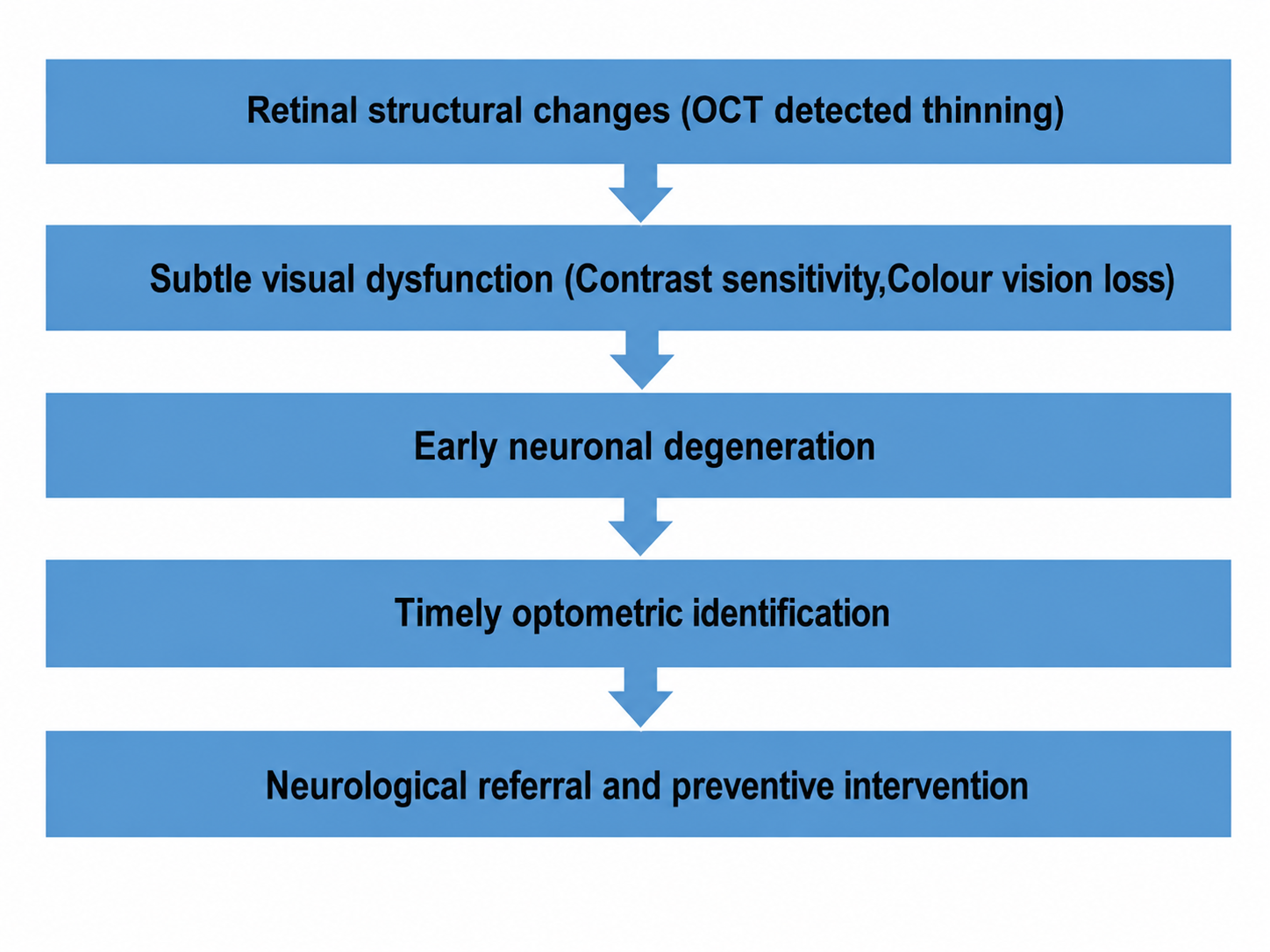
Figure 1: This flow chart illustrates retinal biomarkers enabling early neurodegeneration detection.
Clinical Relevance for Optometry
Routine eye examinations are more accessible and cost-effective than specialised neurological investigations, particularly in low and middle-income settings. Integrating awareness of retinal neuro-biomarkers into Optometric practice supports a predictive and preventive healthcare approach and may significantly reduce diagnostic delays. (2,11)
| Disease | Retinal Findings | Optometric Test | Clinical Significance |
|---|---|---|---|
| Alzheimer’s disease | RNFL thinning, ganglion cell loss |
OCT, contrast sensitivity | Early risk identification |
| Parkinson’s disease | Colour vision loss, inner retinal thinning |
Colour vision testing, OCT | Pre-motor detection support |
| Multiple sclerosis | RNFL thinning, optic nerve damage |
OCT | Disease monitoring |
Table 1 :This table shows retinal indicators of neurodegeneration and their clinical relevance.
Conclusion
The eye does more than enable vision; it reflects the earliest whispers of brain degeneration. As evidence strengthens the role of retinal biomarkers in neurodegenerative disease, Optometry stands at the threshold of a transformative shift. By recognising silent retinal changes before neurological symptoms arise, Optometrists may help redefine care from late diagnosis to early prevention turning routine eye examinations into powerful tools for protecting brain health.
References
- London, A., Benhar, I., & Schwartz, M. (2013). The retina as a window to the brain from eye research to CNS disorders. Nature Reviews Neurology, 9(1), 44–53. https://doi.org/10.1038/nrneurol.2012.227
- World report on vision (2023). World Health Organization.
- Cheung, C. Y., Ikram, M. K., Chen, C., & Wong, T. Y. (2021). Imaging retina to study dementia and stroke. Nature Reviews Neurology, 17(4), 215–228. https://doi.org/10.1038/s41582-021-00473-0
- Saidha, S., Al-Louzi, O., Ratchford, J. N., Bhargava, P., Oh, J., Newsome, S. D., Prince, J. L., Pham, D. L., Roy, S., van Zijl, P., & Calabresi, P. A. (2015). Optical coherence tomography reflects brain atrophy in multiple sclerosis: A four-year study. The Lancet Neurology, 14(9), 853–863. https://doi.org/10.1016/S1474-4422(15)00124-6
- Petzold, A., de Boer, J. F., Schippling, S., Vermersch, P., Kardon, R., Green, A., Calabresi, P. A., & Polman, C. (2017). Optical coherence tomography in multiple sclerosis: A systematic review and meta-analysis. Neurology, 88(3), 294–303. https://doi.org/10.1212/WNL.0000000000003514
- World Alzheimer Report 2023: Reducing Dementia Risk. Alzheimer’s Disease International. (2023). Alzheimer’s Disease International.
- Koronyo, Y., Biggs, D., Barron, E., Boyer, D. S., Pearlman, J. A., Au, W. J., Kile, S. J., Blanco, A., Fuchs, D.-T., Ashfaq, A., Frautschy, S., & Koronyo-Hamaoui, M. (2017). Retinal amyloid pathology and proof-of-concept imaging trial in Alzheimer’s disease. JCI Insight, 2(16), e93621.
- Frost, S., Martins, R. N., & Kanagasingam, Y. (2013). Ocular biomarkers for early detection of Alzheimer’s disease. Acta Neuropathologica, 126(1), 39–52. https://doi.org/10.1007/s00401-013-1139-0
- Armstrong, R. A. (1999). Visual signs and symptoms of Alzheimer’s disease. British Journal of Optometry and Dispensing, 7(4), 135–139.
- Archibald, N. K., Clarke, M. P., Mosimann, U. P., & Burn, D. J. (2011). Visual symptoms in Parkinson’s disease and Parkinson’s disease dementia. Movement Disorders, 26(13), 2387–2395. https://doi.org/10.1002/mds.23891
- Bourne, R. R. A., Flaxman, S. R., Braithwaite, T., Cicinelli, M. V., Das, A., Jonas, J. B., Keeffe, J., Kempen, J. H., Leasher, J., Limburg, H., Naidoo, K., Pesudovs, K., Resnikoff, S., Silvester, A., Stevens, G. A., Tahhan, N., Wong, T. Y., & Taylor, H. R. (2021). Magnitude, temporal trends, and projections of the global prevalence of blindness and distance and near vision impairment. The Lancet Global Health, 9(2), e144–e160. https://doi.org/10.1016/S2214-109X(20)30425-3
About the Author

Gopi Krishnan G.,
M. Optom Student,
Recent Comments