
Baneen Kazmi, B. Optom Student1
1Department of Optometry, GD Goenka University, Gurugram, India
Roshni Sengupta, Assistant Professor2
2Department of Optometry, Noida International University, Noida, India
Keywords
optometry, ChatGPT, Artificial Intelligence, patients’ education
Declaration of Interest
Introduction
Diagnosed with early-stage Glaucoma, imagine a patient asks ChatGPT at home: “What does high eye pressure mean for my vision?” Seconds later, a clear, comforting explanation prepares them for their follow-up visit.
Artificial intelligence (AI) is transforming healthcare by making medical information more accessible and improving communication between healthcare professionals and patients. Interest in adopting AI for clinical practice rose significantly following the COVID-19 pandemic, largely driven by the growing demand for remote consultations. Tools such as ChatGPT can provide quick, easy-to-understand health information and support patient learning. In Optometry, these AI assistants are helping patients better understand eye conditions, treatments, and preventive care.
Why Patients’ Education Matters in Optometry?
Educating patients about eye health enables them to make informed decisions and actively participate in their care. When patients understand their diagnosis, treatment, and preventive measures, they are more likely to follow professional advice and attend follow-up visits. (1) Effective patient education also strengthens communication with Optometrists, reduces confusion, and supports better long-term management of eye conditions, ultimately improving visual outcomes and quality of life.
How ChatGPT and AI Helps Patients’ Learn About Eye-health?
ChatGPT helps patients’ learn about eye health by providing clear and easy-to-understand information about eye diseases, their symptoms, treatment options, medications, and preventive care. It can answer common questions at any time, allowing patients to better understand their diagnosis and follow the advice given by their Optometrist or Ophthalmologist. (2,3) Research also suggests that AI chatbots with specialised eye care knowledge can explain diagnoses, guide patients through pre- and post-treatment care, and provide practical advice on contact lens hygiene and general eye care. (2,3) In addition, ChatGPT can help correct common myths and improve patient awareness.
Benefits for Optometrists
AI-assisted patient education enhances communication and saves Optometrists time on routine explanations (Figure 1). Informed patients follow advice better and ask relevant questions. AI tools generate simple educational materials to reinforce post-appointment info, freeing clinicians to focus on personalised, complex care and improving overall engagement. (4)
AI further transforms eye care by streamlining screening, tracking, and triage for conditions like Diabetic Retinopathy, AMD, and Glaucoma. By segmenting OCT scans and detecting subtle biomarkers, it helps prioritise urgent cases. Furthermore, AI acts as a reliable second opinion, expands teleophthalmology, generates visual reports for patients, and reduces administrative burdens to optimise clinical outcomes. (5)
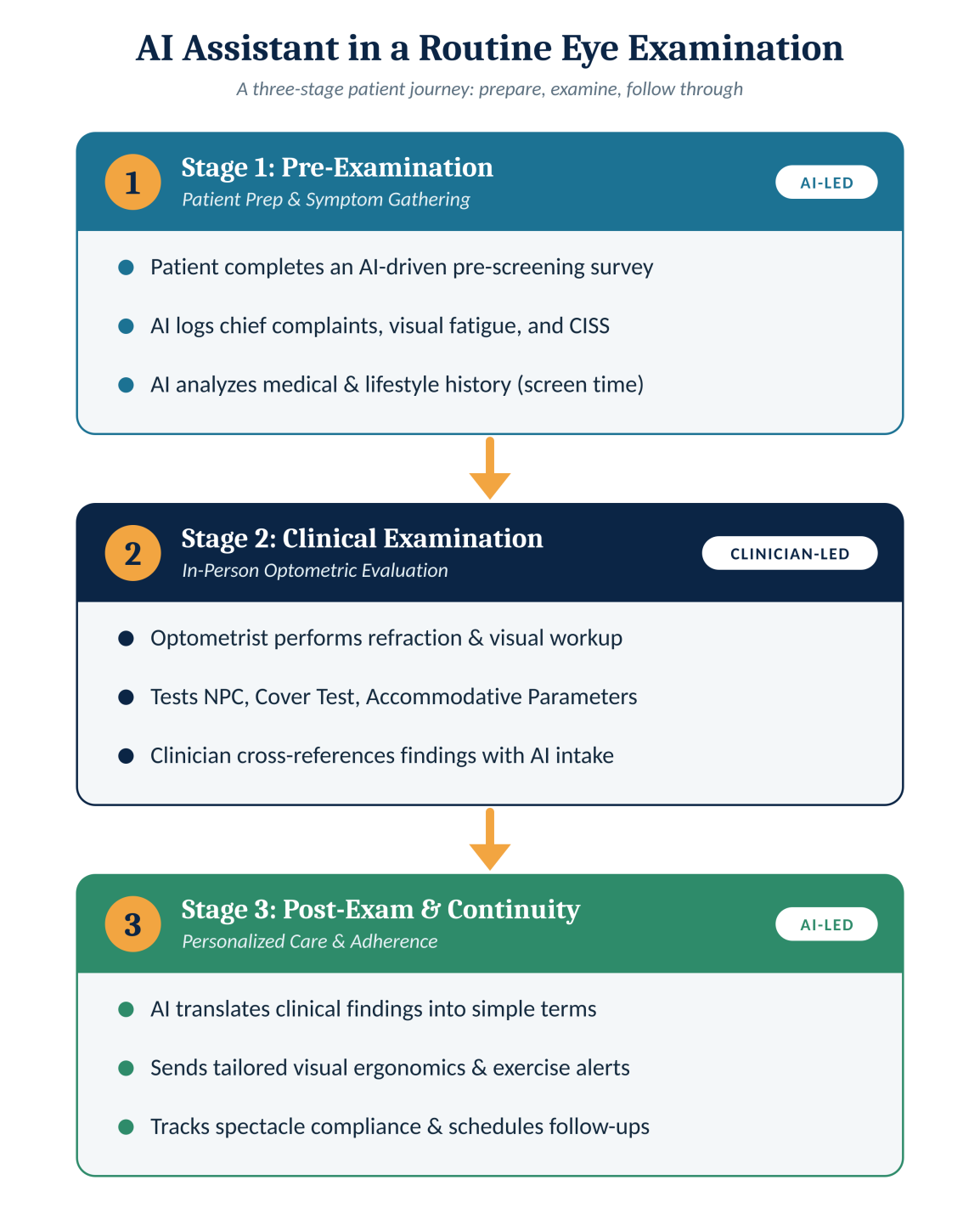
Figure 1: This flowchart shows AI Assistant in a Routine Eye Examination – Patient Journey and Clinical Workflow Integration
Limitations and Risks
AI assistants can provide inaccurate or outdated information, raising privacy concerns and lacking clinical empathy. (6,8) Currently under-performing compared to medical students, AI systems require domain-specific training. Furthermore, their outputs lack regulatory oversight and validated reliability, resulting in mixed patient trust (Figure 2). Due to issues with inaccuracy, uninterpretability, and an inability to express uncertainty, AI cannot be deployed autonomously in clinical settings.(9)
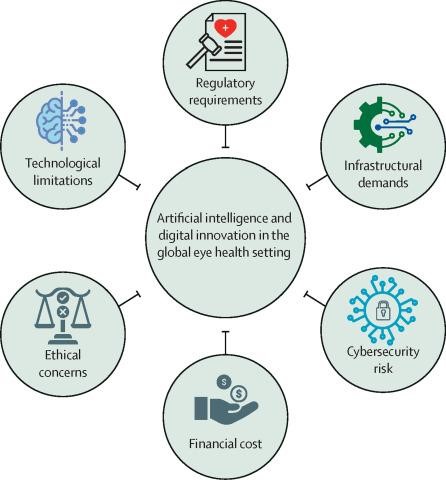
Figure 2: This image shows the barriers to Artificial Intelligence in Global Eye Health.
Image Source: Tan TF, Thirunavukarasu AJ, Jin L, Lim J, Poh S, Teo ZL, Ang M, Chan RP, Ong J, Turner A, Karlström J. Artificial intelligence and digital health in global eye health: opportunities and challenges. The Lancet Global Health. 2023 Sep 1;11(9):e1432-43.
Best Practices for Using AI in Optometry
Optometrists and Ophthalmologists will need to combine the best of their clinical skills and AI tools for best practices. Patients should verify important information with an Optometrist or Ophthalmologist and continue regular eye examinations. Healthcare professionals should use AI to improve patient education and communication while relying on their clinical judgment for diagnosis and treatment. Protecting patient privacy and using trusted AI platforms are also essential. (2,6)
Future of AI in Optometry
As AI continuously integrates new datasets, its diagnostic accuracy and triage capabilities will refine, serving as an essential clinical copilot, like OCT or fundus cameras, without replacing practitioner decision-making. (5) To ensure safe clinical adoption, medical training must integrate standardised AI curricula to unify currently scarce learning resources. Ultimately, these training models will build practitioner competency with specialised digital health tools, including AI in Ophthalmology. (9)
Conclusion
Despite valid ethical and technical constraints, AI is indisputably reshaping eye care. By streamlining disease screening, tracking, and triage, it optimizes specialist workflows and enhances patient care. Additionally, AI delivers valuable second opinions on complex cases and leverages telemedicine to make vision care more accessible.
References
- Iskander M, Hu G, Coulon S, Seixas AA, McGowan R, Al-Aswad LA. Health literacy and ophthalmology: a scoping review. Survey of ophthalmology. 2023 Jan 1;68(1):78-103.
- Andrew A, Rodenko S. Large language models and eye education: A narrative review. Oman Journal of Ophthalmology. 2026 Feb 27;19(1):17.
- Zheng H, Dong H, Zhao H. Trends and advances in ChatGPT applications in ophthalmology. Journal Français d’Ophtalmologie. 2025 Oct 1;48(8):104622.
- Dossantos J, An J, Javan R. Eyes on AI: ChatGPT’s transformative potential impact on ophthalmology. Cureus. 2023 Jun 21;15(6).
- Martynova M. Vision care AI: will AI have a positive effect on eye care? [Internet]. Altris AI; [cited 2026 Jul 30]. Available from: https://www.altris.ai/article/ai-effects-on-eye-care-specialists/
- Biswas S, Davies LN, Sheppard AL, Logan NS, Wolffsohn JS. Utility of artificial intelligence‐based large language models in ophthalmic care. Ophthalmic and Physiological Optics. 2024 May;44(3):641-71.
- Krishnan A, Dutta A, Srivastava A, Konda N, Prakasam RK. Artificial intelligence in optometry: current and future perspectives. Clinical optometry. 2025 Dec 31:83-114.
- Chen S, Bai W. Artificial intelligence technology in ophthalmology public health: current applications and future directions. Frontiers in Cell and Developmental Biology. 2025 Apr 17;13:1576465.
- Tan TF, Thirunavukarasu AJ, Jin L, Lim J, Poh S, Teo ZL, Ang M, Chan RP, Ong J, Turner A, Karlström J. Artificial intelligence and digital health in global eye health: opportunities and challenges. The Lancet Global Health. 2023 Sep 1;11(9):e1432-43.
About the Authors

Baneen Kazmi
B. Optom Student
Department of Optometry, GD Goenka University, Gurugram, India

Roshni Sengupta
Assistant Professor
Recent Comments