
Jeba Ahmed1, M. Optom Student
Haziel Rynjah2, Assistant Professor
1,2The Assam Royal Global University, Guwahati, India
Keywords
binocular vision, simultaneous perception, fusion, stereopsis, cricket
Declaration of Interest
No conflict of interest.
Imagine facing a fast bowler in a cricket match bowl the ball at you at 145 km/hr. You have less than half a second to decide whether to defend, duck or hit the ball, based on the speed, direction, bounce and spin of the incoming pitch. Although talent and good hand-eye coordination certainly help, it is hard to ignore the role of binocular vision in the art of batting. But what exactly is binocular vision?
Binocular vision is a person’s ability to use both eyes in cooperation with each other to obtain a single image with normal depth perception. (1,2) The ability to see with two eyes is vital to most animals as it allows them to perceive depth and move around without colliding with objects. In humans, binocular vision plays an important role in many activities like driving, climbing stairs, and sports. (2,3)
The Three Building Blocks of Seeing
It is important to distinguish between three grades of binocular vision, as each plays a different role in human activity. (2,3) The following table displays three grades of binocular vision with their functions and examples.
| Grade | Function | Role in Athletic Performance |
|---|---|---|
| Grade I | Simultaneous perception Both eyes see the same object. |
Enables the athlete to detect and focus on the target instantly, such as spotting a fast-moving ball, an opponent, or a teammate immediately after it enters the field of view. (2) |
| Grade II | Fusion The image formed by the two eyes is perceived as one, so there is no double vision. |
Allows the athlete to track moving objects smoothly and maintain stable single vision, ensuring accurate timing, coordination, and continuous visual attention during play. (2) |
| Grade III | Stereopsis 3-D vision allows the perceiver to judge distance and speed. |
Helps the athlete judge distance, speed, trajectory, and timing, enabling precise actions such as catching, hitting, passing, heading, or intercepting the ball with confidence. (2) |
Table 1: Three Grades of Binocular Vision and Their Role in Athletic Performance.
Following the Ball: The Science of Performance
While being able to see the ball is important, another factor helps ensure it stays in our field of view. Smooth pursuit eye movements are what enable us to follow the ball throughout the game. In addition to that, when the ball is thrown or hit to another area, we make quick movements with our eyes called saccades. Combined with stereopsis, smooth pursuit eye movements, and saccades, these enable accurate depth perception, hand-eye coordination, and visual reaction time. (4,5) These visual skills are not only crucial for optimal performance in a huge variety of sports, but studies indicate that elite-level athletes are more likely to have improved visual skills. For instance, professional baseball players display exceptional visual skills, proving that the role of vision is crucial in many different sports. (6)
Beyond the Athletic Field
The same visual partnership helps a driver judge the distance of an approaching vehicle, a child catches a flying ball, and a person confidently step off a staircase. When the two eyes coordinate effectively, the world becomes not merely something we see, but something we can accurately navigate and respond to.
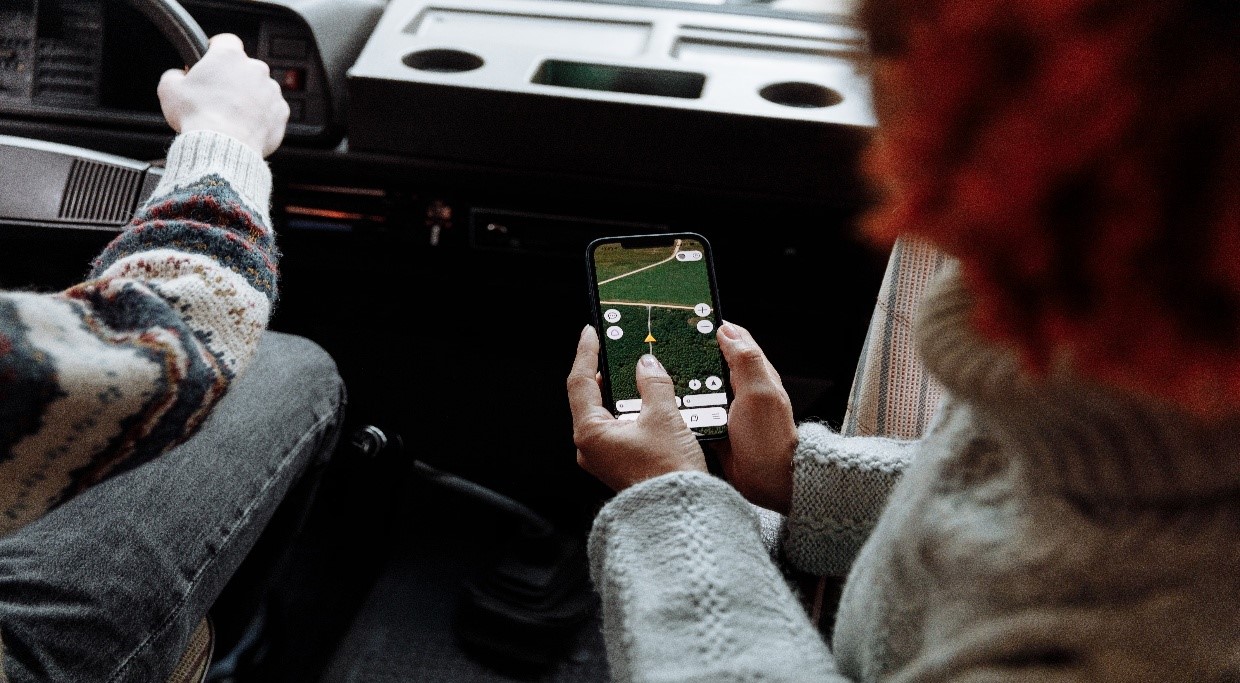
Figure 1: This image shows the role of Binocular Vision in Driving and Distance Judgement.
Image Courtesy : https://images.pexels.com/photos/6945640/pexels-photo-6945640.jpeg
Conclusion
Every successful movement, whether it is a batsman playing the perfect cover drive, a goalkeeper making a crucial save or a child catching a ball, is silently piloted by binocular vision. It transforms two separate images into one meaningful perception and allows us to judge distance, track motion and react with precision. (1)
Before you can win the match, you must first see the ball.
References
- Wilson HR. Binocular contrast, stereopsis, and rivalry: Toward a dynamical synthesis. Vision research. 2017 Nov 1;140:89-95.
- Scheiman M, Wick B. Clinical management of binocular vision: heterophoric, accommodative, and eye movement disorders. Lippincott Williams and Wilkins; 2008.
- Howard IP. Seeing in depth, Vol. 1: Basic mechanisms. University of Toronto Press; 2002.
- Lisberger SG. Visual guidance of smooth pursuit eye movements. Annual review of vision science. 2015 Nov 24;1:447-68.
- Munoz DP, Everling S. Look away: the anti-saccade task and the voluntary control of eye movement. Nature Reviews Neuroscience. 2004 Mar 1;5(3):218-28.
- Laby DM, Davidson JL, Rosenbaum LJ, Strasser C, Mellman MF, Rosenbaum AL, Kirschen DG. The visual function of professional baseball players. American journal of ophthalmology. 1996 Oct 1;122(4):476-85.
About the Authors

Jeba Ahmed
M. Optom Student
The Assam Royal Global University, Guwahati, India

Haziel Rynjah
Assistant Professor
Recent Comments