
Richie Huang
Founder and Optometrist, JD Optometry Group
Not every eye needs a 10:2 ratio – what matters most is understanding the intended Age-Related Eye Disease Studies (AREDS2) population and returning to individualised visual nutrition assessment. AREDS2 transformed the global understanding of ocular nutrition.
It established Lutein and Zeaxanthin as central components in evidence-based nutritional strategies for Age-related Macular Degeneration (AMD), helping move ocular nutrition into a more clinically grounded era. However, over the past decade, the success of AREDS2 may also have unintentionally contributed to the oversimplification of visual nutrition itself.
Today, “10 mg lutein + 2 mg Zeaxanthin” has become one of the most recognisable formulations in the eye health market. Many products are promoted around “AREDS2 formulas” or the “10:2 golden ratio,” leading many consumers to assume that if one is considering lutein supplementation, 10:2 should automatically be the preferred choice.
But the issue is not that the 10:2 ratio lacks value. On the contrary, AREDS2 remains one of the most important landmark studies in ocular nutrition. The more important question is this:
Are we taking a nutritional strategy designed for specific disease stages and high-risk AMD populations, and extrapolating it into a universal eye health formula for everyone?
In other words: AREDS2 should be respected, not generalised.
The Real Value of AREDS2: What It Proved – and What It Did Not
Before discussing the 10:2 ratio, it is important to revisit the original clinical context of AREDS and AREDS2.
The AREDS and AREDS2, led by the U.S. National Eye Institute (NEI), remain among the most influential large-scale clinical trials in AMD nutritional intervention research. According to the NEI, AREDS and AREDS2 supplementation can reduce the risk of progression from intermediate AMD to advanced AMD by approximately 25%. At the same time, the NEI clearly states that these formulations do not prevent AMD onset and are not treatments for cataracts. (1)
This distinction is critically important.The clinical relevance of AREDS2 was never about “preventing eye aging for everyone.” Its purpose was to reduce disease progression risk in individuals already demonstrating specific AMD risk profiles.
The NEI further clarifies that AREDS2 supplementation is primarily intended for individuals with intermediate AMD in one or both eyes, or those with advanced AMD in one eye. (2)
Therefore, the significance of AREDS2 is very specific, It is an evidence-based nutritional strategy for AMD progression risk management – not a universal daily eye health template.
When this distinction becomes blurred, ocular nutrition can gradually shift from evidence-based clinical reasoning toward marketing-driven formula worship.
- The 10:2 Ratio Is Evidence-Based – But Not Universal
AREDS2 incorporated lutein 10 mg and zeaxanthin 2 mg into its study design while evaluating their effects alongside omega-3 fatty acids on AMD progression. The primary analysis of the AREDS2 randomised clinical trial, published in JAMA in 2013, reported that adding lutein/zeaxanthin, DHA/EPA, or both to the original AREDS formulation did not produce a statistically significant additional reduction in progression to advanced AMD. (3)
However, this does not imply that lutein and zeaxanthin lack value. Long-term follow-up analyses later demonstrated that lutein/zeaxanthin were associated with lower risks of progression compared with beta-carotene, while beta-carotene itself was associated with increased lung cancer risk among former smokers. (4) This became one of the key reasons modern AREDS2 formulations replaced beta-carotene with lutein and zeaxanthin.
Still, this should not be interpreted to mean that lutein/zeaxanthin provide equivalent preventive benefits across all populations. The most accurate statement may be 10:2 is an evidence-based ratio within the AREDS2 context – but not a universal ratio for all visual nutrition needs.
When the market reduces 10:2 into a “golden ratio,” the original disease context, risk profile, and clinical purpose can easily become lost.
For individuals with intermediate AMD or elevated progression risk, AREDS2 has clear clinical relevance. But for younger adults without AMD, individuals with digital visual fatigue, highly myopic patients without macular pathology, or consumers simply seeking “daily eye care,” directly applying AREDS2 logic requires greater caution.
This is not a rejection of AREDS2. Rather, it is an attempt to avoid evidence extrapolation – the extension of findings from one specific clinical population into groups that were never directly studied.
The real concern is not the existence of evidence itself, but the expansion of evidence beyond its original clinical boundaries.
- When “Golden Ratios” Become Marketing Language: What Gets Lost Is Clinical Judgment
In consumer markets, “golden ratio” is a powerful phrase. It is simple, memorable, and commercially effective.But within professional ocular nutrition, oversimplified ratio-based thinking may create several problems.
First, consumers may assume that any product matching a 10:2 ratio is automatically more effective, more scientific, or more appropriate for them personally.Second, individuals without AMD – or outside the intended AREDS2 population – may begin using disease-progression formulations as generalised wellness supplements.Third, truly meaningful variables may become overlooked, including:
- Dietary patterns
- Visual function
- Light exposure
- Sleep and circadian behavior
- Digital device use
- Metabolic health
- Smoking history
- Retinal status
- Functional visual complaints
In recent years, I have also observed that some younger and middle-aged adults without confirmed AMD diagnoses have proactively sought or chronically used AREDS2-type formulations.
Yet when their actual concerns are explored more carefully, many are not struggling with macular degeneration at all. Instead, they report:
- Digital visual fatigue
- Glare sensitivity
- Delayed photo stress recovery
- Circadian disruption
- Reduced visual recovery after prolonged near work
These observations suggest that modern visual nutrition challenges may no longer be limited to AMD prevention alone.When every ocular concern becomes simplified into “whether the formula is 10:2,” clinicians risk overlooking far more relevant nutritional and functional considerations.
For some individuals, the priority may not be higher lutein intake, but rather:
- Improving dietary vegetable intake
- Increasing omega-3 consumption
- Restoring sleep quality
- Optimising daytime light exposure
- Addressing chronic inflammation
- Improving Metabolic Health
- Evaluating contrast sensitivity and glare-related dysfunction
True visual nutrition should not begin with “Does this formula contain 10:2?”, It should begin with:“What does this individual eye – and this individual person – actually need?”.
- Ocular Nutrition Should Not Be Reduced to AMD Nutrition Alone
The success of AREDS2 undeniably increased global awareness surrounding AMD and macular nutrition. However, it may also have unintentionally narrowed public understanding of ocular nutrition itself. Today, many discussions about visual nutrition are reduced to:
- AMD
- Lutein
- Zeaxanthin
- Macular support
- 10:2 ratios
Yet modern visual health extends far beyond AMD progression alone. Visual nutrition may also influence:
- Macular Pigment Optical Density (MPOD)
- Contrast Sensitivity
- Glare disability
- Photo stress recovery
- Chromatic contrast
- Digital visual stress
- Sleep quality
- Retinal oxidative stress
- Visual resilience
Hammond et al. demonstrated in a double-blind placebo-controlled study that lutein and zeaxanthin supplementation improved serum carotenoid levels, MPOD, chromatic contrast, and photostress recovery. (5)
Johnson et al. further reported associations between MPOD and functional visual outcomes, particularly glare disability, contrast sensitivity, and photo stress recovery. (6)
Meanwhile, Stringham et al. observed that macular carotenoid supplementation in high screen-time users improved MPOD, sleep quality, headache frequency, eye strain, and several visual performance measures after six months.(7)
Importantly, these findings support broader relationships between macular carotenoids and functional vision – not necessarily universal AREDS2 supplementation strategies for all populations.
These studies remind us that the value of lutein, zeaxanthin, and macular pigment should not be defined solely by AMD progression risk. The next phase of ocular nutrition should increasingly explore their relationship with:
- Visual performance
- Visual resilience
- Healthy aging
- Daily functional vision
- Circadian visual biology
This is precisely why the concept of precision visual nutrition deserves greater attention.
If ocular nutrition is to move beyond formula-centred thinking, a broader clinical framework may be required.Rather than focusing solely on whether a supplement matches a specific ratio, clinicians may need to evaluate disease stage, visual function phenotype, lifestyle exposure, systemic and metabolic context, and nutritional status together.
The proposed precision visual nutrition framework is not intended to replace ophthalmic diagnosis or formal clinical guidelines, but rather to serve as a conceptual model supporting more individualised clinical reasoning in ocular nutrition.
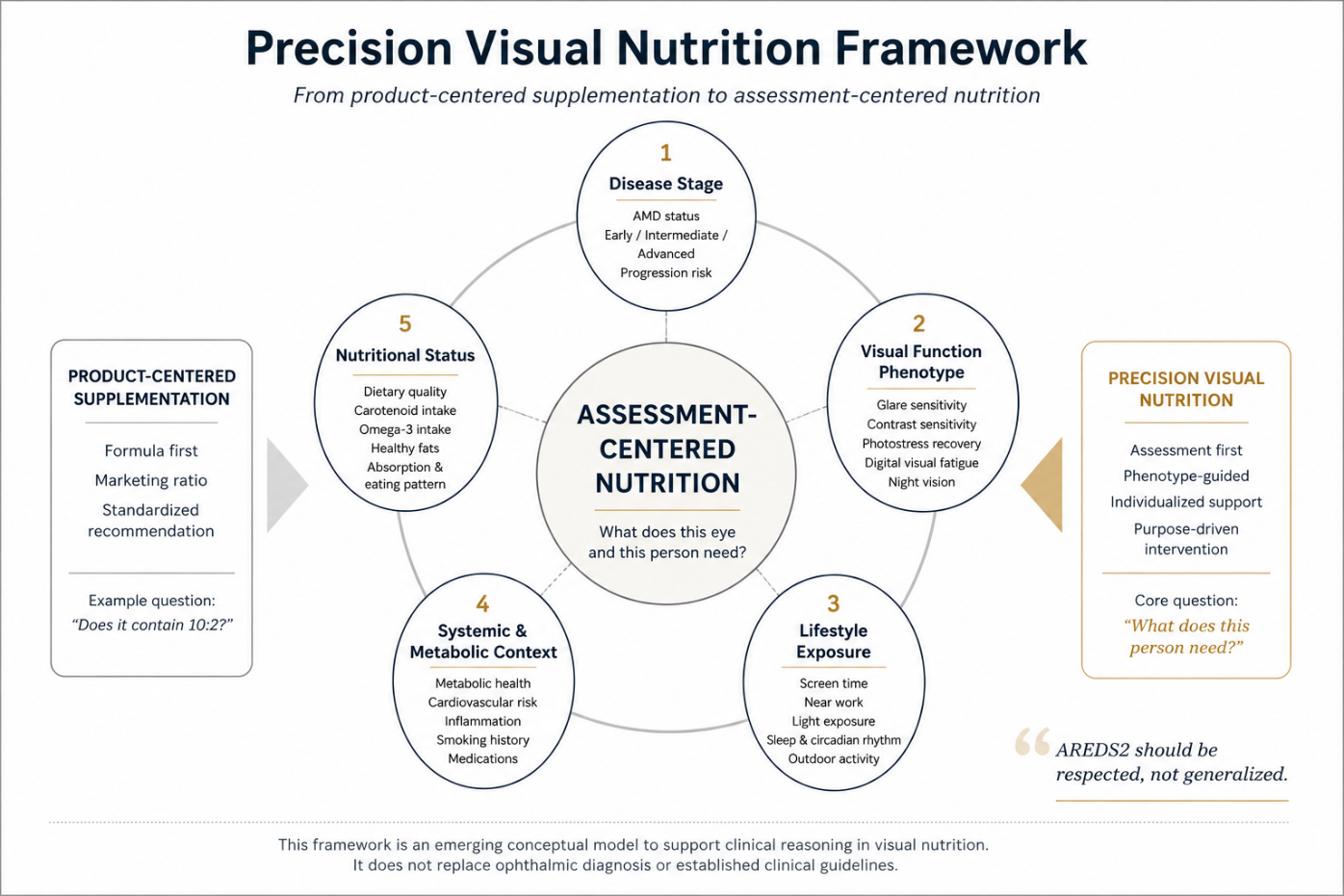
Figure 1: This image shows the proposed precision visual nutrition framework.
Image Courtesy: Created by the Author
This conceptual framework illustrates the transition from product-centred supplementation to assessment-centred visual nutrition. It integrates disease stage, visual function phenotype, lifestyle exposure, systemic and metabolic context, and nutritional status to support individualised clinical reasoning. This model is not intended to replace ophthalmic diagnosis or established clinical guidelines.
- From Product-Centred Supplementation to Assessment-Centred Nutrition
I believe the future of ocular nutrition is not simply about identifying another popular formula. More importantly, it is about changing how nutritional recommendations are made. For years, the supplement industry has largely followed a product-centred model:
Create a product first, then explain why consumers should take it.
Professional visual nutrition, however, should become assessment centred. This means understanding the condition of an individual before deciding:
- Whether nutritional intervention is appropriate
- What type of intervention is needed
- And what physiological or functional target is actually being addressed
These are fundamentally different approaches.As professionals, we should not rely solely on marketing terminology or ratio-based trends. Instead, we should seek a more complete understanding of each individual through interaction, questioning, observation, and clinical evaluation.
This may include:
- AMD stage and retinal findings
- Drusen burden and pigmentary changes
- Glare sensitivity and contrast dysfunction
- Photostress recovery performance
- Digital exposure patterns
- Circadian disruption and light exposure
- Dietary intake quality
- Omega-3 consumption
- Metabolic health
- Inflammatory burden
- Smoking history
- Ocular surface stability
- Dry Eye symptoms
Only when these broader contexts are understood can nutritional recommendations become truly individualised. Some interventions may involve dietary modification. Others may involve supplementation. In some cases, the priority may be omega-3 intake, sleep optimisation, metabolic management, or lifestyle modification rather than simply increasing lutein dosage.
The core principle of Precision Visual Nutrition is therefore not about giving everyone the same ratio. It is about identifying what each individual truly needs support for.
- Precision Visual Nutrition: A Five-Layer Clinical Framework
To move ocular nutrition beyond simplistic ingredient- or ratio-based discussions, future clinical thinking may benefit from a broader assessment framework. The following model is not intended to replace ophthalmic diagnosis or established clinical guidelines. Rather, it serves as a conceptual framework for professional visual nutrition assessment and individualised clinical reasoning.
- Disease Stage: Does the individual have AMD? If so, at what stage? AREDS2 has its clearest value in intermediate AMD or high-risk progression populations. Individuals without AMD should not automatically be managed according to AREDS2 logic.
- Visual Function Phenotype: 20/20 visual acuity does not necessarily indicate complete visual function. Some individuals primarily struggle with:
- Glare sensitivity
- Night vision reduction
- Delayed visual recovery
- Contrast sensitivity decline
- Digital visual fatigue
Future ocular nutrition strategies may increasingly need to consider distinct visual nutrition phenotypes, such as:
- Glare-sensitive phenotype
- Screen-stress phenotype
- Low-MPOD phenotype
- Aging-resilience phenotype
- Inflammatory-metabolic phenotype
These phenotypes may not require identical nutritional or lifestyle interventions.
- Lifestyle Exposure: Near work intensity, screen exposure, limited outdoor light exposure, irregular sleep schedules, and nighttime light exposure all represent important modern visual health variables. These issues cannot necessarily be addressed through a single carotenoid ratio alone.
- Systemic and Metabolic Context: AMD is a multifactorial disease.Older adults frequently present with diabetes, cardiovascular risk, metabolic syndrome, chronic inflammation, or medication-related considerations. Visual nutrition should therefore not be separated from systemic health.
- Nutritional Status: Finally, actual nutritional intake must be evaluated. Does the individual consume adequate leafy greens, fish, eggs, healthy fats, and carotenoid-rich foods? Are there dietary imbalances, absorption concerns, or lifestyle limitations? Without understanding nutritional status first, recommending standardised formulas may overlook far more fundamental issues.
Taken together, these five layers shift the discussion from “Which formula should everyone take?” toward “What does this individual need, and why?” This is the clinical foundation of Precision Visual Nutrition.
- This Is Not a Rejection of 10:2 – It Is an Attempt to Return It to Its Proper Clinical Context
To be clear, this article is not anti-AREDS2, nor anti-lutein.On the contrary, because AREDS2 is so important, its original clinical context deserves to be preserved rather than oversimplified into marketing language.
AREDS2 demonstrated that ocular nutrition can become clinically validated and integrated into disease progression risk management.That is a major achievement.
But AREDS2 never claimed that:
- Everyone should take 10:2
- Individuals without AMD require AREDS2 formulations
- Ocular nutrition can be standardised without assessment
- One ratio can represent all visual health needs
The professional responsibility is therefore not to abandon AREDS2 – but to place it back into its proper clinical context.
- Conclusion: The Future of Visual Nutrition Should Not Be Another Universal Formula
Visual nutrition is entering a new phase. The previous decade helped establish public awareness regarding lutein, zeaxanthin, and macular health. The next decade may require something more sophisticated moving beyond formula-centred thinking toward clinically guided nutritional reasoning.
True professionalism does not direct every individual toward the same answer. Instead, it seeks to understand:
- Which eye actually requires intervention?
- What is the intended outcome?
- Are we targeting disease risk, visual function, retinal resilience, or lifestyle-related visual stress?
- How are sleep, light exposure, metabolism, diet, and behavior shaping visual health?
AREDS2 established the foundation of evidence-based ocular nutrition but Precision Visual Nutrition may represent the next stage of its evolution. Not every eye needs 10:2, what matters is understanding:
- The condition of the eye
- The needs of the individual
- The broader systemic and lifestyle context
- And how nutrition, light, sleep, metabolism, and clinical care interact to shape long-term visual function
The future of ocular nutrition should not become another simplified universal formula.It should move:
from product-centred thinking back to people,from ratio worship back to clinical judgment, and from generalised supplementation toward truly individualised visual care.
References
- AREDS/AREDS2 Clinical Trials. National Eye Institute (2025). https://www.nei.nih.gov.
- AREDS 2 Supplements for Age-Related Macular Degeneration.National Eye Institute. https://www.nei.nih.gov
- Age-Related Eye Disease Study 2 Research Group. Lutein + Zeaxanthin and Omega-3 Fatty Acids for Age-Related Macular Degeneration: The AREDS2 Randomized Clinical Trial. JAMA. 2013;309(19):2005–2015.
- Chew EY, et al. Long-term Outcomes of Adding Lutein/Zeaxanthin and ω-3 Fatty Acids to the AREDS Supplements on Age-Related Macular Degeneration Progression. JAMA Ophthalmology. 2022;140(7):692–698.
- Hammond BR Jr, et al. A Double-Blind, Placebo-Controlled Study on the Effects of Lutein and Zeaxanthin on Photostress Recovery, Glare Disability, and Chromatic Contrast. Invest Ophthalmol Vis Sci. 2014;55(12):8583–8589.
- Johnson EJ, et al. The Association Between Macular Pigment Optical Density and Visual Function Outcomes: A Review. Nutrients. 2021;13(6):2002.
- Stringham JM, et al. Macular Carotenoid Supplementation Improves Visual Performance, Sleep Quality, and Adverse Physical Symptoms in Those with High Screen Time Exposure. Foods. 2017;6(7):47.
Read the Article In Chinese
Recent Comments