
Shree Chatterjee, B. Optom Student
NSHM College of Management and Technology, Durgapur, India
Dry Eye Disease (DED) is a chronic condition where the eyes do not produce enough tears or tears evaporate too quickly, causing inflammation and damage to the ocular surface.
There are ocular symptoms, by which we can identify that the person has dry eye, which include tear film instability, ocular surface inflammation and damage, and neurosensory abnormalities that play etiological roles. (1)
DED has a significant impact on visual function, causing disturbances to comfort activities, constant discomfort, pain, and some effect in the lifestyle of the patient. There are various manageable and treatable options, which includes lubricating eye drops, topical corticosteroids, autologous serum eye drops, and minor surgical options such as Punctal Occlusion (block tear drainage), Tarsorrhaphy (partially close the eyelid), and Salivary Gland Transplantation (provides alternative tear secretion). An alternate tool for management of DED is scleral lens.
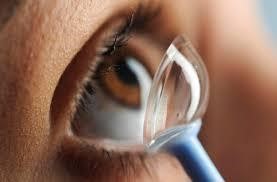
Figure 1: This image shows insertion of scleral lens into the eye.
Image Courtesy: https://www.crozeteyecare.com/scleral-contact-lenses/
What Are Scleral Lenses?
Scleral lenses are large, rigid, and gas-permeable contact lenses that vault over the entire cornea and rest on the sclera, creating a fluid-filled space that provides moisture and masks irregularities for people with severe dry eye, corneal diseases (like Keratoconus).
The reason for using a scleral lens for severe dry eye:
- Scleral lenses provide continuous moisture and are more comfortable.
- The custom fit of scleral lenses, combined with their liquid reservoir, creates a smooth optical surface for clear vision while addressing optical irregularities. (2)
Advanced Technology
Artificial Intelligence (AI) and machine learning help us develop new treatments for dry eyes. These technologies use information about tears and how eyes move and also make accurate diagnoses and create treatment plans.
AI in Dry Eye Practice
The integration of AI is about augmenting rather than replacing the expertise of clinicians. It can also streamline the process, from patient intake to follow-up, and help ensure that my staff is equipped with a comprehensive understanding of the condition of each patient before they step foot into the office. As DED management evolves, the role of AI is expected to expand, further improving patient care and clinic operations. (3)
AI is enhancing scleral lenses by marking a dry eye treatment by combining fluid reservoirs with intelligent customisation for unmatched hydration and comfort.
Conclusion
Although AI will bring a transformative tool for managing dry eye in the upcoming years; on the other hand, AI with scleral lens represents a significant advancement toward dry eye.
References
- Smith W. (2025) What is the new treatment for dry eyes in 2024, Annandale EyeCare Blog.
- Williams Dj. (2025) Scleral lenses for dry eyes: comparing contact lens options. 2020 eyecare Ohio.
- Nunziata, S., Petrini, D., Dell’Anno, S., Barone, V., Coassin, M., & Di Zazzo, A. (2024). Customized Scleral Lenses: An Alternative Tool for Severe Dry Eye Disease—A Case Series. Journal of Clinical Medicine, 13(13), 3935.
About the Author

Shree Chatterjee
B. Optom Student
Recent Comments