
Aakanksha Pathania, MBA
Program Manager, Vision Science Academy, New Delhi, India
In Spider-Man: Brand New Day, Tom Holland’s Peter Parker undergoes a disturbing biological transformation, with his eyes appearing completely black. What makes the effect particularly striking is that the production used black scleral contact lenses, creating a practical ocular effect rather than relying entirely on Computer-Generated Imagery (CGI).
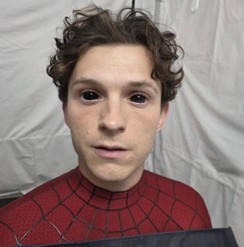
Figure 1: This image shows Tom Holland wearing scleral lenses in the recent Spider-man movie.
Image Courtesy:

The case highlights an important role for Optometry in modern filmmaking: transforming a fictional visual concept into a real, wearable ocular effect while considering lens size, fit, vision and ocular safety. The black scleral lens becomes more than a special effect-it becomes part of how Peter’s transformation is communicated to the audience.
The Beginning of Theatrical Contact Lenses in Hollywood
The use of contact lenses as a cinematic effect dates to 1939, when Beverly Hills Optometrist Reuben Greenspoon adapted coloured lenses for Miracles for Sale. His work continued through Citizen Kane and culminated in creating blind-looking eyes for Herbert Marshall in The Enchanted Cottage (1945), establishing him as a pioneer of theatrical contact lenses in Hollywood. (1)
What Are Theatrical and Special-Effects Contact Lenses?
Theatrical or special-effects (FX) contact lenses are customised lenses designed to alter the appearance of the eye for a character or visual effect. They can change the iris, pupil, sclera and overall ocular appearance, creating animal, supernatural or fictional eyes.
They may also be called character, costume, prosthetic, cosmetic or decorative lenses, depending on their purpose and design. (2)
Regulatory Perspective
The FDA classifies theatre, cosmetic, coloured, fashion and Halloween lenses as decorative contact lenses. They can create effects such as cat or vampire eyes but remain medical devices requiring proper prescription and fitting.
From an Optometric perspective, they require attention to ocular health, fit, material, wearing time and visual function.
The terms cosmetic, prosthetic and theatrical may overlap because similar technologies, including tinting, printing, painting and custom fitting, can be used across all three. (3)
Actsafe provides production-specific guidance on theatrical contact lenses, covering their fitting, handling and safe use in film and television. It complements clinical contact-lens literature with practical on-set safety guidance. (2)
Useful for the broader clinical definition and classification of contact lenses according to anatomical position, material, design and function.
| Aspect | Cosmetic | Prosthetic | Theatrical / Special-Effects |
| Primary purpose | Enhance or alter the appearance of a normal eye | Camouflage or reconstruct the appearance of an abnormal or disfigured eye | Transform a normal eye into a fictional or non-human eye |
| What is modified? | Mainly iris colour, pattern or apparent diameter | Iris, pupil and visible ocular irregularities | Iris, pupil, sclera and sometimes the entire visible ocular appearance |
| Design approach | Usually, standard tinted or printed designs | Individually matched; may be computer-printed or hand-painted | Character-specific; often opaque, printed, hand-painted or large-diameter |
| Typical application | Changing brown eyes to blue/green; enhancing the limbal ring | Corneal opacity, iris defects, aniridia or other visible abnormalities | Vampire, zombie, alien, demon, reptile or superhero eyes |
| Clinical priority | Appearance + appropriate contact-lens fit | Cosmesis + ocular health + precise fitting | Visual effect + ocular safety + performance requirements |
Table 1: This table shows the difference between the cosmetic, prosthetic and theatrical lenses.
Why Scleral Lenses Matter in Hollywood
Scleral lenses provide a larger canvas for ocular transformation than conventional corneal lenses, allowing filmmakers to alter not only the iris and pupil but also the visible sclera.
This makes them useful for dramatic effects such as black, cloudy, alien, demonic and reptilian eyes, with lighting and VFX further enhancing the result.
In Hollywood, the scleral lens becomes more than a contact lens-it becomes a tool for character design. (4)
How Hollywood Creates Non-Human Eyes
Hollywood has the most convincing creature: eyes are not simply created by changing eye colour. The anatomy of the eye itself becomes part of the character design. Depending on the effect, filmmakers can manipulate the iris, pupil, limbal boundary and sclera using coloured, opaque, printed, hand-painted and large-diameter lenses. Makeup, lighting and visual effects can then extend the practical effect beyond what the lens alone can achieve.
| Character Eye | What Is Being Transformed? | How the Effect Is Achieved | The Optometric Connection | Film / Character Example |
| Vampire | Iris colour, pigmentation and pupil appearance | Custom-coloured or opaque lenses create unnatural reds, ambers, yellows or intensified irises; cinematography can further amplify the colour | Colour selection, pigmentation and lens fit determine how the eye appears on camera | The Twilight Saga: Breaking Dawn |
| Zombie / Undead | Iris, pupil and perceived ocular health | Cloudy, pale, bloodshot or irregular designs make a healthy eye appear deteriorated or lifeless | The lens must reproduce the visual effect while maintaining appropriate fit and ocular safety | The Walking Dead |
| Alien | Iris and visible sclera | Large scleral lenses provide a much larger design surface than conventional corneal lenses | Scleral anatomy, vaulting, diameter and lens stability become part of the character design | District 9 |
| Demon / Monster | Iris, pupil, sclera and overall ocular proportions | Opaque colours, distorted patterns and unusual pupil shapes deliberately break normal human anatomy | Requires balancing customisation, centration, movement and visual function | Fantasy and supernatural productions |
| Reptilian / Feline | Pupil shape and orientation | A round human pupil is replaced visually by a narrow vertical or slit-shaped design | Rotational stability becomes critical: a rotated lens can rotate the pupil | Michael Jackson, Thriller |
| Blind / Diseased Eye | Visibility of the iris and pupil | White-out, opaque or painted lenses simulate blindness, opacity or ocular damage | Closely related to prosthetic contact-lens design and custom pigmentation | The Enchanted Cottage |
| Enlarged / Stylised Eye | Iris diameter, pupil size and limbal boundary | Custom iris dimensions and limbal designs alter the perceived proportions of the eye | Demonstrates how lens geometry can change perceived ocular anatomy, not simply colour | Fantasy and stylised characters |
The most interesting aspect of theatrical lenses is that they can change how the audience interprets the anatomy of an eye. A larger iris can make the eye appear unnaturally large; a vertical pupil immediately suggests an animal; altering the sclera can make the entire eye appear non-human. At this point, the contact lens stops functioning merely as a cosmetic accessory and becomes a tool of character design. In this sense, Hollywood uses optometry in reverse: rather than correcting how an actor sees, the lens is carefully designed to change how the audience sees the actor. (5)
The Clinical Risks of Theatrical Contact Lenses
Theatrical contact lenses are still medical devices placed directly on the ocular surface. Their use introduces the established risks of contact-lens wear, while large diameters, opaque designs, unusual lens geometry, repeated handling and long production days can create additional fitting and visual-performance considerations.
| Clinical Risk | What Happens to the Eye? | Why It Matters in Theatrical Use |
| Corneal hypoxia and surface stress | Large, thick or prolonged-wear lenses may reduce oxygen availability and contribute to epithelial or conjunctival changes. Scleral wear may also cause midday fogging and ocular-surface complications. (6) | Special-effects lenses may be larger or more opaque than conventional lenses, making fit and wearing time particularly important. |
| Corneal abrasion and mechanical injury | A damaged, contaminated or poorly fitted lens can mechanically irritate the ocular surface or cause corneal scratches. | Frequent insertion and removal during makeup and filming makes careful handling essential. |
| Microbial keratitis | Poor hygiene can allow microorganisms to cause keratitis, corneal ulcers and potentially serious visual loss. | Film sets involve repeated handling, making controlled hygiene and professional lens management critical. |
| Acanthamoeba and water exposure | Exposure to non-sterile water can introduce organisms such as Acanthamoeba, potentially causing severe keratitis. | Lens storage, cleaning and handling must be carefully controlled; contact with inappropriate water should be avoided. |
| Restricted visual function | Opaque or highly pigmented lenses can reduce visual acuity, contrast and functional vision. | This becomes especially important when actors must perform stunts, choreography or movement-heavy scenes. |
| Poor fit, decentration and movement | An unsuitable lens–eye relationship can produce discomfort, excessive movement, decentration, limbal bearing or conjunctival complications. | For effects such as vertical pupils, even small lens rotation can alter the intended character appearance. |
| Prolonged wear | Extended wear may increase discomfort, deposits, fogging and ocular-surface stress. | Wearing time should be determined by the lens and the eye—not simply by the filming schedule. |
| Hygiene and cross-contamination | Incorrect storage, disinfection or sharing of lenses can increase the risk of contamination and infection. | Each lens requires controlled assignment, cleaning, storage and professional handling. |
Table 2: This table shows the clinical risk of the theatrical lenses.
Examples in Hollywood
District 9 (2009): Creating the Alien Eye
District 9 shows how a contact lens can become part of creature design rather than simple cosmetic enhancement. Special-effects lens artist Cristina Patterson used a painted scleral lens for transformation of Sharlto Copley, altering the visible eye to support his increasingly alien appearance. (8)
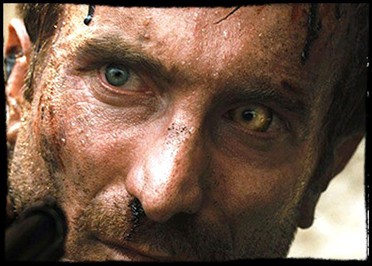
Figure 2: The image shows yellow paint to the scleral lenses to show effect.
Image Courtesy:
https://media.wired.com/photos/59325968b8eb31692072ee1f/master/w_2048%2Cc_limit/ut_fxeyes_2f.jpg

From an Optometric perspective, the scleral design is significant because it provides a larger surface for ocular transformation, allowing the effect to extend beyond the iris. Scleral-lens fitting, ocular-surface assessment and lens stability therefore become part of achieving the visual effect safely.
The Optometrist helps turn an artistic concept into a wearable, fitted ocular device-connecting character design with the anatomy and safety of the real eye.
The Walking Dead: Designing the Zombie Eye
The Walking Dead demonstrates how theatrical lenses can become an essential part of large-scale creature makeup. Special-effects lenses helped create the show’s characteristic cloudy, damaged and lifeless zombie eyes, working alongside prosthetics and makeup.
At this scale, Optometry becomes particularly important: fitting, lens handling, hygiene, insertion, removal and monitoring must be managed across multiple performers while maintaining the intended visual effect. Actsafe specifically addresses the safe use of theatrical lenses in film and television production. (2,4)
The final zombie may be fictional, but the eye wearing the lens is real. That is where clinical expertise becomes part of filmmaking.
The Emerging Role of Optometry in Entertainment
The role of Optometry in entertainment extends beyond conventional vision care into specialty contact lenses, prosthetic lenses and theatrical eye effects. Historical examples, including the work of Reuben and Morton Greenspoon, demonstrate that optometrists have contributed to Hollywood by designing, fitting and managing lenses that transform the appearance of an actor. Today, this work can involve collaboration with lens artists, makeup and prosthetic teams, cinematographers and VFX departments. (7)
Theatrical lens practice requires a combination of clinical expertise and visual-design understanding. A practitioner may need to evaluate ocular health, determine lens parameters, assess centration and stability, manage insertion and removal, and monitor the actor during production. Scleral and custom prosthetic lenses require additional technical knowledge, making advanced contact-lens education particularly relevant to this emerging area.
Conclusion
Theatrical Optometry sits at the intersection of eye care, technology and visual storytelling. Although its applications are well established, research remains limited, creating a need for stronger clinical evidence, specialised training and production safety standards.
Modern filmmaking increasingly combines specialised lenses, prosthetics and VFX, making Optometrists an often unseen but important part of transforming a creative concept into a safe, convincing ocular effect.
References
- Heitz, R. F. (2015). Early cosmetic contact lenses for Hollywood film actors. History of Ophthalmology International, 1, 83–86. https://open.icm.edu.pl/items/b0df3772-32d6-4a07-938d-0432df084e79
- Actsafe Safety Association. (2023). Theatrical contact lenses: Actsafe safety bulletin #46 [Safety bulletin]. https://actsafe.ca/wp-content/uploads/2023/12/Theatrical-Contact-Lenses-Safety-Bulletin-46_MP.pdf
- U.S. Food and Drug Administration. (n.d.). Decorative contact lenses for Halloween and more. https://www.fda.gov/medical-devices/contact-lenses/decorative-contact-lenses-halloween-and-more
- Chun, R. (2026, May 29). Vision quest: The art of the contact lens. Television Academy. https://www.televisionacademy.com/features/emmy-magazine/articles/contact-lenses-tricks-of-the-trade
- American Optometric Association. (2017, February 23). Hollywood’s eye experts. https://www.aoa.org/news/inside-optometry/member-spotlight/hollywoods-eye-experts
- Walker MK, et al. (2016). Complications and fitting challenges associated with scleral contact lenses: A review. Contact Lens and Anterior Eye, 39(2), 88–96.
https://pubmed.ncbi.nlm.nih.gov/26341076/ - Heitz, R. F. (2015). Early cosmetic contact lenses for Hollywood film actors. History of Ophthalmology International, 1, 83–86.
https://open.icm.edu.pl/items/b0df3772-32d6-4a07-938d-0432df084e79 - Li, S. (2014, June 3). The Hollywood FX master who painted Angelina Jolie’s eyeballs. WIRED. https://www.wired.com/2014/06/eye-fx/
About the Author

Aakanksha Pathania is an Optometrist and healthcare professional. She completed her Bachelor’s in Optometry and an MBA in Hospital and Health Management at IIHMR University.
Alongside her clinical experience Aakanksha is an active contributor at the Vision Science Academy (VSA). She serves as a tutor and editorial assistant and is the author of the course “Forensic Optometry.” She has earned top positions in VSA competitions, and several of her blogs have been published in the Academy’s exclusive section.
With a growing presence in clinical practice, research writing, and healthcare management, Aakanksha is committed to advancing evidence-based eye care and contributing meaningfully to the future of vision health.
Recent Comments