
Susweta Guham, B. Optom Intern,
L V Prasad Eye Institute, Bhubaneswar, India
Measurement is a very important thing. It can be for any purpose, and in our lives measurement plays a vital role at every moment, from a tailor to a mason.
Accordingly, Optometry is such a profession where a simple error in measurement can ruin the life of a patient, and it can even lead to death. (1)
The Measurements
1. Dioptric Power: Dioptric power is one of the most fundamental measurements in Optometry. Accurate refractive assessment is essential for prescribing the correct spectacle or contact lens power. If the refractive error is measured incorrectly, the patient may receive an inappropriate prescription, leading to blurred vision, eyestrain, headaches, or visual discomfort. (1)
2. Working Distance: Working distance is an important factor during retinoscopy because it has its own dioptric value. If the working distance is not correctly maintained or properly accounted for, the final refractive power may be inaccurate. Therefore, careful consideration of working distance is essential for obtaining a reliable retinoscopy result. (1)
3. Interpupillary Distance (IPD): IPD is another important measurement in spectacle dispensing. Accurate measurement ensures that the optical centres of the spectacle lenses are properly aligned with the pupils of the patients. If the measurement is incorrect, unwanted prismatic effects may occur, potentially causing eyestrain, headaches, discomfort, dizziness, or difficulty adapting to the spectacles. (1)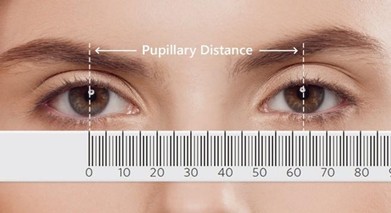
Figure 1: This image shows the process of IPD measurement.
Image Courtesy: https://bchashmavala.com/wp-content/uploads/2023/09/PD-Measurements-1-1400×788.jpg

4. Axial Length
Axial length plays a crucial role in ocular biometry and Intraocular Lens (IOL) power calculation, particularly in Cataract surgery. Even a small error in axial length measurement can affect the calculated IOL power and may influence the post-operative refractive outcome of the patients. Therefore, precise biometry is essential for achieving the desired visual result after surgery. (2)
5. Corneal Curvature
The curvature of the cornea is an important component of the refractive power of the eyes. Changes or abnormalities in corneal curvature can influence the refractive status of the eye. Irregular corneal curvature may also be associated with conditions such as Keratoconus, making accurate corneal assessment clinically important. (3)
6. Intraocular Pressure (IOP)
Intraocular pressure is an important measurement in the assessment of ocular health and Glaucoma. Although IOP alone cannot diagnose Glaucoma, accurate measurement, combined with optic nerve evaluation, visual field assessment, and other clinical findings, helps eye-care professionals make appropriate clinical decisions. (3)
7. Corneal Thickness
Corneal thickness is another clinically significant measurement. It can influence the interpretation of IOP readings and is considered as one of the factors in assessing glaucoma risk. Therefore, measuring corneal thickness can provide valuable information during a comprehensive eye examination. (3)
Conclusion
We can conclude that, as Optometrists, it is extremely important to take every measurement with the utmost care and accuracy, as even a small error can lead to serious consequences and may potentially put the life of the patient at risk. (1,4,5)
References
- American Academy of Ophthalmology. (n.d.). Ophthalmic measurements. https://www.aao.org/young-ophthalmologists/yo-info/article/ophthalmic-measurements
- American Academy of Ophthalmology. (n.d.). Ultrasound biomicroscopy. EyeWiki. https://eyewiki.aao.org/Ultrasound_biomicroscopy
- Barraquer Ophthalmology Center. (2025, August 5). Anatomy of the eye: Structures, characteristics and measurements. https://www.barraquer.com/en/news/anatomy-eye-structures-characteristics-measurements
- Howland, H. C., Lempert, P., Peck, L., Bock, G., Widdersheim, K., Giuffre, L., Gupta, R., & Schafer, S. (1991). Optical methods for the measurement of anterior chamber depth. Noninvasive Assessment of the Visual System.
- Rizzuti, A., & Song, A. L. (2023). Optical biometry. StatPearls Publishing. https://www.ncbi.nlm.nih.gov/books/NBK580549/
About the Author

Susweta Guha
B. Optom Intern,
Recent Comments